Cabling kit
The kit for terminating your own runs, and the one part not to economise on
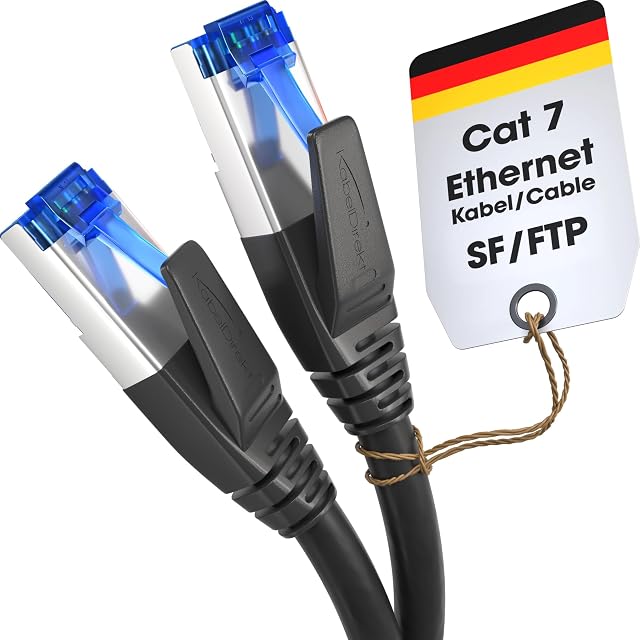
Terminating your own runs is a straightforward skill and an unforgiving purchase, because five items all have to match one another: the cable’s category and conductor type, the modules rated for that category, plugs matched to the conductor and the jacket diameter, a tool that seats them, and something to prove the result.
By Jean-Benoit Buisson
Buy the cable and the plugs as one decision
More failed crimps come from mismatched parts than from technique.
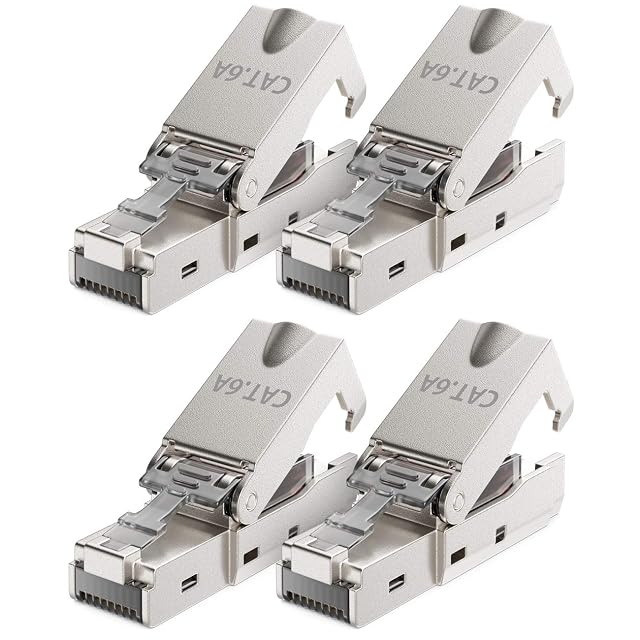
Conductor type. Solid cable for fixed runs, stranded for flexible leads, and plugs specified for whichever you have. The contacts inside a plug pierce a solid conductor differently from the way they grip a bundle of strands, and a plug used on the wrong type produces a connection that works on the bench and fails intermittently a year later.
Conductor and jacket diameter. Plugs are specified for a range, and a cable at the thick end of the market will not enter a plug built around a slim one. This is what makes some plug-and-cable combinations simply impossible.
Screened or unscreened. A screened cable needs plugs and modules that carry the screen through, with a path to earth as the manufacturer’s instructions define. Terminating screened cable into unscreened parts produces an unscreened channel that was harder to install.
Category. The grade belongs to the whole channel. Category 6A cable terminated into Category 5e modules gives a Category 5e channel, and the cable’s printing does not change that.
Prefer modules and panels to plugs wherever you can
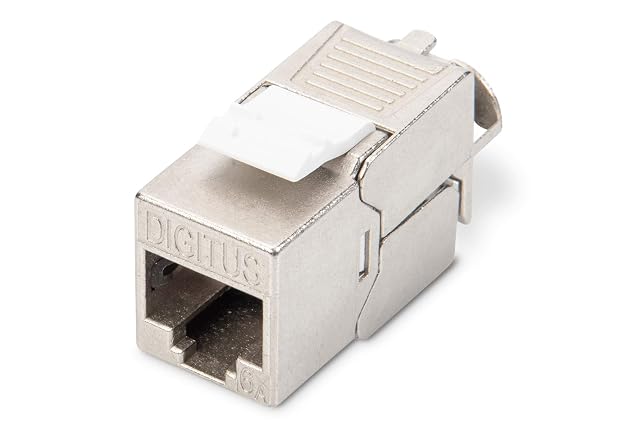
At a faceplate, a keystone module; in a cabinet, a patch panel. Both use insulation displacement contacts, both are designed around solid cable, and both protect the cable’s end rather than exposing it.
The practical advantage is repeatability. A module has a printed layout for both wiring schemes, holds the conductors while you punch them, and can be redone in a minute if it is wrong. A crimped plug can be redone only by cutting it off, which costs length you may not have.
Choose one wiring scheme for the whole building and use it at both ends of every run. The two schemes swap a pair over, and a run terminated to one at the panel and the other at the faceplate produces a crossover that some equipment quietly works around and some does not. Write the choice on the cabinet door.
A crimping tool that seats all eight contacts squarely in one stroke. The item where quality is felt every time, and the one to buy properly. A tool with a cutter and a stripper built in saves handling; one with a ratchet ensures the stroke completes.
A punch-down tool for modules and panels, which cuts the conductor as it seats it. Many modules come with a small plastic tool that works; a proper one works better and is not expensive. Some modules terminate without one, and their instructions say so.
A stripper that removes the jacket without nicking the conductors. Nicked insulation on an individual conductor is a fault you will not see and a tester may not catch.
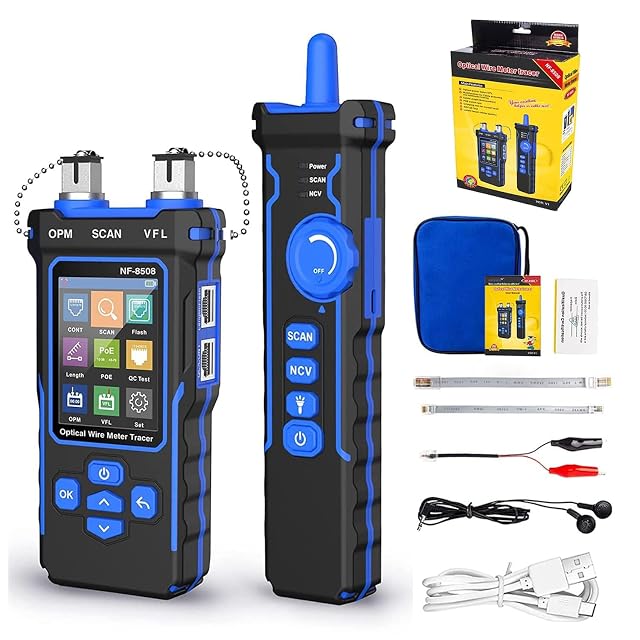
A tester. Described below, and not optional.
Add a marker for writing identifiers on the jacket, hook-and-loop wraps rather than plastic ties, and more spare plugs than you think you need.
The technique that separates a good termination from a working one
Two habits, and both are about the twist.
Strip only as much jacket as the module or plug needs. A long tail of exposed conductors is easier to sort and is exactly what you are trying to avoid.
Keep each pair twisted as close to the contacts as the part allows, and untwist only the last section that has to lie flat. The twist is what cancels interference between neighbouring pairs, and every untwisted millimetre is a millimetre without it.
Then do not over-tighten anything. A cable tie pulled hard enough to dent the jacket has changed the spacing of the pairs inside it, and the bend behind a faceplate is where installations breach the maker’s published minimum bend radius.
Test each run as you finish it
Put a tester on both ends before moving on. A basic wiremap unit tells you that all eight conductors reach the right pin in the right pair, which is the fault class termination introduces, and it takes seconds.
Testing eight runs at the end of the day means finding one fault and not knowing which of eight terminations caused it. Testing as you go means finding it while your hands are still on it and the tools are still out.
Testers with a tone generator and probe add the ability to identify which cable in a bundle is which, which is worth having in any building with runs somebody else installed.
Where the run touches anything else
Separation from mains cabling, what may cross a fire compartment, which jacket materials a route requires and any penetration through a floor or ceiling are governed by the wiring and building rules where you live, and by the manufacturer’s instructions for the products involved. Plan the route, then have anything touching the fixed electrical installation carried out by somebody qualified to do it.