Continuity, wire map and length are three different instruments in one word
The best network cable testers for 2026
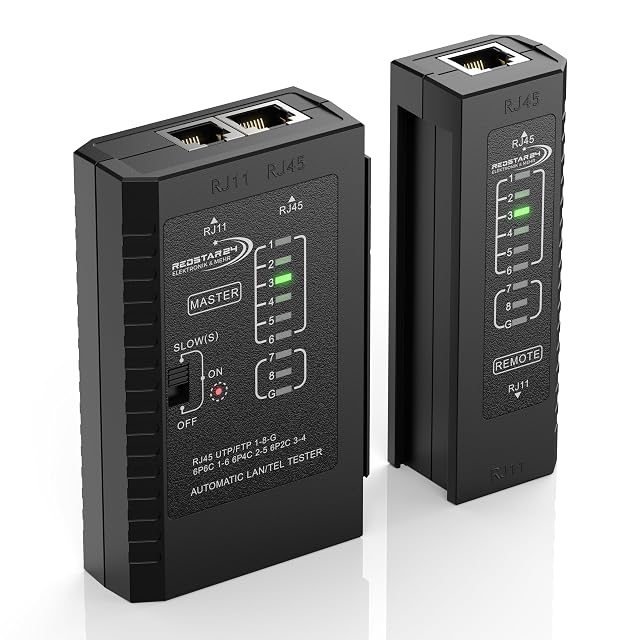
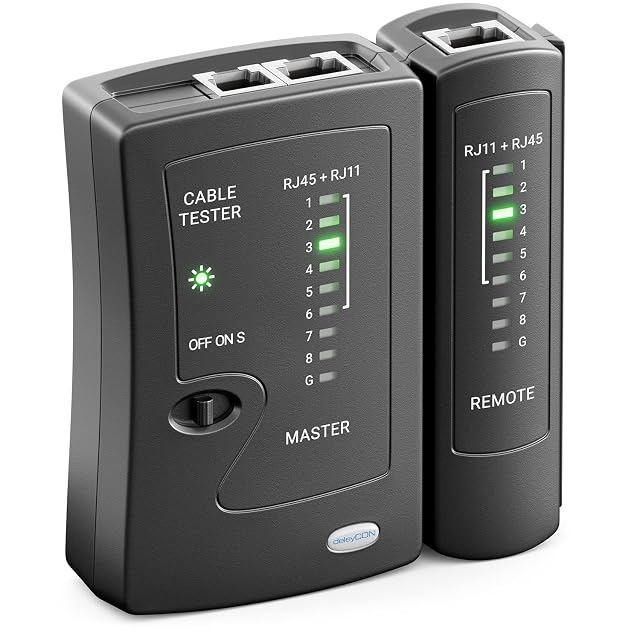
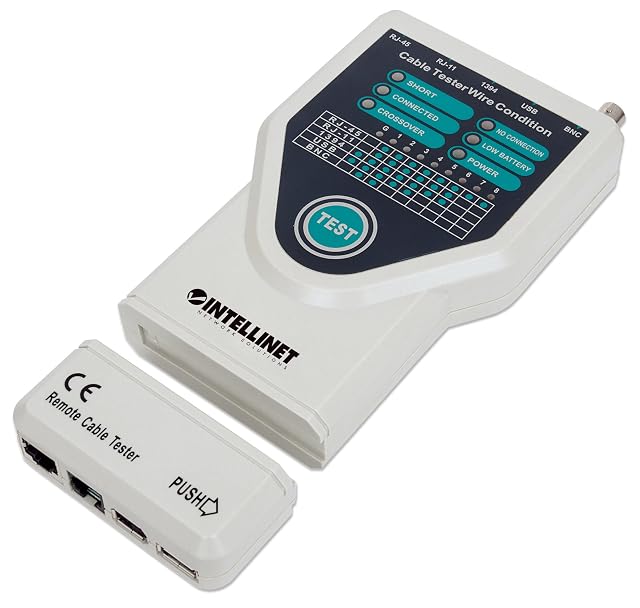
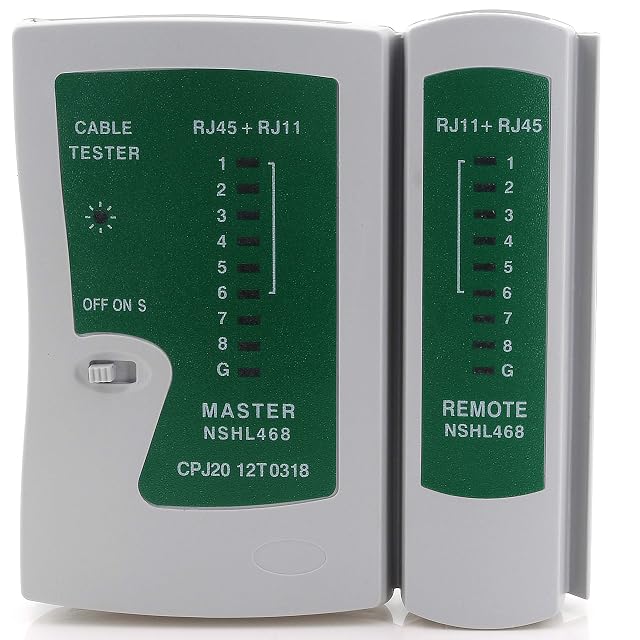
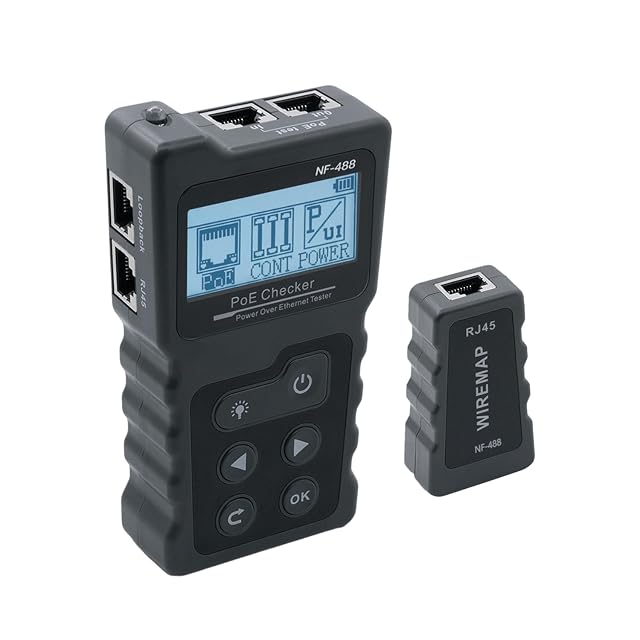
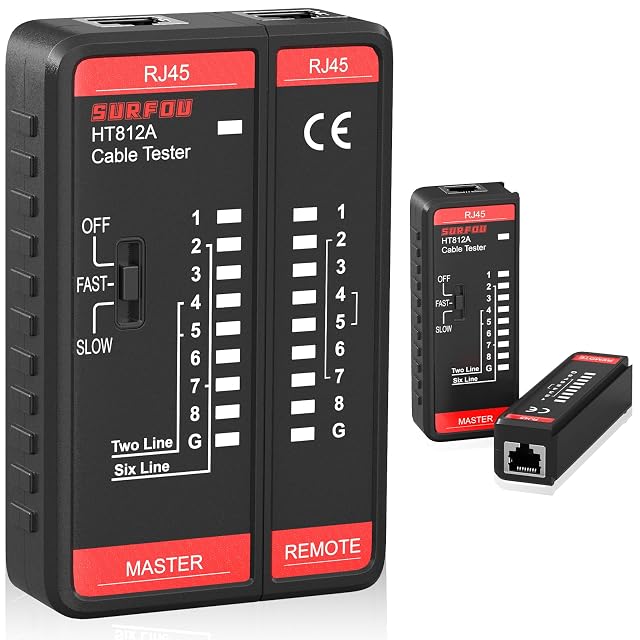
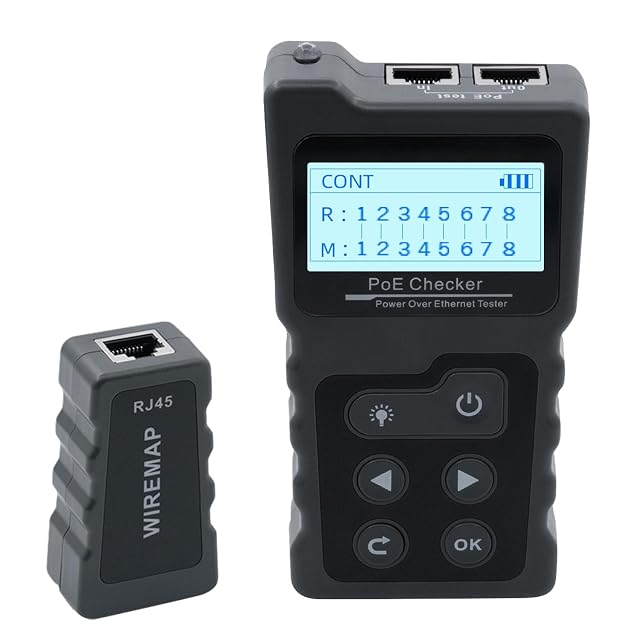
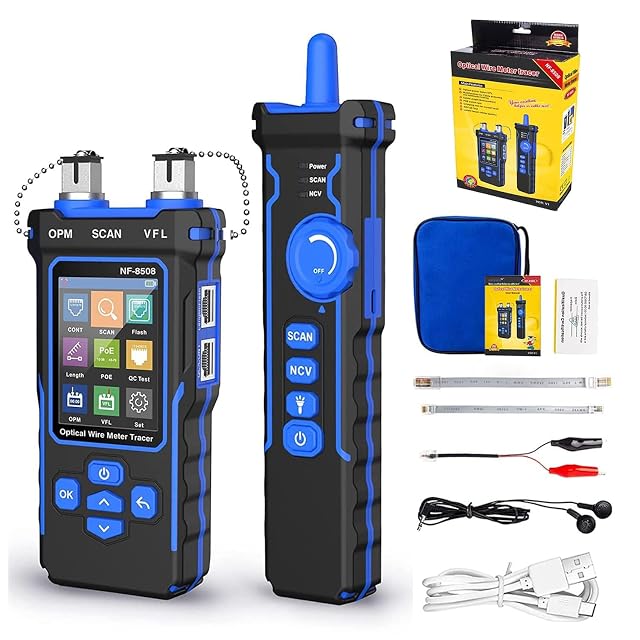
The word tester covers three different instruments, and the cheapest of them answers the smallest question. A continuity tester is a pair of boxes with a row of lights: it says that eight conductors reach the far end, and in what order. That catches the crossed pair and the broken conductor, which between them account for most of what goes wrong with a hand-crimped lead. A wire map tester reads the same thing more precisely and names split pairs — two conductors that are electrically continuous but not twisted together as the standard intends — which a row of lights cannot see. A length and fault tester uses a time-domain measurement to state how far along a run the problem sits, and that is the feature which turns an afternoon of guessing into ten minutes with a ladder. Above those sit certifiers that report against the performance limits of a category; they are a professional purchase at a professional price. Read next what the unit accepts: RJ45 for network runs, RJ11 for telephone, coaxial connectors on some models, and whether a remote unit is included and how many. Tone generation with a probe is what lets one cable be found inside a bundle at the other end of a building. The rest is practical — replaceable cells or a rechargeable pack, a case, a backlit display, and whether the unit reports PoE presence on a live socket before you unplug it. We compare tester type, connector types accepted, wire map and split pair detection, length reporting, tone and probe function, remote units supplied, PoE detection and power source.