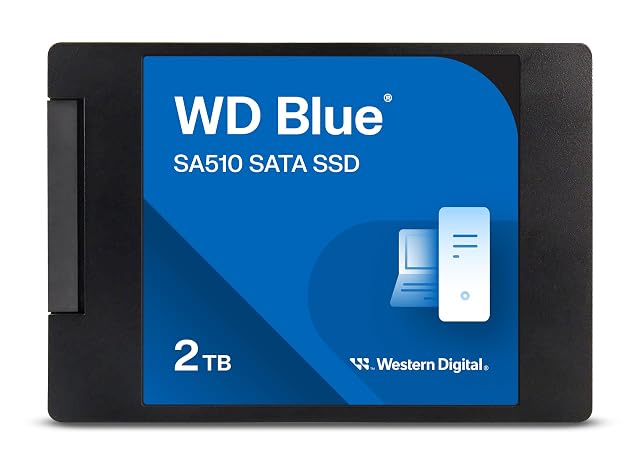
One interface caps every drive on the shelf at the same ceiling
The best SATA SSDs for 2026
Every SATA SSD shares one ceiling, and that is the most useful single fact about the family. The SATA interface tops out at six gigabits per second of signalling, which after line coding leaves roughly half a gigabyte per second of payload, and essentially every drive on the shelf reaches it. Sequential figures therefore separate almost nothing, and the comparison has to move elsewhere. Form factor comes first: the 2.5-inch drive at a 7 mm height is the common one and drops into a laptop bay or a desktop bracket; M.2 2280 drives running on this interface exist and look exactly like NVMe ones, which is why the slot's published support has to be read rather than assumed; mSATA survives in older machines. Then endurance, where three numbers that get treated as one deserve separating. TBW states the writing the drive is rated for, in terabytes. MTBF is a statistic across a population, in hours. The warranty is a commercial period which usually ends at whichever of the two limits arrives first. None of them describes how long one drive will last. Capacity is published in decimal units and displays smaller once the operating system counts in units of 1024; the figure quoted here is the maker's, in the maker's unit. Below that, whether the drive carries a DRAM cache, which controller family it uses, and the stated random IOPS say far more about how it feels in use than the sequential pair does. We compare capacity, form factor and height, stated sequential read and write figures, stated random IOPS, TBW rating, stated MTBF, DRAM cache presence, controller family and warranty length.