Skip to content

The best UPS units for 2026

An uninterruptible power supply keeps a machine running long enough to shut it down properly, and the specification opens on a distinction that accounts for half the price. In a standby unit the load runs from the mains until the mains fails, and a relay hands over to the inverter within a few milliseconds. A line-interactive unit adds a transformer that corrects a supply which is merely low or high without calling on the battery at all, which counts for a great deal on a weak line. An online unit runs the load from its inverter permanently and has no transfer time. IEC 62040-3 gives these arrangements formal classifications, and the maker states which one applies. Then the two capacity figures, which are not the same number. VA is apparent power and watts is real power; the watt figure is always the smaller of the two and is the one a computer's consumption has to fit inside. Runtime charts are published against a load in watts, so a runtime quoted without its load says nothing at all. The waveform on battery is either a stepped approximation or a sine wave, and some power supplies with active correction object to the former — on that point the maker of the computer, not of the UPS, is the source. Count the sockets and note which are battery-backed and which only filtered, then read the battery type and whether the pack is user-replaceable. We compare topology and its stated classification, VA and watt ratings, stated runtime at a named load, output waveform, socket count and type, battery type and replaceability, and communication port.
The ones worth installing

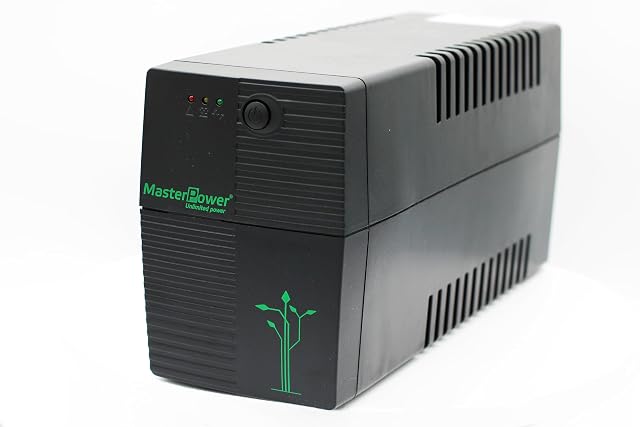
  1. Master U-Power 650 VA rated at 360 W, with two runtimes quoted per device rather than per watt

    650 VA · 360 W · 10 minutes for a computer or 40 minutes for a modem-router · 2 Schuko sockets · 12 V 7 Ah battery, changeable · topology and waveform not published

    A six-hundred-and-fifty volt-ampere unit that prints a watt figure beside it, quotes two runtimes against named devices rather than against a load in watts, and never says which arrangement it uses or what shape its output takes on battery.

    Best for: A modem, a router and a recorder that need to stay up through a short cut, bought by someone who will read the maker’s own instructions before deciding what goes behind it.

    ≈ 42 €

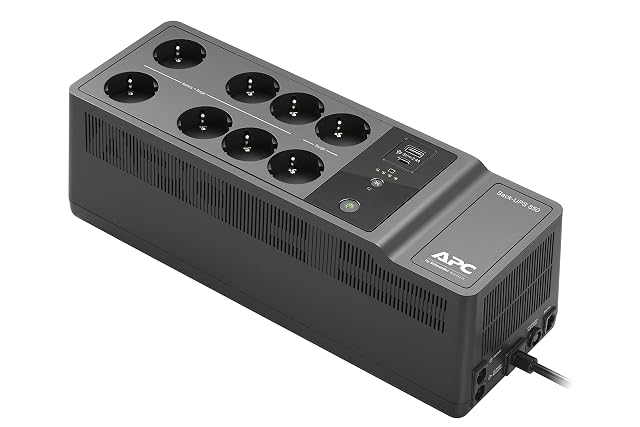
  2. APC Back-UPS BE850G2-GR, 850 VA with no watt figure anywhere on the page

    850 VA · no watt rating published · 8 Schuko sockets · surge protection named · USB Type-C and Type-A charging ports · topology, waveform, runtime and battery not published

    An eight-hundred-and-fifty volt-ampere unit with eight sockets and a single bullet, whose page carries no watt figure, no runtime, no waveform and no description of the battery.

    Best for: A desk with a great many plugs, bought by someone who will ask for the watt rating and the runtime chart before anything is connected behind it.

    ≈ 110 €

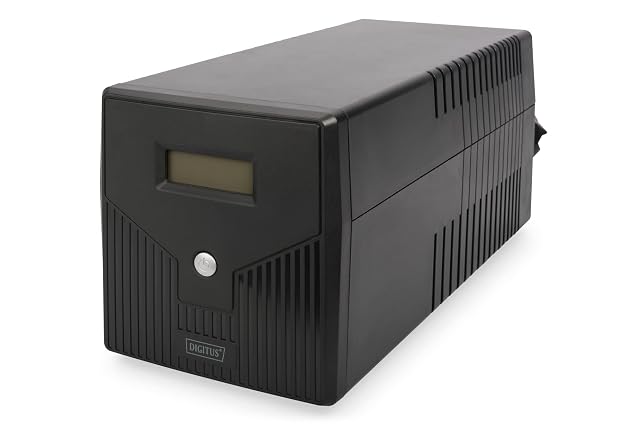
  3. DIGITUS DN-170075, line-interactive at 1500 VA and 900 W, with a runtime tied to a load in watts

    1500 VA · 900 W · line-interactive, class 2 – VI · 36 minutes at a 120 W load · transfer of 2 to 6 ms · 4 Schuko CEE 7/7 sockets · USB Type-B and RS232 · waveform and battery not published

    The one listing of the eight to quote its runtime against a load in watts, and the one to publish a classification code beside its topology, on a page that then says nothing about its waveform or its battery.

    Best for: A small rack or a desk running a machine and a monitor, where a runtime at a stated load and a serial port count for more than a published waveform.

    ≈ £215 / 160 €

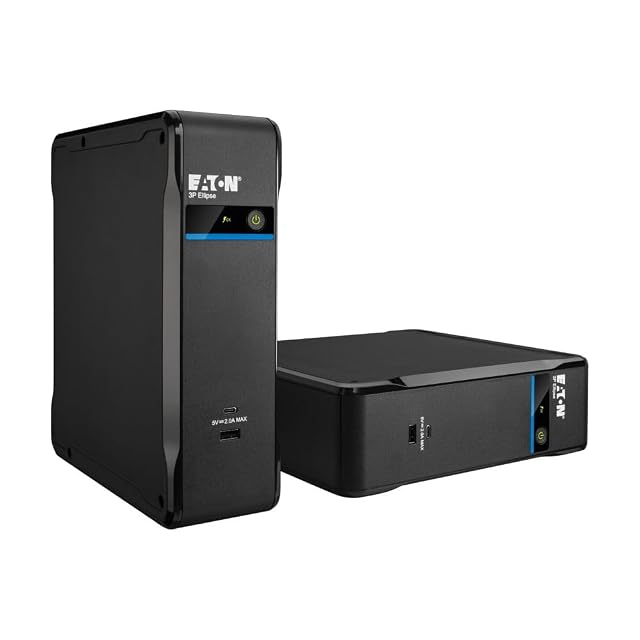
  4. Eaton 3P700UD, standby at 700 VA and 420 W, with the whole specification in the title

    700 VA · 420 W · standby topology stated · 4 sockets, 3 on battery and surge and 1 on surge only · Schuko · USB port plus USB charging ports · runtime, waveform and battery not published

    A standby unit whose title publishes both power ratings, the topology, the split between battery-backed and surge-only sockets and a communication port, above three bullets that carry three words between them.

    Best for: A desk where three machines need the battery and a fourth needs filtering only, chosen on that socket split rather than on a runtime the page never gives.

    ≈ 130 €

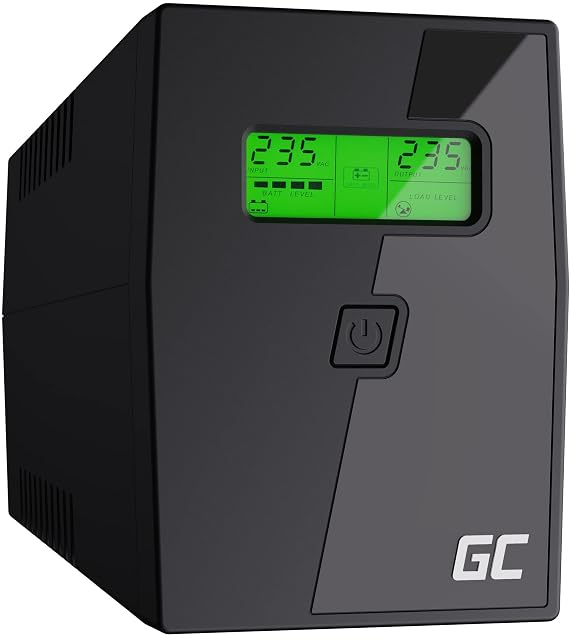
  5. Green Cell UPS01LCD, line-interactive at 360 W, with a VA figure given twice and differently

    600 VA in the title, 600–999 VA in the bullets · 360 W · line-interactive with AVR · modified sine wave · up to 20 minutes, load not named · 2 Schuko sockets · one 12 V 7 Ah AGM battery · transfer of 2 to 6 ms

    A line-interactive unit whose watt figure is printed three times without changing, whose volt-ampere figure appears as one number in the title and as a range in two bullets, and whose backup time is quoted with no load behind it.

    Best for: A desk where the supply sags more often than it fails, and where a stepped waveform has been checked against the power supply that will sit behind the unit.

    ≈ 54 €

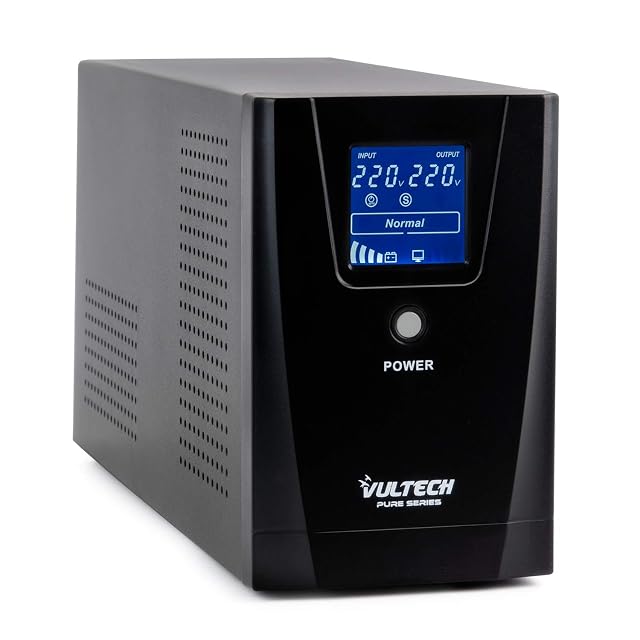
  6. Vultech UPS1500VA-PURE, pure sine wave at 1500 VA, with 1200 W read off a two-model line

    1500 VA · 1200 W · line-interactive with an internal stabiliser · pure sine wave · 3 outputs: 2 bypass Schuko rated 10–16 A and 1 IEC C13 on battery · USB and software · runtime and battery not published

    A line-interactive tower sold on its pure sine wave, whose watt figure arrives inside a sentence describing two models of the range, and whose battery backup is attached in writing to one output of three.

    Best for: A machine whose power supply objects to a stepped waveform, plugged into the one output the fourth bullet puts on the battery.

    ≈ 205 €

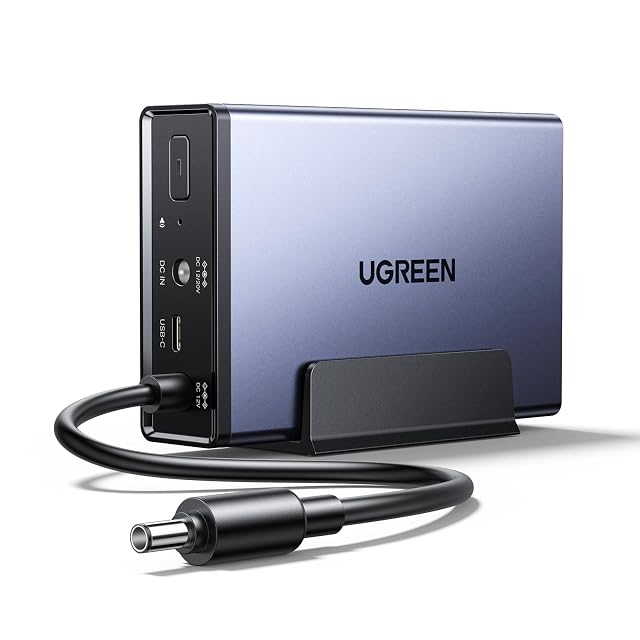
  7. UGREEN NASync US3000, 120 W published with no volt-ampere figure beside it

    120 W constant output · no VA rating published · 12,000 mAh lithium pack · transfer stated as 0 seconds · app monitoring and automatic shutdown · sockets not counted · waveform not published

    A unit built for one maker’s network storage that publishes a watt figure and no volt-ampere rating at all, states a transfer of zero seconds without naming an arrangement, and never counts or types its sockets.

    Best for: One of the enclosures named in the third bullet, where the matched 120 W output is the point and nothing else will be plugged in behind the unit.

    ≈ $110 / £106 / 110 €

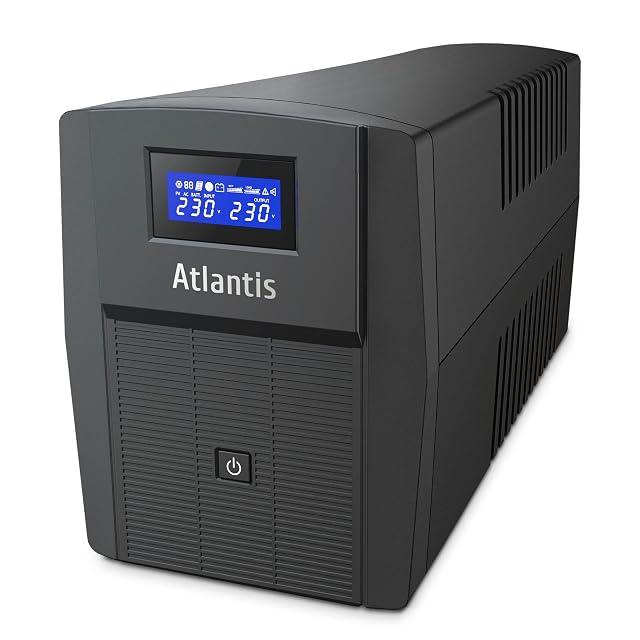
  8. Atlantis A03-HP2003, 1500 VA and 900 W, with three runtimes quoted as percentages of an unstated figure

    1500 VA · 900 W · line-interactive tower · pure sine wave · a few seconds at 100 %, 7.3 min at 50 %, 20 min at 25 %, base not stated · 3 IEC and 2 Schuko sockets · 2 × 12 V 9 Ah batteries · USB HID · 10.1 kg

    A line-interactive tower publishing both ratings, a pure sine wave and two batteries by size, whose three runtimes are given as percentages without the page ever saying percentages of which figure.

    Best for: A tower under a desk feeding equipment with IEC leads, where the pure sine wave and the two-battery pack matter and the percentage runtimes will be put to the maker.

    ≈ 220 €

Every price named in a summary was read on the date that review carries. What a shop asks today is shown beside the product, and it moves.