Skip to content

The best NAS enclosures for 2026

A NAS enclosure is a small computer whose job is to hold drives and serve them, and it is sold empty. Bay count is the first figure and the hardest to change afterwards, because adding a bay usually means buying another enclosure. The drive interface follows: bays for 3.5-inch SATA drives, often with mounting for 2.5-inch ones, and increasingly one or two M.2 slots whose intended use — caching, or a separate fast volume — is published by the maker and differs between models. Redundancy arrangements are named on every listing, and this site describes them for exactly what they are: a way of carrying on through a drive failure, which is a different thing from having the data in a second place. A copy on separate hardware is a separate arrangement, and no redundancy level stands in for it. What decides how the unit behaves day to day is the processor and memory, since transcoding video, running containers and serving several people at once all lean on them, and memory is sometimes expandable and sometimes soldered down. Then the connections: Ethernet port count and speed, whether two sockets can be aggregated, and USB ports for copying to an attached drive. The operating system is the least comparable part and the part people live with; read the list of applications the maker publishes rather than the marketing around it. Noise and idle draw matter in a flat. We compare bay count and drive interface, solid-state slot count, processor and memory, Ethernet port count and speed, USB ports, supported redundancy levels, published operating system, stated idle power, stated acoustic figure and stated dimensions.
The ones worth installing

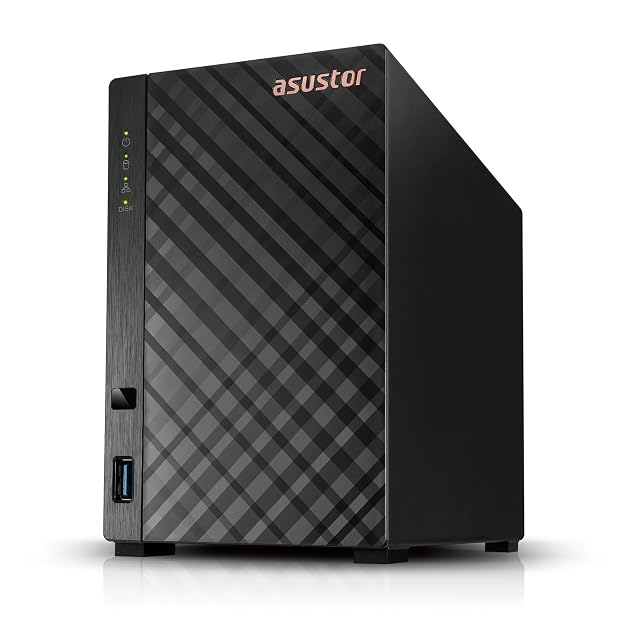
  1. Asustor Drivestor 2 Lite AS1102TL, two-bay enclosure with one gigabit socket

    two bays · Realtek RTD1619B, four cores at 1.7 GHz · 1 GB DDR4 · one 1GbE socket · Btrfs and iSCSI snapshots named · sold without drives

    A two-bay enclosure whose title states the processor, the memory and the single gigabit socket, and whose page never names the drive interface, an array arrangement or the software that runs it.

    Best for: A first enclosure for a household copy of photographs and documents, where one gigabit is enough and where the buyer is content to look up the drive compatibility elsewhere.

    ≈ £198 / 183 €

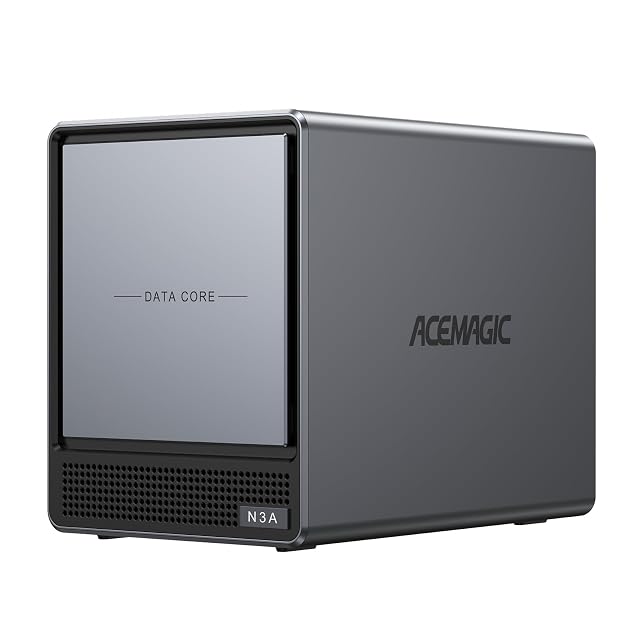
  2. ACEMAGIC N3A, four-bay enclosure that ships without an operating system

    four bays for 3.5-inch drives · two M.2 NVMe slots · AMD R2544 · 8 GB DDR4 and a 128 GB system drive · no operating system supplied · 24 months of warranty

    A four-bay enclosure that states its bay size, counts its solid-state slots and supplies no operating system at all, naming three the buyer may install instead.

    Best for: A builder who already knows which storage system they want to run and wants the hardware to stay out of the way, rather than a buyer expecting a finished appliance.

    ≈ 600 €

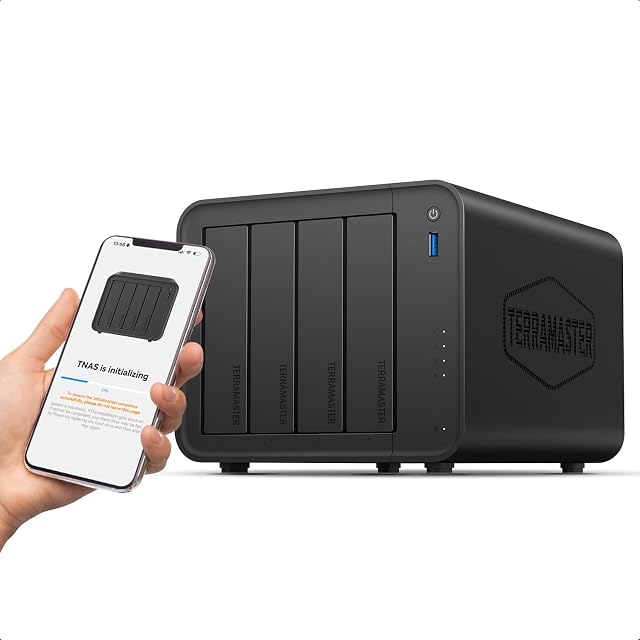
  3. TERRAMASTER F4-425, four-bay enclosure with a stated 22 dB(A) and a named array scheme

    four bays · Intel x86 quad-core · 4 GB memory · one 2.5GbE socket · TRAID named · 22 dB(A) · 30 TB per bay, 120 TB in total

    A four-bay enclosure that publishes an acoustic figure, a per-bay ceiling and the name of its array scheme, and that never says what size of drive its four bays take.

    Best for: A media collection that has outgrown a two-bay unit and lives in a room where people sleep, bought by someone who will confirm the drive sizes separately.

    ≈ 345 €

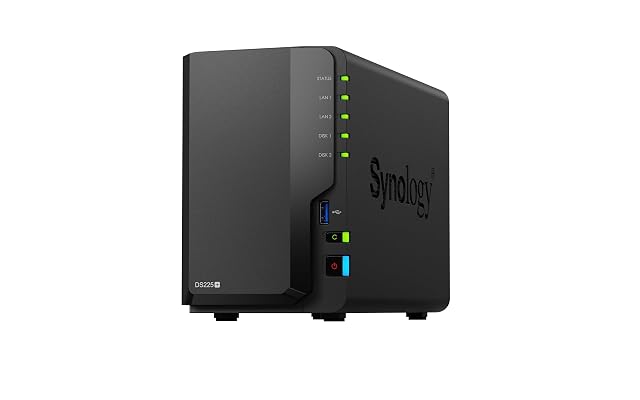
  4. Synology DS225+, two-bay enclosure whose two sockets are given two different speeds

    two bays · Intel Celeron J4125, four cores at 2.0 GHz · 2 GB DDR4 to 6 GB · two RJ-45 sockets · port speed published two ways · compatibility list required

    A two-bay enclosure that publishes its processor, its memory ceiling and the exact module that raises it, and whose title and fifth bullet disagree about how fast its two network sockets are.

    Best for: A household or small office replacing an older two-bay unit, where the applications matter more than the price and where a compatibility list is not an obstacle.

    ≈ $428 / £350 / 367 €

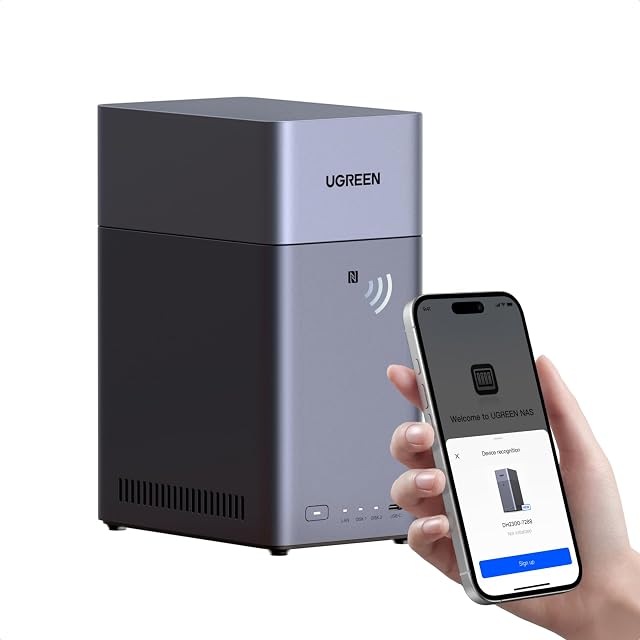
  5. UGREEN NASync DH2300, two-bay enclosure sold on what it replaces

    two bays · sold without drives · NFC pairing named · HDMI output with 4K · no processor, no memory, no Ethernet socket published

    A two-bay enclosure whose page publishes a bay count, a television output and an arithmetic of cloud subscription savings, and not one figure about the machine itself.

    Best for: A household that wants its photographs off a subscription and onto its own hardware, and that is willing to ask the seller for the specification the page leaves out.

    ≈ 199 €

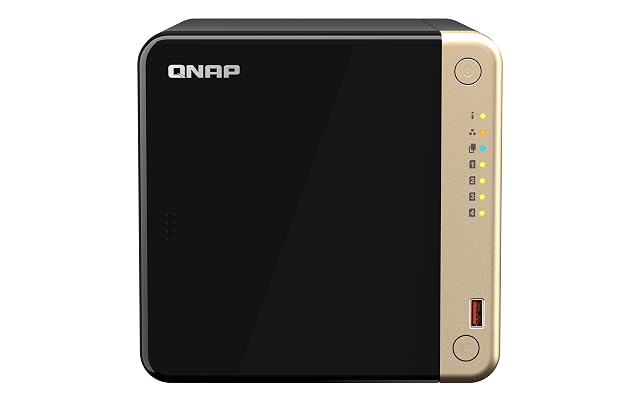
  6. QNAP TS-464, four-bay enclosure sold behind a title in the wrong language

    four bays · 8 gb of memory · four bullets that describe no product · title in Spanish on a German shop · reference printed short of the product record

    A four-bay enclosure whose page carries a bay count, a memory figure and four bullets that would fit any object at all, printed in a language the shop does not use.

    Best for: A buyer who already knows this model from elsewhere and is here only for the price, since the page itself will not tell them what they are buying.

    ≈ $840 / £677 / 719 €

Every price named in a summary was read on the date that review carries. What a shop asks today is shown beside the product, and it moves.