Form factor, interface and rotational speed before the capacity
The best internal hard drives for 2026
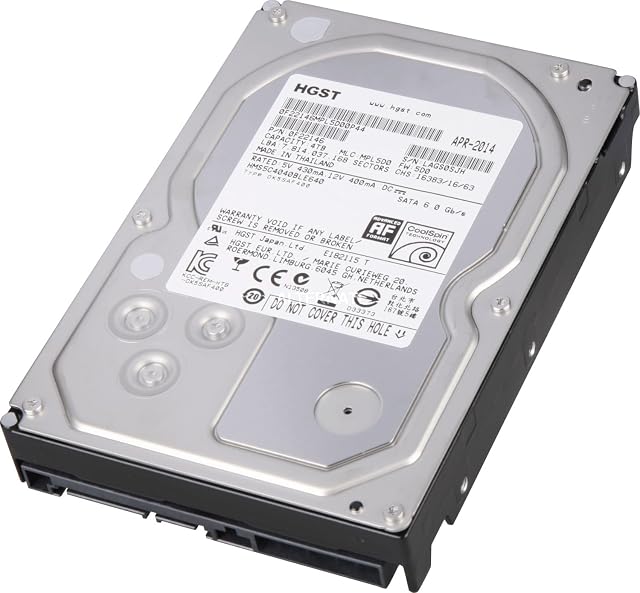
A spinning drive inside a desktop is now bought for bulk rather than for speed, and the specification reflects that. Form factor comes first: 3.5-inch drives take the large capacities and want a bay and a power lead, while 2.5-inch drives fit a laptop or a small case and stop well short of the same ceiling. The interface is SATA in nearly every case, on the same connector motherboards have carried for years. Then capacity, and here the arithmetic deserves its own sentence: makers count a terabyte as a thousand billion bytes, while many operating systems display the same drive in units of 1024, so a drive labelled with one figure shows a smaller one on screen. Nothing has gone missing; they are two units for one count of bytes, and this site publishes the figure the maker publishes, in the unit the maker uses. Rotational speed divides the shelf into drives that spin faster and reach data sooner, and drives that spin slower, run cooler and draw less. Cache size smooths bursts of writing. What the drive is specified for appears as a workload rating in terabytes per year and as an MTBF figure in hours, and neither is a promised life; the warranty is a third, separate term with its own conditions. Read also the height in millimetres if the destination is a laptop bay, and the stated acoustic figure, because a drive in a quiet room is heard whenever it seeks. We compare capacity, form factor and height, interface, rotational speed, cache size, stated workload rating, warranty length, stated MTBF, stated acoustic figure and stated idle power.