Skip to content

The best PCIe network cards for 2026

A network card is bought for one of two reasons: the socket on the motherboard is too slow, or the machine never had one. Either way the decision is made at the slot before it is made at the port. A card states a PCIe generation and a lane count — PCIe 3.0 ×4, PCIe 4.0 ×8 — and both a physical fit and an electrical one have to work out: a ×4 card sits happily in a ×8 or ×16 connector, but a connector wired for fewer lanes than the card expects limits what the card can carry. The board's own published slot table is the reference, and no photograph of the connectors shows the difference. The port side is a standard again: 1000BASE-T, 2.5GBASE-T, 10GBASE-T over copper, or an SFP+ cage for a module. Copper ten-gigabit cards run warm, most carry a heatsink, some carry a small fan, and in a quiet machine that is audible. The controller deserves naming because driver support follows the chip rather than the brand on the box, and operating systems differ in what they include without help. Then the details that decide an installation: whether a low-profile bracket is in the package for a small case, how many ports the card carries, and whether features such as Wake-on-LAN, VLAN tagging or SR-IOV are published. We compare PCIe generation and lane count, port speed standard, port count, controller family, bracket heights supplied, cooling arrangement and stated operating system support.
The ones worth installing

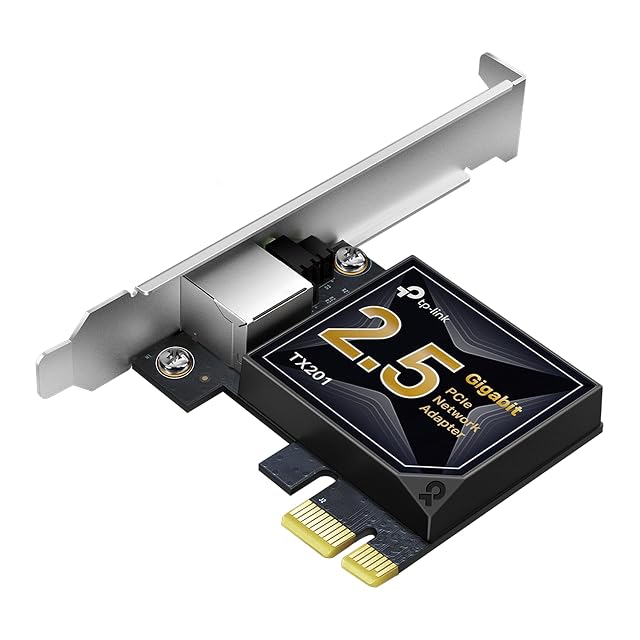
  1. TP-Link TX201, single-port 2.5-gigabit PCIe card with both brackets

    one 2.5GBASE-T socket · 2.5G / 1G / 100M · no PCIe generation printed · no lane count printed · two brackets · Wake-on-LAN and QoS named

    A single-socket 2.5-gigabit card that names its Ethernet standard, its brackets and its operating systems, and never says which PCIe generation or how many lanes it wants.

    Best for: A desktop machine whose motherboard socket has been outgrown, where the case may be a small one and where the buyer already knows what the free slot is wired for.

    ≈ £22 / 18 €

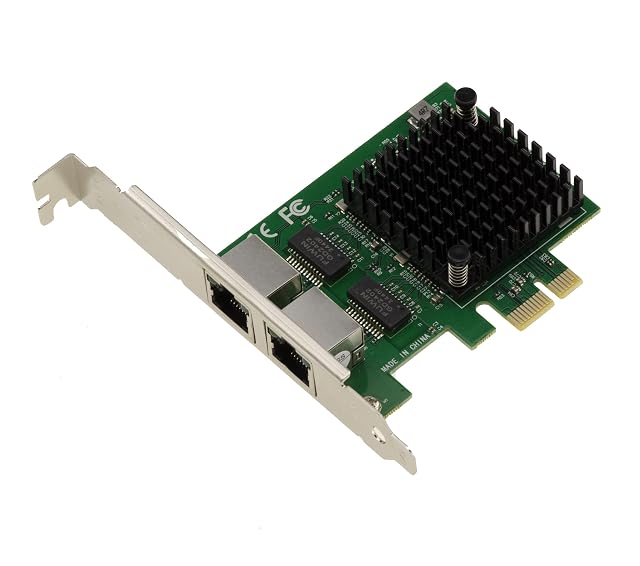
  2. KALEA-INFORMATIQUE 11888237, dual-port 2.5-gigabit card on PCIe 3.1 ×1 with two Intel I226 controllers

    two RJ45 sockets · 2500/1000/100/10 BASE-T · PCIe 3.1 ×1 · dual Intel I226 SRKTU with an ASM bridge · high and low brackets · jumbo frames to 9.5 KB

    The only card on this shelf that publishes a PCIe generation and a lane count, and it puts two 2.5-gigabit sockets behind a single lane and says so.

    Best for: A small server or a workshop machine that needs two separate 2.5-gigabit sockets from one slot, where the ×1 requirement is a fit rather than a compromise.

    ≈ £52 / 50 €

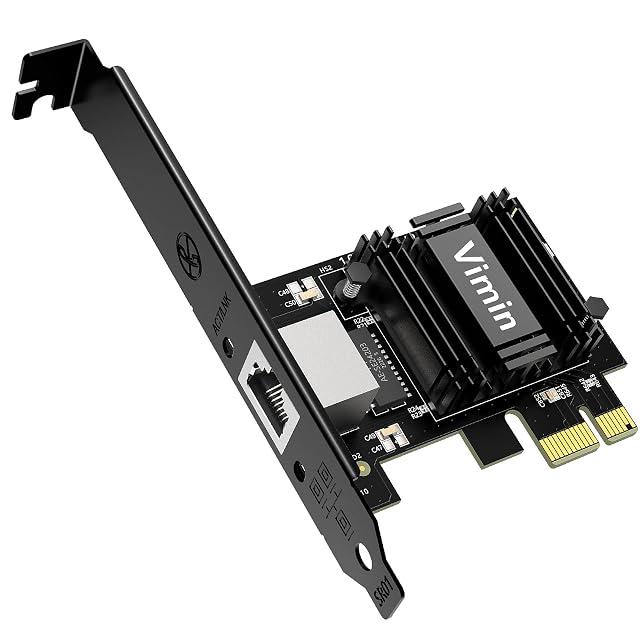
  3. VIMIN 2.5G Base-T PCIe card built on a Realtek RTL8125B

    2500/1000/100 Mbit/s · Realtek RTL8125B named · fits ×1, ×4, ×8 and ×16 connectors · two brackets · port count printed both ways

    A 2.5-gigabit card that names its controller and lists every connector it fits, and whose own page counts its Ethernet socket once in the singular and once in the plural.

    Best for: A machine where the driver situation has to be settled in advance, since the controller is named and its support can be checked before anything is ordered.

    ≈ $20 / £16 / 18 €

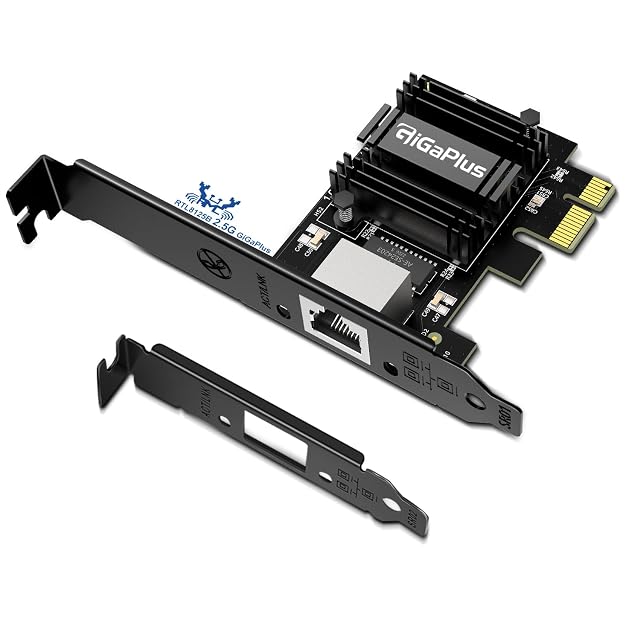
  4. GigaPlus 2.5-gigabit PCIe card on a Realtek RTL8125B, brackets both ways

    2500 Mbps · Realtek RTL8125B · one RJ45 socket · fits ×1, ×4, ×8 and 16 · two brackets · driverless on Windows 10 · heat dissipation named without a part

    A single-socket 2.5-gigabit card that names its controller, counts its socket once, and describes its cooling as excellent without naming a heatsink or a fan.

    Best for: A build where the driver has to be sorted out on a system that is not Windows 10, and where knowing the exact chip beforehand is worth more than a brand name.

    ≈ $20 / £20 / 20 €

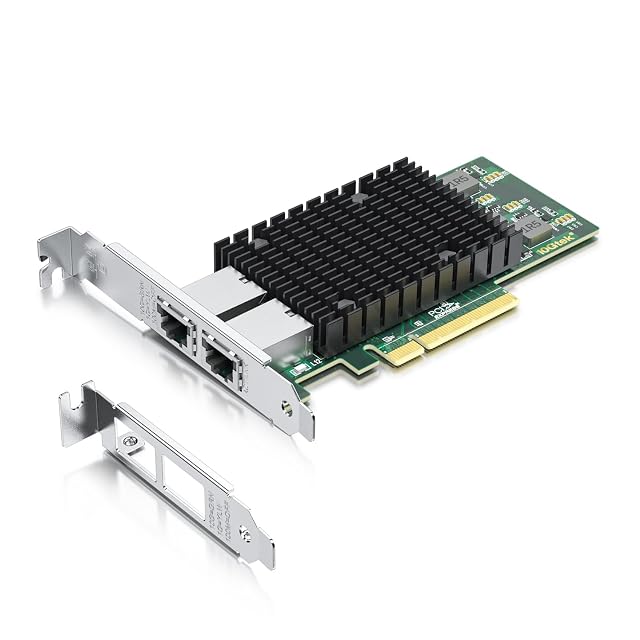
  5. 10Gtek X540-T2, dual-port ten-gigabit copper card on PCIe 2.1 ×8

    two RJ45 sockets · 10GBASE-T copper · 100M / 1G / 10G, no 2.5G or 5G · PCIe 2.1 ×8 · Intel X540 · Cat 6A to 100 m, Cat 6 to 55 m

    A dual-socket ten-gigabit copper card that publishes its slot, its cable grades and its distances, and states in as many words the two intermediate rates it does not support.

    Best for: A server or a workstation with a real ×8 connector and copper runs already in the walls, where ten gigabits are the point and the intermediate rates are not needed.

    ≈ £49 / 53 €

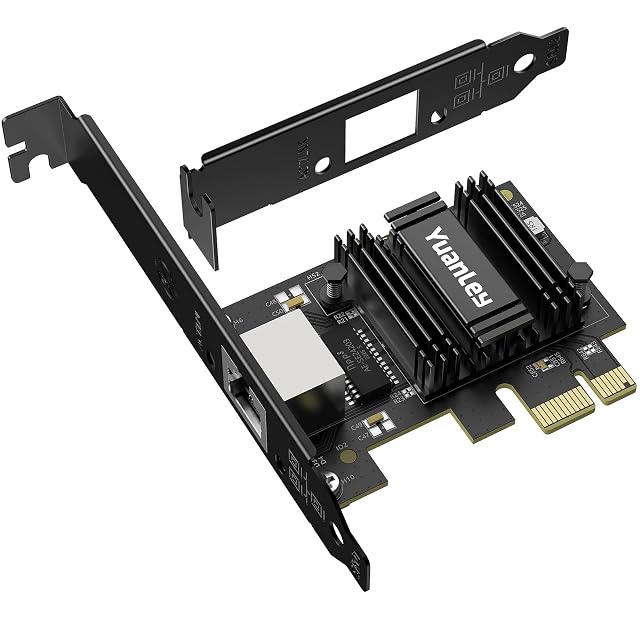
  6. YuanLey 2.5-gigabit PCI Express card with a heatsink and three network features named

    2500 Mbps · Realtek RTL8125B · integrated heatsink stated · fits ×1, ×4, ×8, ×16 · Wake-on-LAN, PXE boot and VLAN tagging · brackets counted twice

    A 2.5-gigabit card that states a heatsink rather than an adjective and names three network features by name, on a page whose title counts one bracket and whose bullets count two.

    Best for: A machine that starts from the network, or one where VLAN tags have to be set on the card itself, in a case where a warm card is better off with a heatsink on it.

    ≈ $20 / £18 / 18 €

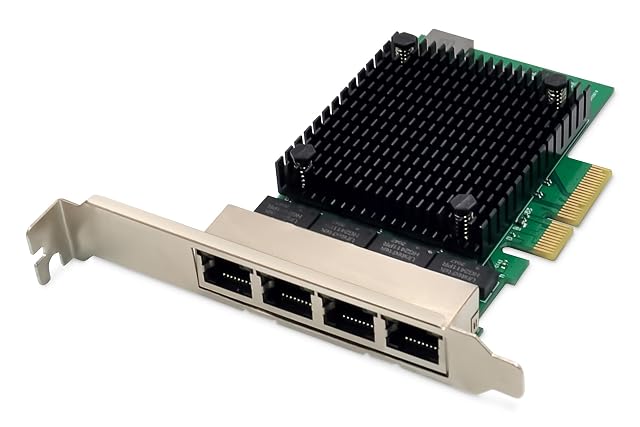
  7. DIGITUS DN-10136, four-port 2.5-gigabit server card with two lane figures on one page

    four RJ45 sockets · 2.5G base-T with 10M BASE-Te and 100/1000M · bus width stated up to 10 Gbps · two lanes in one bullet, ×4 in the next · no controller named

    A four-socket 2.5-gigabit card whose page publishes a bus width and then gives its lane count two different values in consecutive bullets.

    Best for: A router, firewall or small server build where four separate 2.5-gigabit sockets are the reason for the slot, and where the driver situation can be checked on the hardware itself.

    ≈ $92 / £91 / 70 €

Every price named in a summary was read on the date that review carries. What a shop asks today is shown beside the product, and it moves.