Skip to content

The best mesh routers for 2026

A mesh system is sold as a covered area, and that figure is the least standardised number on the box: it comes from the maker's own assumptions about walls, ceilings and furniture, and no two makers assume the same building. The rest can be read plainly. The class figure — the four or five digits printed after AX or BE — is the arithmetic sum of the theoretical peak rates of every radio in the unit, a quantity defined by the standard rather than obtained from a link. No single client ever sees it, and adding the bands together is exactly what makes it large. Underneath sits the Wi-Fi generation, published as both a marketing name and an IEEE designation such as 802.11ax or 802.11be, and the band plan: dual-band systems share one 5 GHz radio between clients and the link that carries traffic back towards the router, while tri-band systems keep a radio aside for it. That link, the backhaul, is the single thing that separates two systems quoting the same class figure, and every mesh worth the name also accepts a wired backhaul over Ethernet. Then the countable parts: how many nodes are in the pack, whether they are identical or a router plus satellites, the Ethernet ports on each node and their speed — 1000BASE-T or 2.5GBASE-T — and whether the WAN socket differs from the LAN ones. We compare Wi-Fi generation and IEEE designation, stated class figure, band plan and backhaul type, node count and pack composition, stated coverage area, Ethernet port count, port speed and whether the WAN socket is separate.
The ones worth installing

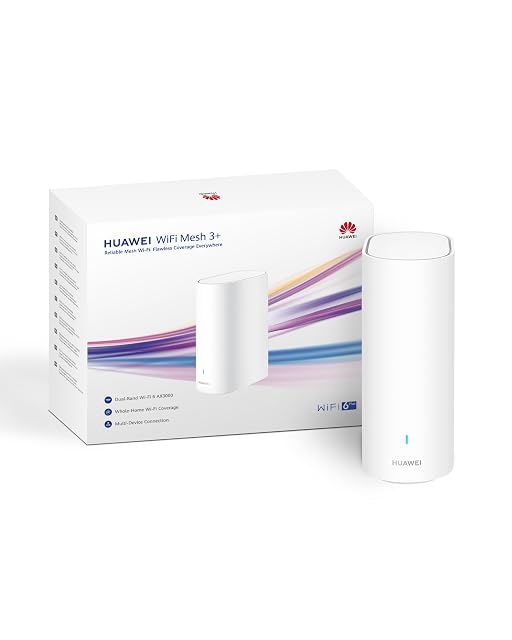
  1. HUAWEI WiFi Mesh 3+, dual-band Wi-Fi 6 node sold singly

    Wi-Fi 6 · AX3000 class figure · dual-band · one node · coverage quoted in rooms · no wired socket counted

    A single Wi-Fi 6 mesh node that quotes its coverage in rooms rather than in square metres, and never counts a wired socket anywhere on the page.

    Best for: A flat of two or three rooms where a second and a third node may follow later, and where nothing at the far end needs a cable.

    ≈ 43 €

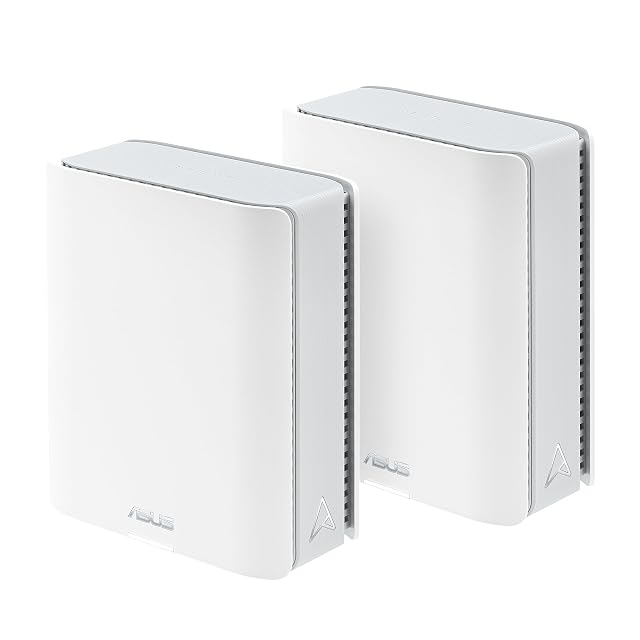
  2. ASUS ZenWiFi BT8, two-node tri-band Wi-Fi 7 set

    Wi-Fi 7 · up to 14 Gbit/s stated · tri-band with 6 GHz · two nodes · 550 m² · seven internal antennas · no socket published

    A two-node Wi-Fi 7 set that counts its antennas and its front-end modules and never counts an Ethernet socket.

    Best for: A large home with Wi-Fi 7 clients and a wish for separate IoT and guest networks, where the wired side is handled by a switch elsewhere.

    ≈ £420 / 397 €

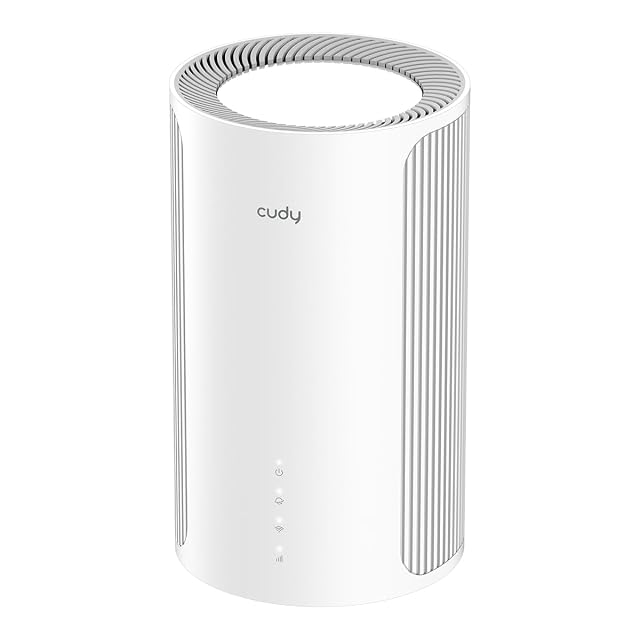
  3. Cudy M11000, BE11000 tri-band Wi-Fi 7 node sold singly

    Wi-Fi 7 · BE11000 badge over 10 777 Mbit/s published · dedicated 6 GHz backhaul · four 2.5G sockets, one WAN · 110 m² stated

    The most completely specified unit in this group: three band rates, a named backhaul, four multi-gigabit sockets — and a badge 223 Mbit/s larger than the figures printed beneath it.

    Best for: A household on a multi-gigabit line that wants every socket faster than a gigabit and a 6 GHz lane kept clear between nodes.

    ≈ $150 / £150 / 144 €

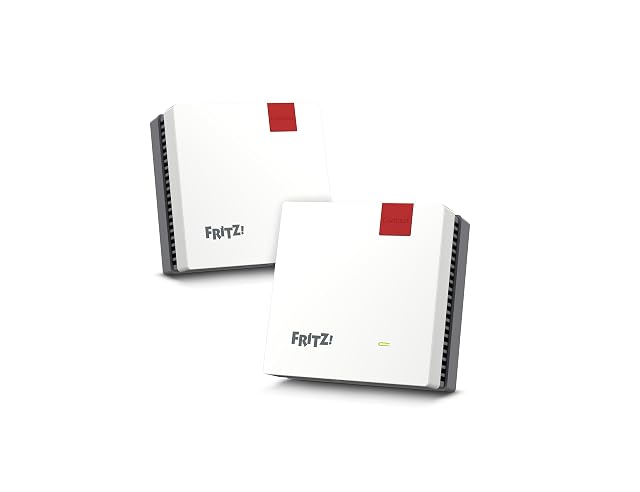
  4. FRITZ! Mesh Set 1600, two-piece Wi-Fi 6 mesh set

    Wi-Fi 6 · up to 3000 Mbit/s stated · two units · seven of eleven lines unpublished · made in Europe

    A two-piece set from a well-known European maker whose listing runs on four bullets: a generation, a figure, an installation promise and a sentence about security.

    Best for: A buyer who already trusts the maker and wants a mesh pair that will sit behind an existing provider box without an argument.

    ≈ 155 €

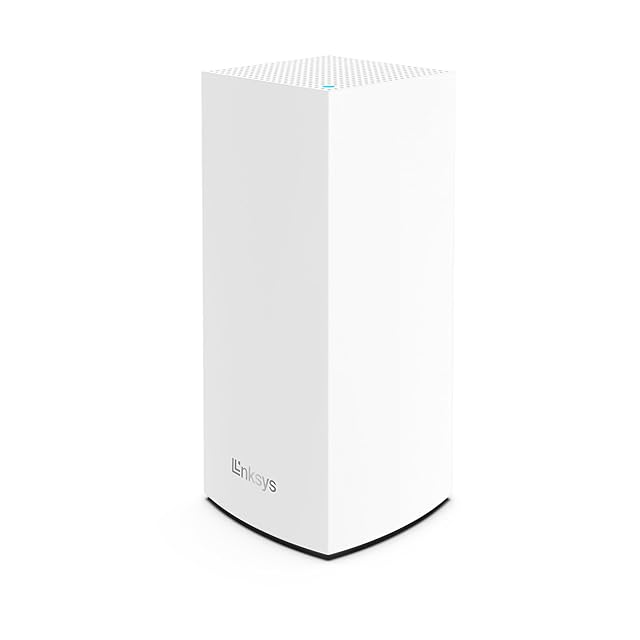
  5. Linksys Velop MX4200, tri-band Wi-Fi 6 node sold singly

    Wi-Fi 6 · AX4200 badge, 4.2 Gbit/s stated · tri-band · one node · 260 m² and 40 devices · no socket published

    A tri-band node quoting an area, a device count and a 4.2 Gbit/s badge, and describing itself as 3.5 times faster without ever saying faster than what.

    Best for: A home office of up to 260 m² and around forty devices, bought as a single node with more to follow.

    ≈ 84 €

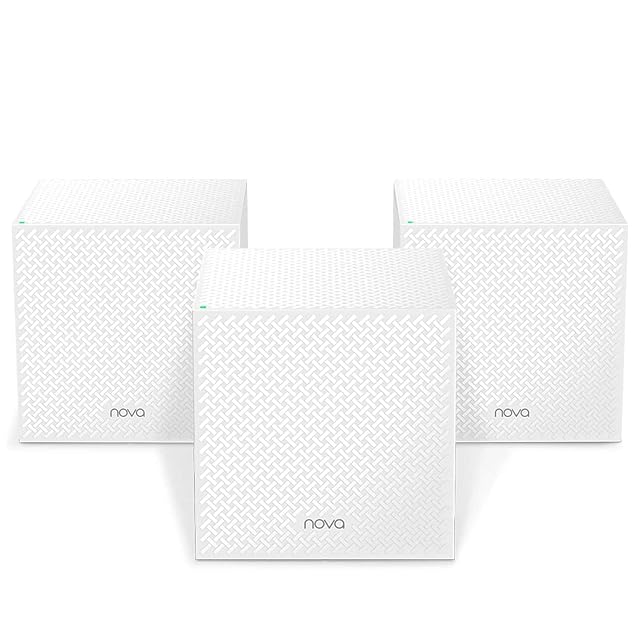
  6. Tenda Nova MW12, three-node tri-band mesh system

    AC2100 class figure · tri-band · three nodes · 600 m² stated · nine Gigabit sockets across the pack · no generation named

    A three-node tri-band system that publishes an area, a device ceiling and a socket count, and never names the Wi-Fi generation its class figure belongs to.

    Best for: A house of three or four bedrooms wanting three units and a wired socket in each room, where the generation of the radios matters less than the area covered.

    ≈ 85 €

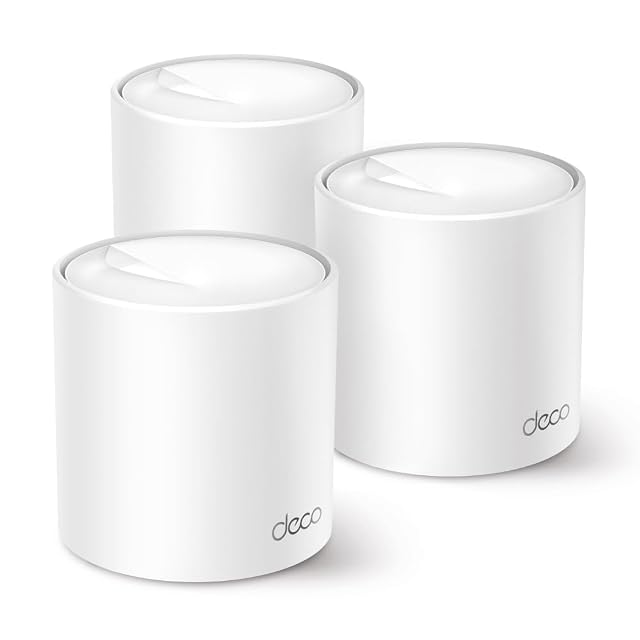
  7. TP-Link Deco X50, three-node dual-band Wi-Fi 6 set

    Wi-Fi 6 · AX3000 badge over 2976 Mbit/s published · dual-band · three nodes · 604 m² · three Gigabit sockets per unit

    A three-node set that publishes both band rates and three sockets on every unit, and rounds a published 2976 Mbit/s up to an AX3000 badge.

    Best for: A house of four to six bedrooms where each unit can offer a wired socket or two, and where a cable between units is not available.

    ≈ £229 / 183 €

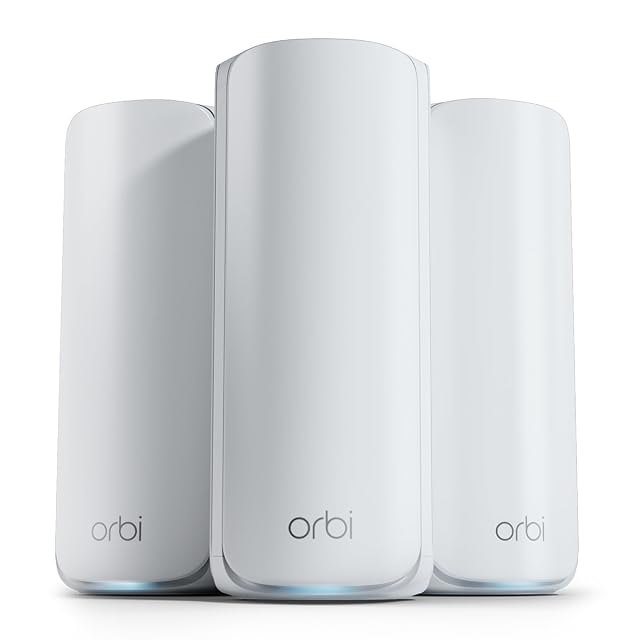
  8. NETGEAR Orbi 770 Series, router and two satellites, Wi-Fi 7

    Wi-Fi 7 · up to 11 Gbit/s stated · tri-band with Enhanced Backhaul · router plus two satellites · 540 m², qualified by the maker

    A three-piece Wi-Fi 7 system whose listing does something rare: it states the coverage figure and then names the three things that change it.

    Best for: A multi-storey house of around 540 m² on a fast line, where a router and two satellites are wanted out of one box.

    ≈ £590 / 697 €

Every price named in a summary was read on the date that review carries. What a shop asks today is shown beside the product, and it moves.