Skip to content

The best Wi-Fi repeaters for 2026

A repeater listens to an existing network and speaks it again further along, and the arithmetic behind that is what buyers are rarely told. A single-band repeater receives and retransmits on the same radio, so the airtime is used twice and what leaves is a fraction of what arrived. A dual-band or tri-band repeater keeps one band for the link back towards the router and another for its own clients, which is the entire reason the dearer models exist. The class figure on the box adds the theoretical peaks of those radios together, exactly as on a router, and describes no link at all. Read instead the band plan, the stream count and the Wi-Fi generation, and remember that a repeater cannot use a generation the router does not speak. Physical form divides the shelf in two: plug-in units occupy a socket and sometimes pass it through, desktop units want a flex and an outlet. Nearly all carry an Ethernet port, and its speed matters twice over — as a wired outlet for a television at the far end, and because many models can instead be wired back to the router and run as an access point, which removes the halving altogether. Look also at whether the unit adopts the network name of the router or raises a second one, and for a signal indicator that says where to plug it in. We compare Wi-Fi generation and IEEE designation, stated class figure, band plan and stream count, plug-in or desktop form, Ethernet port count and speed, and access point mode.
The ones worth installing

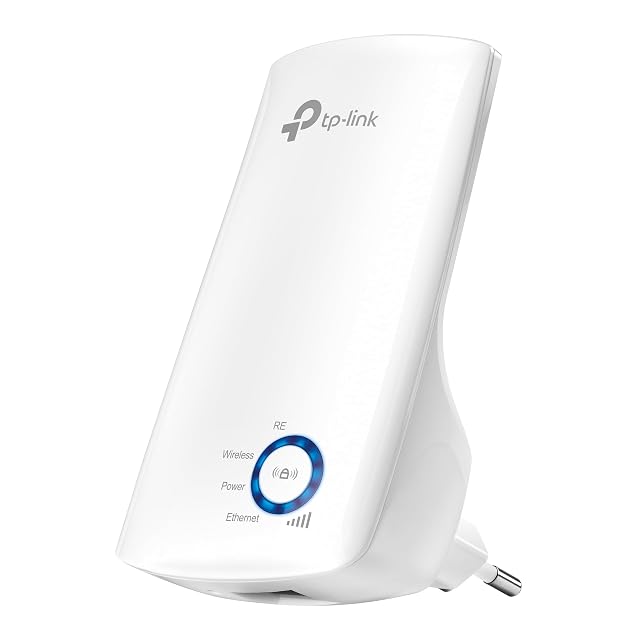
  1. TP-Link TL-WA850RE, single-rate repeater with one LAN socket

    300 Mbit/s stated · 802.11b/g/n compatibility named · one LAN socket, speed unpublished · signal LEDs that switch off · German interface

    A long-standing repeater that names the standards it works with, publishes one rate, and never says what frequency that rate belongs to.

    Best for: A single stubborn corner served by an older router, where one wired socket for a television is wanted and speed is not the point.

    ≈ 15 €

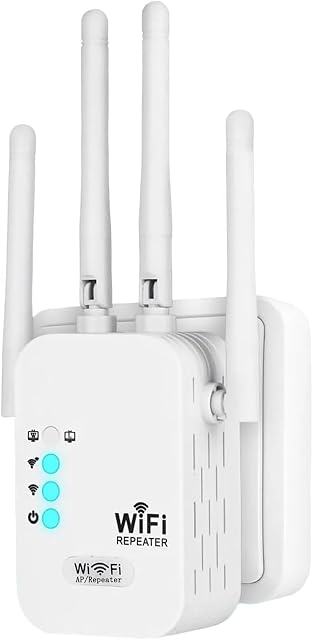
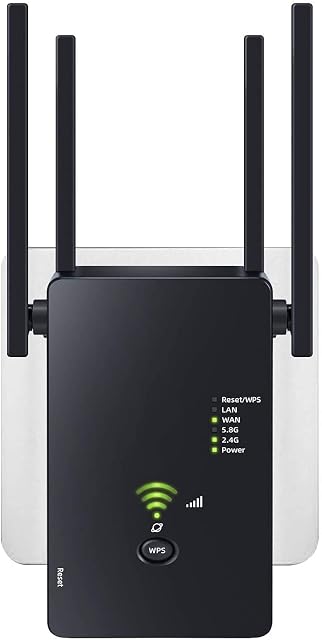
  2. Bfhdbdt dual-band repeater with three modes and four antennas

    1200 Mbit/s badge, and 900 plus 300 published · four antennas · repeater, router and AP modes · 15 devices · no Ethernet socket anywhere

    A dual-band repeater whose two published rates add up to its badge exactly, and which offers a router mode without naming an Ethernet socket anywhere on the page.

    Best for: A wireless-only extension where nothing needs a cable and the badge arithmetic matters more than the brand.

    ≈ 25 €

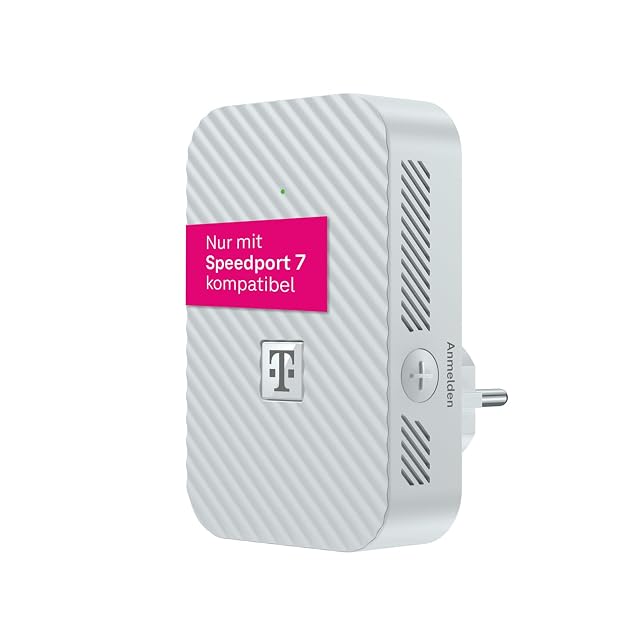
  3. Deutsche Telekom Speedport 7 Repeater, Wi-Fi 7 unit tied to one router

    Wi-Fi 7 capable · 6400 Mbit/s stated · one LAN socket at 1 Gbit/s · mesh with up to four more units · works only with a Speedport 7

    A Wi-Fi 7 repeater carrying the largest figure in this family and the narrowest condition: it works with one router model and no other.

    Best for: A household already running a Speedport 7 that wants a matching mesh node rather than a general-purpose repeater.

    ≈ 80 €

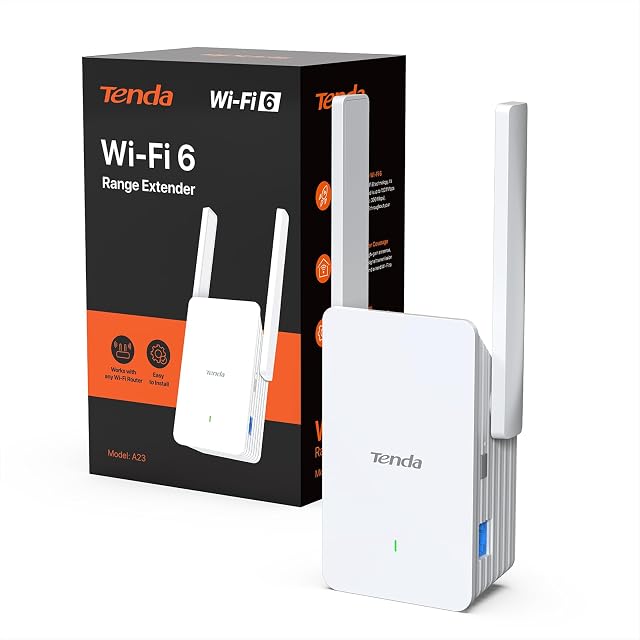
  4. Tenda A23, Wi-Fi 6 AX1500 plug-in repeater with a Gigabit socket

    Wi-Fi 6 · AX1500 over 1501 published · plug-in, stated · one Gigabit socket · repeater or access point mode · no mesh, stated

    A plug-in Wi-Fi 6 repeater that states its socket, its form and its two modes — and closes with a bullet saying a repeater extends coverage rather than speed.

    Best for: A flat or medium-sized house wanting one plug-in unit with a wired socket for a television, and a maker prepared to say what a repeater cannot do.

    ≈ 37 €

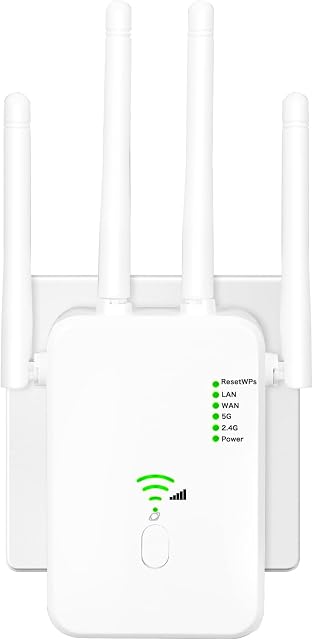
  5. TVVNHA TVV9, dual-band repeater with three modes and four rotating antennas

    1200 Mbit/s badge over 1167 published · 867 at 5 GHz, 300 at 2.4 GHz · 4 × 3 dBi rotating · repeater, AP and router · 35 devices

    A dual-band repeater rated 867 Mbit/s on its 5 GHz radio, offering three modes and four rotating antennas, whose Ethernet socket is singular in the title and plural in a bullet.

    Best for: A house needing a second network point with a wired socket, where the antennas can be aimed at a particular room.

    ≈ 18 €

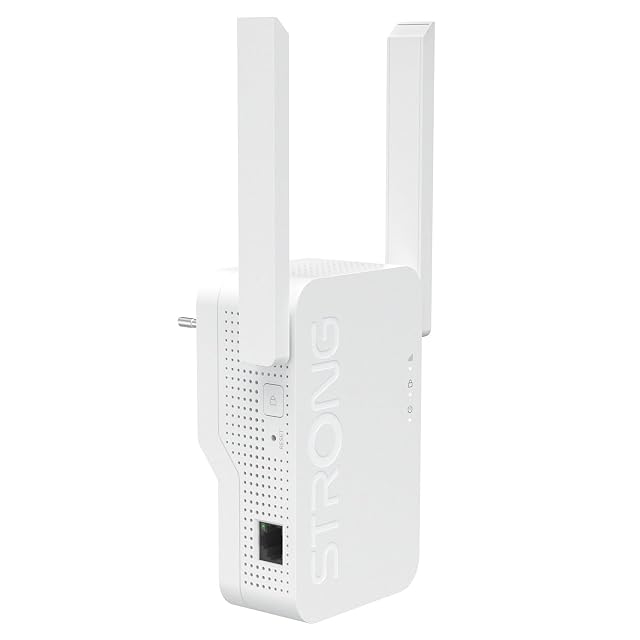
  6. STRONG AX3000 Wi-Fi 6 dual-band repeater with two adjustable antennas

    Wi-Fi 6 · AX3000 over 2976 published · two 5 dBi adjustable antennas · repeater and access point · no Ethernet socket named

    A Wi-Fi 6 repeater whose title turns a class name into a rate — AX3000 Mbit/s — and which offers an access point mode without naming a socket.

    Best for: A wireless extension for Wi-Fi 6 clients where the antennas can be aimed and nothing at the far end needs a cable.

  7. Tesref wall-mounted dual-band repeater with three modes

    1200 Mbit/s badge, 900 plus 300 published · wall-mounted body stated · Ethernet ports named, not counted · repeater, router, AP and client · 15 devices

    The only unbranded repeater here to describe its own body — wall-mounted — and to name a client mode alongside the usual three.

    Best for: A wall position between a router and a dead corner, where a wired socket at the far end is wanted and the exact count can be confirmed on arrival.

    ≈ 30 €

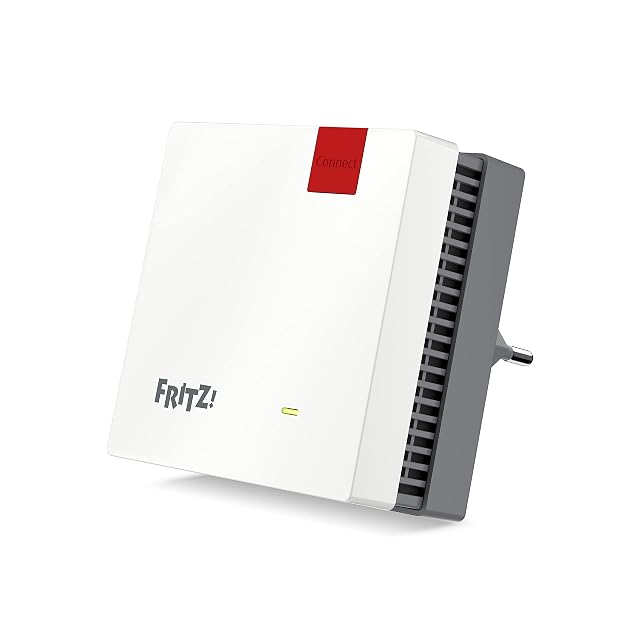
  8. FRITZ FRITZ!Repeater 1200 AX, Wi-Fi 6 mesh repeater with a Gigabit socket

    Wi-Fi 6 · 3000 Mbit/s stated, exactly 2400 plus 600 · cross-band repeating · 160 MHz channels · one Gigabit socket · mesh

    A Wi-Fi 6 repeater whose headline figure is exactly the sum of its two published band rates, and whose product name carries a number the page never explains.

    Best for: A household already running the maker’s own router that wants a mesh node with a Gigabit socket and no ambiguity about the arithmetic.

    ≈ 83 €

Every price named in a summary was read on the date that review carries. What a shop asks today is shown beside the product, and it moves.