Skip to content

Samsung T7 1 TB, two leads, a drop height and seven footnote marks vs SanDisk Extreme Portable 1 TB, an ingress code and no interface generation

Two cables and a stated generation, or an ingress rating and a warranty term?

These two publish identical rates — 1050 MB/s reading, 1000 writing — and differ in what surrounds them. The Samsung T7 names USB 3.2 Gen 2 in full, counts two leads in the box, and states drop resistance from up to 2 m; it also carries seven footnote marks whose notes never appear. The SanDisk Extreme Portable states IP65 and five years, and never names a USB generation at all.

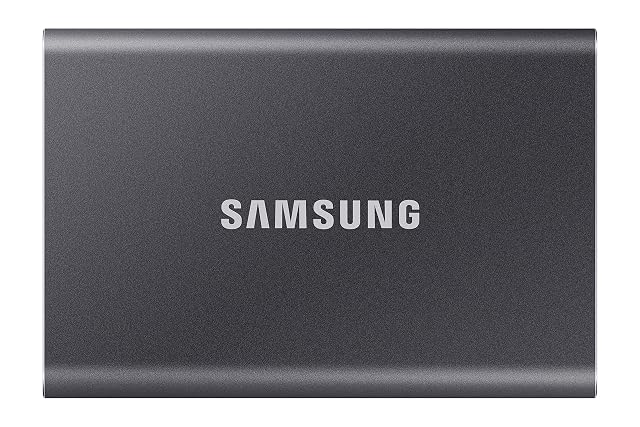
Samsung Portable SSD T7 1 TB in a grey aluminium case with two USB leads

Samsung T7 1 TB, two leads, a drop height and seven footnote marks

Wins 4 of 13

Check price

≈ £170 / 160 €

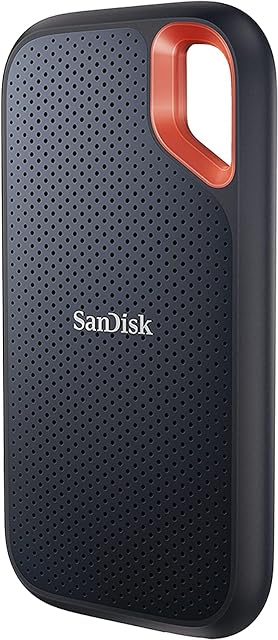
SanDisk Extreme Portable SSD 1 TB with a carabiner loop and a USB-C socket

SanDisk Extreme Portable 1 TB, an ingress code and no interface generation

Wins 3 of 13

Check price

≈ $220 / £160 / 159 €

Line by line

Compared on T7 1 TB, two leads, a drop height and seven footnote marks Extreme Portable 1 TB, an ingress code and no interface generation
Capacity 1 TB, in the maker’s unit; up to 4 TB is named across the range under a footnote mark whose note does not appear 1 TB, in the maker’s unit, repeated in the box list
Interface standard USB 3.2 Gen 2, given in full rather than left at the family Not published — the title names a connector shape, not a standard; calling the drive NVMe describes the mechanism inside rather than the link to the computer
Stated link rate Not published as a figure in gigabits per second — rates are quoted in megabytes per second and the generation is named Not published — two figures in megabytes per second and none in gigabits
Connector type Not published as a socket on the drive — two leads are counted and neither says which end meets the drive The symmetrical connector, in the title and named again for telephones carrying the same shape
Stated sequential read figure Up to 1050 MB/s, under a footnote mark whose note does not appear Up to 1050 MB/s, printed three times
Stated sequential write figure Up to 1000 MB/s, fifty below the reading figure Up to 1000 MB/s, fifty below the reading figure
Stated ingress or drop rating Drop resistance from up to 2 m, under a footnote mark whose note does not appear; no ingress code IP65, with resistance to shock, vibration and water claimed; no drop height
Dimensions Not published — the case is called compact and robust with no measurement Not published — the box list calls it a 2.5-inch external drive, a format for a different kind of product, and no figure in millimetres appears
Weight Not published Not published, on a drive described hanging from a belt loop or a rucksack strap
Cable supplied Two leads — one between two symmetrical connectors, one ending in the older rectangular plug; no length stated Not published — the box list names the drive and the warranty and counts no lead
TBW rating Not published Not published
Stated MTBF Not published Not published
Warranty length Not published, on a page that does state that a management application keeps the drive updated Five years

A tick means one listing published something the other did not, or published a better figure. It does not mean the product is better, and the column is not a score out of anything: a maker who says less loses lines here without losing a comparison. The two verdicts below are where the page is settled.

Which one, for whom

Buy the Samsung T7 1 TB, two leads, a drop height and seven footnote marks

The T7 is the drive that will plug into whatever is on the desk: two leads in the box, one for a modern symmetrical socket and one for the older rectangular plug, and a generation stated in full so the rate is knowable before it arrives. It is also the page with seven footnote marks and no footnotes — including on the drop height and on both speed figures. Take the 2 m as printed and read nothing more into it.

Buy the SanDisk Extreme Portable 1 TB, an ingress code and no interface generation

The Extreme Portable states the two things the Samsung page omits: IP65, which is an ingress code covering dust and water jets, and five years of cover. Against that, it never names a USB generation — a connector shape is not a standard — and it counts no cable at all, on a drive whose own bullets describe plugging it into a telephone. Same speeds on paper, a very different set of things you know before ordering.

The questions that come up before an order

IP65 or a 2 m drop rating — which is the more useful claim?

They cover different accidents. IP65 is about dust and water jets; a drop height is about impact. Neither drive publishes both, so the choice is between a drive rated for the weather and one rated for the floor. Both figures are the makers’ own, printed on their own pages, and neither is a test result from this site.

What is missing when a page names USB-C but no generation?

The speed. USB-C is the shape of the plug; the generation is what runs through it, and the gap between generations of the same family is large. The SanDisk page quotes rates in megabytes per second and never names the standard behind them, so a buyer cannot check the drive against the socket on their own machine. The Samsung page names USB 3.2 Gen 2, which settles it.

The full reviews

  • Samsung T7 1 TB, two leads, a drop height and seven footnote marks

    1 TB · USB 3.2 Gen 2 · up to 1050 MB/s read · up to 1000 MB/s write · drop resistance to 2 m · aluminium case · two leads in the box · encryption at 256 bits · no TBW, no MTBF, no warranty

    A one-terabyte portable drive that publishes both sequential figures, a drop height, an aluminium case and two supplied leads, and that carries seven footnote marks whose notes appear nowhere on the page.

    Best for: A laptop that travels, where a stated generation, two leads and a published drop height matter and the drive will be carried loose.

    ≈ £170 / 160 €

  • SanDisk Extreme Portable 1 TB, an ingress code and no interface generation

    1 TB · USB-C named as a shape, no generation published · up to 1050 MB/s read · up to 1000 MB/s write · IP65 · five-year warranty · no lead counted · no TBW, no MTBF

    A one-terabyte portable drive that publishes an ingress code, both sequential figures and a five-year term, and that never names the interface generation the socket has to meet.

    Best for: Photographs and video taken outdoors, where a published ingress code and a long term matter and the buyer already owns the right lead.

    ≈ $220 / £160 / 159 €

Every price named in a summary was read on the date that review carries. What a shop asks today is shown beside the product, and it moves.