Skip to content

TP-Link TX201, single-port 2.5-gigabit PCIe card with both brackets vs DIGITUS DN-10136, four-port 2.5-gigabit server card with two lane figures on one page

One socket you can be sure will work, or four on a page that never names a driver?

These two are at opposite ends of the same shelf. The TP-Link TX201 has one 2.5-gigabit socket, ships both bracket heights and lists the operating systems it supports — twice, and not identically. The DIGITUS DN-10136 has four sockets, the highest count here, and names not one operating system, no bracket and no controller, while printing two different lane figures on the same page.

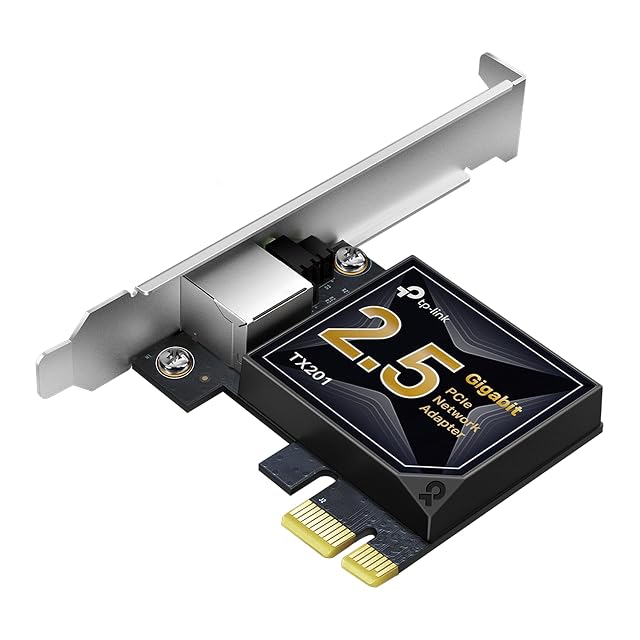
TP-Link TX201 PCIe network card with a single RJ45 socket and a full-height bracket

TP-Link TX201, single-port 2.5-gigabit PCIe card with both brackets

Wins 2 of 8

Check price

≈ £22 / 18 €

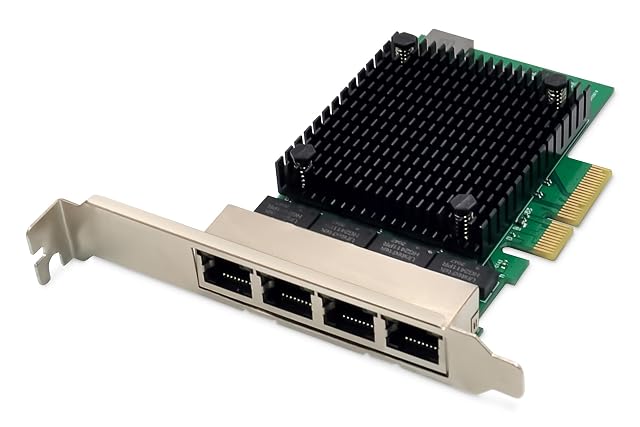
DIGITUS DN-10136 four-port 2.5 Gigabit Ethernet PCIe server network card

DIGITUS DN-10136, four-port 2.5-gigabit server card with two lane figures on one page

Wins 3 of 8

Check price

≈ $92 / £91 / 70 €

Line by line

Compared on TX201, single-port 2.5-gigabit PCIe card with both brackets DN-10136, four-port 2.5-gigabit server card with two lane figures on one page
PCIe generation Not published — PCIe appears four times and no generation number follows it Not published — no generation number appears; what is given instead is a bus figure, up to 10 Gbps of bus width
Lane count Not published — neither a lane figure nor a list of the connectors the card fits Stated twice and not identically — a two-lane bus connection in the first bullet, ×4 in the second, with nothing deciding between them
Port speed standard 2.5GBASE-T at 2.5 Gbps, backwards compatible to 1 Gbps and 100 Mbps, negotiated automatically 2.5G base-T with 10M BASE-Te and 100/1000M base-T, an integrated transceiver compatible with 802.3, and a 2.5G and 1G Lite mode
Port count One — the socket is spoken of in the singular and no figure is printed Four RJ45 sockets, the highest count on this shelf
Controller family Not published — no chip, maker or part number, on a shelf where three of seven cards put the controller in the title Not published — an integrated transceiver is named and never identified, on a card whose four sockets make the driver question larger rather than smaller
Bracket heights supplied Two — a low-profile bracket in addition to the standard one, with mini-tower cases named as the reason Not published — no bracket, no case size, no contents list
Cooling arrangement Not published — no heatsink, no fan, no word about heat Not published — no heatsink, no fan, no reference to temperature
Stated operating system support Published twice and not identically — the title runs the server list to 2012 and 2008 R2, the sixth bullet stops it at 2016; Windows 11 down to 7 and Linux appear in both Not published — not one operating system is named, which on a card described as a server card is the single largest blank on this shelf

A tick means one listing published something the other did not, or published a better figure. It does not mean the product is better, and the column is not a score out of anything: a maker who says less loses lines here without losing a comparison. The two verdicts below are where the page is settled.

Which one, for whom

Buy the TP-Link TX201, single-port 2.5-gigabit PCIe card with both brackets

The TX201 is one socket and a page that answers the two questions that stop an install: will it physically fit a small case, and will the machine load a driver. Both brackets are in the box, and the operating systems are listed — although the title and the bullets disagree about how far back the server support runs, so read both. It never names its controller or its lane count, which on a single-socket card matters less than it would on four.

Buy the DIGITUS DN-10136, four-port 2.5-gigabit server card with two lane figures on one page

The DN-10136 puts four 2.5-gigabit sockets on one card, which nothing else here does, and then declines to say what drives them. No controller named, no operating system named, no bracket named, and two different lane figures on the same page. For a machine already known to take the card and load it, that is four sockets for the price of one slot. For anything less certain, the page gives nothing to check against.

The questions that come up before an order

Why does an unnamed controller matter?

Because the driver follows the chip, not the brand on the box. A page that names an Intel I226 or a Realtek RTL8125B tells you what your operating system needs to have, and whether it already does. Neither of these two names one, and on the four-socket card that leaves rather more riding on the answer.

Which lane figure is right on the DIGITUS?

The listing does not settle it: one bullet says two lanes and the next says ×4, and both are printed here as published. The practical consequence is what the card needs from the slot, so a machine with a physically short connector is a real risk on a page that contradicts itself about the requirement.

The full reviews

Every price named in a summary was read on the date that review carries. What a shop asks today is shown beside the product, and it moves.