One interface caps every drive on the shelf at the same ceiling · review
SanDisk Ultra 3D 2 TB, five years and a claim of constant performance review
A two-terabyte drive with a five-year term and a named caching technology the page credits with constant performance, and which publishes no figure for writing and no endurance quantity.
The bottom line A long term and a named mechanism, on a page that quantifies one direction and repeats it three times. The claim of constant performance is the most interesting sentence here and the one the page never supports with a figure.
On the listing
A two-terabyte internal solid-state drive in the 2.5-inch format, described as shock resistant with three-dimensional flash and a named caching technology, at transfer rates of 560 MB/s; up to 560 MB/s for faster starting and application loading; greater resilience and reliability, with the flash said to lengthen a laptop’s battery life; a durable design with no moving parts, so a fall does not put data at risk; constant performance credited to the caching technology; and a box containing the drive in the 2.5-inch format at 560 MB/s with a limited five-year warranty, described there as grey where the title describes it as black.
One figure, three times
Five hundred and sixty megabytes per second appears in the title, in the first bullet and in the box list. It is called a transfer rate rather than a reading rate, and no second figure appears anywhere. On this interface, reading and writing rates are usually close and always both published; here the page repeats one number instead of giving two.
Constant performance, and what would prove it
The fourth bullet credits the caching technology with keeping performance constant. That is the most substantive claim on the page. Every drive of this type is quick while its fast region has room and slower afterwards, and caching changes the length of the first phase rather than removing the second. A sustained figure would turn the claim into a specification. None is given, here or anywhere on this shelf.
Black in the title, grey in the box list
The title sells a black drive and the fifth bullet describes a grey one. Both are reported. It is a small thing on an internal drive, which spends its life out of sight, and it is the sort of inconsistency worth noticing on a page whose figures are also stated more than once.
Five years, without a total
Five years is stated plainly, and it is a longer term than most drives on this interface carry. Terms of this sort normally end at a written total as well as at a date, and no total appears. What can be read is the length of the promise; what cannot is the amount of writing that would end it early.
Before ordering
Ask for the writing rate and the written total. The term is a good reason to look at this drive, and both of the figures that would place it against a rival are absent.
Availability
Priced from 277 € to 411 € across the German, French, Italian and Spanish Amazon stores the day this page was checked.
It is stocked on the American and British Amazon stores as well, in that country’s own currency. The range above leaves those out: it counts euro stores and no others.
Every figure in this section is what Keepa held on the day this page was last updated. Stock and prices move without warning.
Prices quoted in this text were read on 10 September 2026. The live price is at the top of the page.
Where it holds up, and where it stops
Strengths
A five-year term is published, which is longer than most terms on this shelf and is the only obligation the page creates
The caching technology is named by its own name, which makes it a thing a buyer can look up rather than an adjective
The memory type is stated in the title, and it is the part of the specification that governs sustained writing
Compromises
One figure is printed three times and it covers only one direction, so writing is never quantified
Constant performance is claimed with no sustained figure behind it, which is precisely the claim a number would settle
Neither a written total nor a population statistic, so the five-year term stands alone
Specifications
Capacity
2 TB — printed in the title and repeated in the box list of the fifth bullet, in the maker’s unit and reported here in that unit
Form factor
2.5-inch — printed in the title and again in the box list, both times beside the description of an internal drive
Height
Not published on the listing — the format is given in inches twice and no thickness in millimetres appears, on a page whose fourth bullet names laptops directly
Stated sequential read figure
Up to 560 MB/s — printed in the title, repeated in the first bullet and again in the box list. It is given there as a transfer rate rather than named as reading
Stated sequential write figure
Not published on the listing — the same figure of 560 MB/s is printed three times without a second rate beside it, so the writing direction is never quantified
Stated random IOPS
Not published on the listing — no figure in IOPS appears in the title or in the five bullets
TBW rating
Not published on the listing — no total in terabytes written appears, on a page whose fifth bullet publishes a five-year term
Stated MTBF
Not published on the listing — no figure in hours appears; the second bullet offers greater resilience and reliability as an assertion instead
DRAM cache presence
Not published on the listing as memory on the drive — the title and the fourth bullet name a caching technology by its trade name, and no separate memory chip is claimed
Controller family
Not published on the listing — no controller is named; the title names the memory as three-dimensional flash and stops there
Warranty length
Five years, limited — stated at the end of the fifth bullet, after the box list
Amazon reference
B0BZMLG2CJ (same reference on 6 Amazon marketplaces)
EAN
0619659201876
The questions that come up before an order
What would a claim of constant performance need to be checkable?
A sustained figure. Every drive of this kind writes quickly into a fast region and more slowly once that region is exhausted, and a caching technology changes how long the first phase lasts rather than abolishing the second. A page saying performance stays constant is describing an intention; a page publishing a rate for the second phase is publishing a specification. This one does the first.
Does a longer warranty tell you the drive is more durable?
Not by itself. A term is a commercial decision, priced against expected returns, and it usually ends at a written total as well as at a date. Two drives with the same term can carry very different totals, and the total is the figure that describes what the drive is rated to accept. Here the term is published and the total is not, so the term is the whole of what can be read.
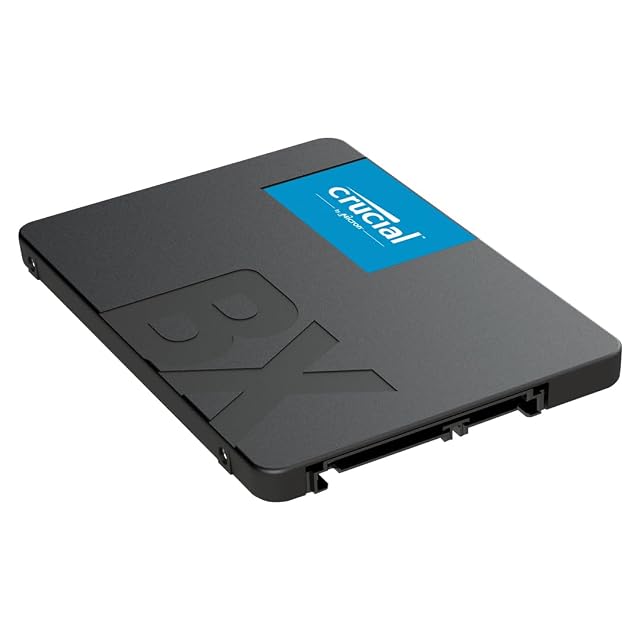
1 TB · 2.5-inch · up to 540 MB/s read · dynamic write acceleration named · 256-bit hardware encryption to three named standards · three-year limited warranty · no write figure, no TBW, no MTBF
A one-terabyte drive that publishes a term, a named write acceleration mechanism and three encryption standards by name, and that never quantifies writing or endurance.
Best for: A machine where encryption to a named standard is a requirement and the drive will be read from far more than it is written to.
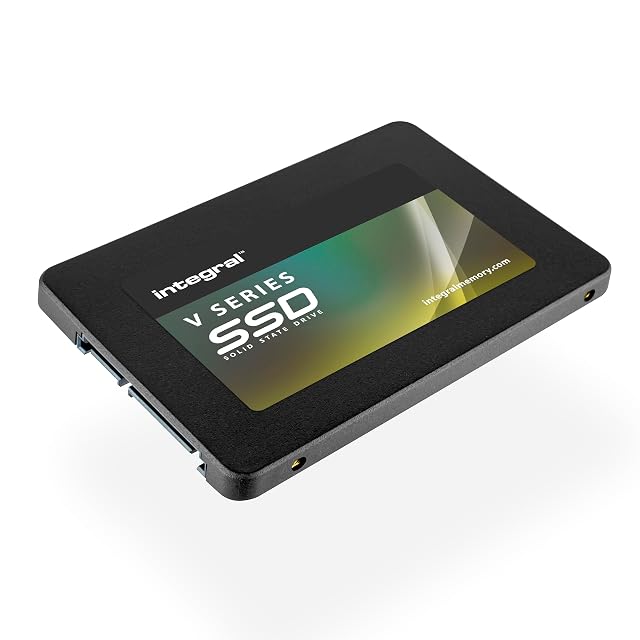
2 TB · 2.5-inch · SATA III · up to 540 MB/s read · up to 500 MB/s write · three-year warranty ending at a written total the page never states · no MTBF · no controller named
A two-terabyte drive whose warranty is explicitly limited by a written total, and whose page never says what that total is.
Best for: A desktop machine or a laptop needing two terabytes on this interface, bought by someone who will ask for the written total before relying on the term.
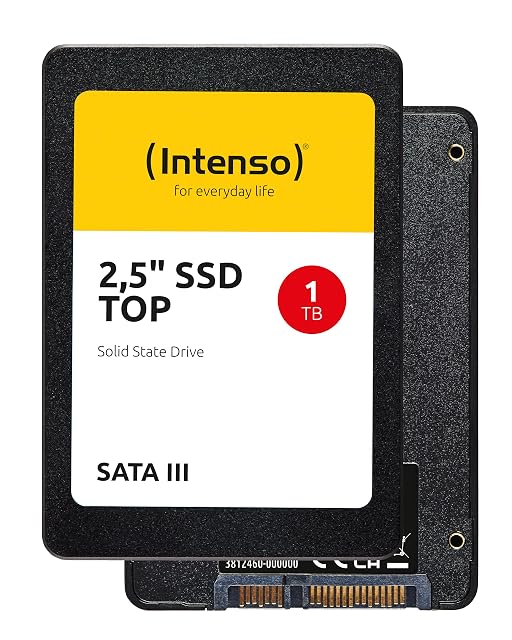
1 TB · 2.5-inch · SATA III at 6 Gbps · up to 550 MB/s read · up to 500 MB/s write · TBW rating of up to 480 TB · 2 million hours MTBF · shock resistance to 1500 G · no warranty term
A one-terabyte drive that publishes both sequential figures, a written total, a population statistic and a shock figure with its duration, and that names no warranty term at all.
Best for: A notebook or a desktop machine that is knocked about, where a shock rating and a written total matter and the term will be checked with the seller.