Bay count, drive interface and the processor behind the applications · review
UGREEN NASync DH2300, two-bay enclosure sold on what it replaces review
A two-bay enclosure whose page publishes a bay count, a television output and an arithmetic of cloud subscription savings, and not one figure about the machine itself.
The bottom line A page written entirely about the subscription it replaces, and almost not at all about the machine that replaces it. Two bays, a television output and an app are the whole specification; everything a buyer would compare against a rival is absent.
On the listing
A two-bay network enclosure for beginners and home users, sold without a drive; no monthly fee, with a saving of 719.88 euros a year set against a standard package of 59.99 euros a month for 12 TB; sharing across Windows, macOS, Android, iOS, web browsers and smart televisions; one-touch pairing through a built-in NFC module; 4K Ultra HD output over HDMI, DLNA or a television app, with films and subtitles organised automatically; and a photo album that sorts by face, scene and place, removes duplicates and shares by QR code or link.
Where the figures went
Five bullets and a title, and the only quantities on the page are a monthly tariff, an annual saving and a capacity belonging to somebody else’s subscription. No processor, no memory, no socket, no measurement, no consumption. The bay count is the whole of the hardware specification.
The television output
4K over HDMI, DLNA or a television app. This is the one capability the page describes in detail, and it is a genuine point of difference: many enclosures of this size have no video output at all. It also implies decoding work, which returns the reader to the processor the page never names.
What sorting photographs asks of the machine
Faces, scenes, places, duplicates and growth albums are all processing, and they run on hardware this listing declines to describe. A buyer comparing two enclosures on those features has nothing here to compare with.
Before ordering
Ask the seller for three lines: the processor, the memory, and the speed of the network socket. The page answers none of them, and they are what separate this enclosure from every other two-bay unit on the shelf.
Availability
Priced from 199 € to 200 € across the German, French, Italian and Spanish Amazon stores the day this page was checked.
It is stocked on the British Amazon store as well, in that country’s own currency. The range above leaves those out: it counts euro stores and no others.
The American Amazon store returned nothing at all, so the buy button there opens a search in that country rather than a page that would not load.
Every figure in this section is what Keepa held on the day this page was last updated. Stock and prices move without warning.
Prices quoted in this text were read on 10 September 2026. The live price is at the top of the page.
Where it holds up, and where it stops
Strengths
The bay count is stated twice and the unit is sold openly without drives, so nobody opens the box expecting storage to be inside it
An HDMI output is named with 4K playback and subtitle handling, which is a real capability that most enclosures at this size never mention
Pairing over an NFC module is described concretely enough to picture, which is more than the usual promise of easy setup
Compromises
Neither a processor nor a memory figure is published, and both are what decide whether the photograph sorting the fifth bullet describes actually runs well
Not one network socket is counted on a network storage product, so the speed at which files reach the machine is unstated
The only numbers on the page belong to a cloud tariff, which describes what the buyer stops paying rather than what the buyer receives
Specifications
Bay count
Two — stated in the title as a 2 Bay unit and repeated in the fourth bullet, which calls it the 2 Bay NAS
Drive interface
Not published on the listing — the title says the unit ships without a drive, and neither a size in inches, a bus nor a ceiling per bay appears in the five bullets
Solid-state slot count
Not published on the listing — no M.2 slot and no solid-state mounting is named, and the only storage figure on the page belongs to a cloud tariff rather than to the enclosure
Processor
Not published on the listing — no chip, no core count and no clock speed appears, on a page whose fifth bullet describes photographs being sorted by face, scene and place
Memory
Not published on the listing — no memory figure appears in the title or in any of the five bullets
Ethernet port count
Not published on the listing — the fourth bullet names an HDMI socket for a television, and no network socket is counted anywhere on a network storage product
Port speed
Not published on the listing — with no network socket counted, none is given a rate
USB ports
Not published on the listing — the only socket named on the page is the HDMI output of the fourth bullet
Supported redundancy levels
Not published on the listing — no array arrangement is named, and the second bullet describes access from Windows, macOS, Android, iOS, browsers and smart televisions instead
Published operating system
Not published on the listing by name — the third bullet names an app and pairing over an NFC module, and the software those belong to is never called anything
Stated idle power
Not published on the listing — no figure in watts appears, and running cost is discussed only as a subscription that is no longer paid
Stated acoustic figure
Not published on the listing — no decibel value and no claim about noise appears in the title or in the five bullets
Stated dimensions
Not published on the listing — no measurement of the case is printed anywhere on the page
Amazon reference
B0FNWWDGSX (same reference on 5 Amazon marketplaces)
EAN
6941876294800
The questions that come up before an order
Why does a missing processor figure matter on a storage box?
Because the features this page sells lean on it. Sorting photographs by face, decoding video for a television and serving several people at once are all processing work, and an enclosure that is quick at copying files can still be slow at all three. Bay count says how much fits; the chip says what the machine can be asked to do with it.
Is a saving against a cloud subscription a specification?
It is a comparison of costs, and it is calculated from a named monthly tariff for a named amount of storage. It says nothing about the hardware. The two arrangements also differ in what they include — a subscription keeps a copy elsewhere, and an enclosure at home is one place — so the sums are not measuring the same thing.
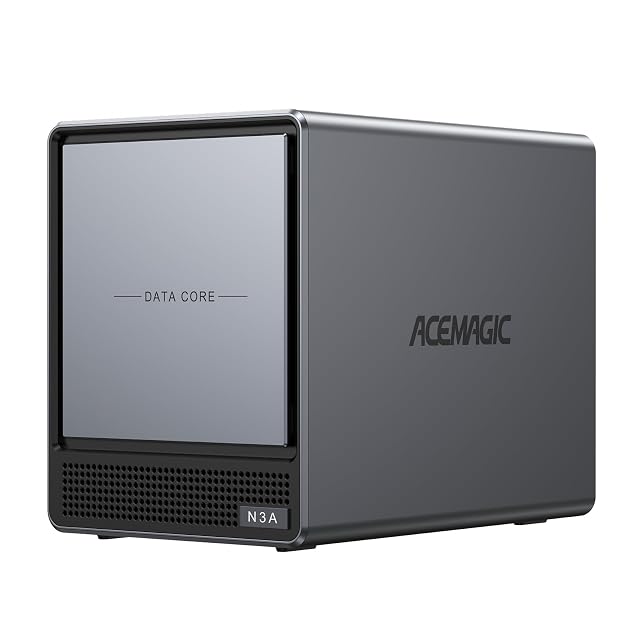
four bays for 3.5-inch drives · two M.2 NVMe slots · AMD R2544 · 8 GB DDR4 and a 128 GB system drive · no operating system supplied · 24 months of warranty
A four-bay enclosure that states its bay size, counts its solid-state slots and supplies no operating system at all, naming three the buyer may install instead.
Best for: A builder who already knows which storage system they want to run and wants the hardware to stay out of the way, rather than a buyer expecting a finished appliance.
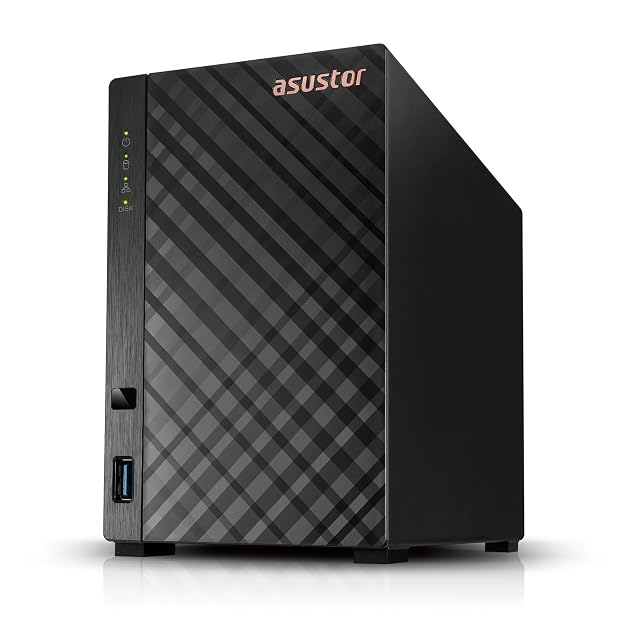
two bays · Realtek RTD1619B, four cores at 1.7 GHz · 1 GB DDR4 · one 1GbE socket · Btrfs and iSCSI snapshots named · sold without drives
A two-bay enclosure whose title states the processor, the memory and the single gigabit socket, and whose page never names the drive interface, an array arrangement or the software that runs it.
Best for: A first enclosure for a household copy of photographs and documents, where one gigabit is enough and where the buyer is content to look up the drive compatibility elsewhere.
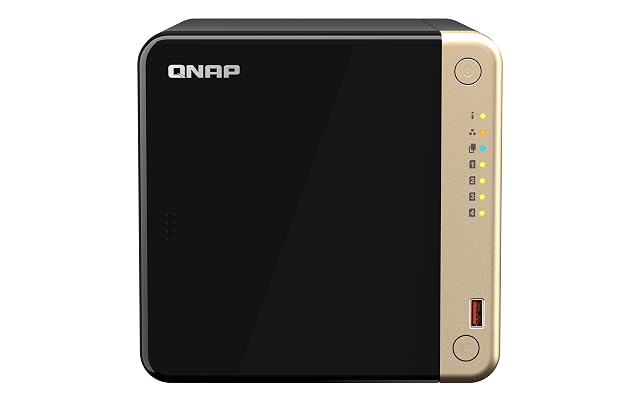
four bays · 8 gb of memory · four bullets that describe no product · title in Spanish on a German shop · reference printed short of the product record
A four-bay enclosure whose page carries a bay count, a memory figure and four bullets that would fit any object at all, printed in a language the shop does not use.
Best for: A buyer who already knows this model from elsewhere and is here only for the price, since the page itself will not tell them what they are buying.