Bay count, drive interface and the processor behind the applications · review
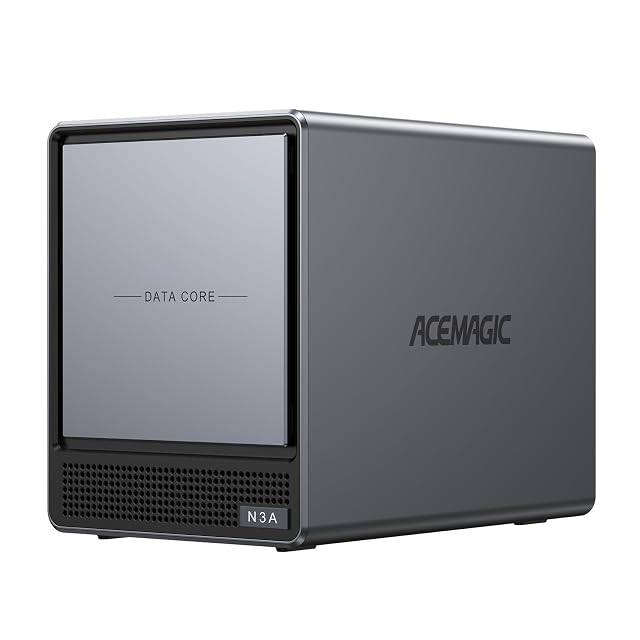
UGREEN DXP4800 Plus review
A ten-gigabit four-bay machine whose page publishes neither a processor model nor a memory figure, and translates its 144 TB ceiling into one photograph count that disagrees with its own three other figures.
At $656.99 on Amazon.com on October 26, 2026 it cost three dollars less than the DXP4800 GT, and the first bullet’s whole account of what is inside is the word “Powerful Procesor”, misspelled. No model number, no core count, no clock speed, and no memory figure anywhere on the page. The GT above it in the same range publishes an AMD Ryzen R2514 with four cores, eight threads and a clock, and a 64 GB memory ceiling. This page publishes neither line.
The capacity arithmetic is where the listing contradicts itself. The second bullet gives up to 144 TB and translates it three ways and then a fourth: 98 thousand 1.5 GB films is about 147 TB, 5 million 30 MB songs is about 150 TB, and both sit within a few per cent of the headline. “50 million 1MB photos” is about 50 TB — barely a third of it. Three of the four figures agree with the ceiling and the fourth does not, and nothing on the page explains the difference.
The last bullet states that the advertised capacity is based on using RAID 0 with compatible drives, which is the arrangement that carries no redundancy at all: it adds the four drives together and loses the lot if one fails. The second bullet separately offers “a wide range of RAID options for easy data recovery even if a drive fails” without numbering a level. Carrying on through a dead drive is what an array does; it is not a copy of the data on separate hardware, and no level here stands in for one.
The network figure is a single 10GbE port, named in the singular in the third bullet, which also names 10 Gbps USB ports in the plural without counting them and offers a 1 GB backup in under a second over either. Ten gigabits on one socket puts this above every published listing on the shelf and level with the GT, which publishes two.
The software is not named. Docker and virtual machines are supported per the last bullet, which states that all DXP models support them and that Plex can run through Docker — the opposite of what the DH2300’s page says about itself, and useful precisely because the same maker publishes both. An AI photo album, duplicate removal and an app across Windows, macOS, Android, iOS, browsers and smart televisions are described by function.
The seventh bullet names Western Digital, Seagate and Toshiba as compatible and directs the reader to a compatibility list that is not reproduced on the page — the same arrangement the published Synology uses. Two years of warranty, 24-hour specialist support and 30-day returns are stated in the eighth. Two years is the commonest term on this shelf; the LinkStation SoHo 220 here is alone in giving three. Four words on the page are misspelled — “Procesor”, “semalessly”, “inluding” and “issures” — and no decibel value, no figure in watts and no measurement appears in the bullets; the product record carries 258 by 178 by 178 mm (7.01 in) and 3,790 g (133.7 oz).
Prices quoted in this text were read on October 26, 2026. The live price is at the top of the page.
Where it holds up, and where it stops
Strengths
A 10GbE network socket and 10 Gbps USB ports, both stated in the third bullet
States that Docker, virtual machines and Plex through Docker are all supported, in a range whose entry-level page publishes the opposite
Two years of warranty with 24-hour support and 30-day returns, which is the commonest term on this shelf — only the LinkStation SoHo 220 here gives three
Names three drive makers as compatible rather than leaving the question open entirely
Says outright that the advertised capacity assumes RAID 0, which is the condition most pages omit
Compromises
No processor model and no memory figure at all, where the DXP4800 GT at three dollars more publishes both
The 144 TB ceiling is translated as 50 million 1 MB photographs, about a third of it, while the page’s three other translations land within a few per cent
The network socket and the USB sockets are both named without being counted
The compatibility list the seventh bullet relies on is named and not reproduced
Four words on the page are misspelled, including the only word describing the processor
Specifications
Bay count
Four — stated in the title as a 4-Bay unit. The second bullet gives a capacity ceiling of 144 TB without publishing the per-bay figure that would produce it
Drive interface
Not published on the listing as a size or a bus — the seventh bullet names Western Digital, Seagate and Toshiba as compatible and directs the reader to a compatibility list not reproduced on the page
Solid-state slot count
Not published on the listing — no M.2 slot and no cache slot is named, and the 144 TB figure is given with no arithmetic behind it
Processor
Not published on the listing — the first bullet says "Powerful Procesor", misspelled, and gives no model, no core count and no clock speed anywhere on the page
Memory
Not published on the listing — no memory figure of any kind appears in the title or in any of the nine bullets
Ethernet port count
Not published on the listing as a figure — the third bullet names "the 10GbE network port" in the singular, which describes one socket without counting the sockets
Port speed
10GbE — stated in the third bullet, offered as backing up 1 GB in less than a second over either the network port or the USB ports
USB ports
Not published on the listing as a count — the third bullet names "the 10Gbps USB ports" in the plural without a numeral, so the rate is given and the number is not
Supported redundancy levels
A wide range of RAID options, named without a level — stated in the second bullet. The last states that the advertised capacity is based on RAID 0, which carries no redundancy at all. Carrying on through a drive failure is a different thing from holding the data in a second place
Published operating system
Not named on the listing — the first bullet names Docker and virtual machines and the last states that all DXP models support both and that Plex can run through Docker. The software is described by function throughout and never called anything
Stated idle power
Not published on the listing — no figure in watts appears anywhere on the page
Stated acoustic figure
Not published on the listing — no decibel value and no claim about noise appears, on a four-bay machine sold for families and small teams
Stated dimensions
Not published in the bullets — the product record carries 258 by 178 by 178 mm (7.01 in) and 3,790 g (133.7 oz), and no measurement of the case appears on the page
Amazon reference
B0D22JRHZB
EAN
6941876238538
On Amazon.com
Amazon.com had an offer at $657 on October 26, 2026.
Where this unit differs
Put against the median of its own group on this site — not against every network product sold.
Ethernet port countNot published on the listing as a figure — the third bullet names "the 10GbE network port" in the singular, which describes one socket without counting the sockets+300 % against the median of this group
Port speed10GbE — stated in the third bullet, offered as backing up 1 GB in less than a second over either the network port or the USB ports+300 % against the median of this group
Bay countFour — stated in the title as a 4-Bay unit. The second bullet gives a capacity ceiling of 144 TB without publishing the per-bay figure that would produce it+100 % against the median of this group
The questions that come up before an order
What processor and how much memory?
Neither is published. The first bullet offers "Powerful Procesor" and no model, core count or clock speed, and no memory figure appears anywhere in the title or the nine bullets.
Is the 144 TB figure usable?
The last bullet states that the advertised capacity is based on using RAID 0, the arrangement that adds the drives together and carries no redundancy. The usable figure under a protective arrangement would be lower.
Why do the capacity examples disagree?
Three of them do not: 98 thousand 1.5 GB films and 5 million 30 MB songs both land within a few per cent of 144 TB. The fourth, 50 million 1 MB photographs, lands at about 50 TB, and the page does not explain it.
How does it compare with the DXP4800 GT?
The GT publishes a processor with cores, threads and a clock, a 64 GB memory ceiling, two 10GbE sockets and the bay arithmetic behind its 144 TB. This page publishes one 10GbE socket and none of the rest, at $3.00 less on October 26, 2026.
Against the rest of the network and storage gear
This network and storage gear share the category and the price bracket. Only what each one states is shown; an incomplete column would mislead.
Model
Price
Bay count
Drive interface
Solid-state slot count
Processor
UGREEN DXP4800 Plus
$657
Four — stated in the title as a 4-Bay unit. The second bullet gives a capacity ceiling of 144 TB without publishing the per-bay figure that would produce it
Not published on the listing as a size or a bus — the seventh bullet names Western Digital, Seagate and Toshiba as compatible and directs the reader to a compatibility list not reproduced on the page
Not published on the listing — no M.2 slot and no cache slot is named, and the 144 TB figure is given with no arithmetic behind it
Not published on the listing — the first bullet says "Powerful Procesor", misspelled, and gives no model, no core count and no clock speed anywhere on the page
Four — stated in the sixth bullet as four drive bays for SATA drives up to 32 TB each, with up to two of those same bays also accepting U.2 NVMe solid-state drives
SATA bays at up to 32 TB each, two of which also take U.2 NVMe — stated in the sixth bullet. No drive size in inches is printed anywhere on the page, so the bus is named and the format is not
Two M.2 slots carrying up to 16 TB between them, stated in the sixth bullet, plus up to two of the four SATA bays accepting U.2 NVMe drives. The 144 TB total is 4 × 32 TB plus 16 TB, and the arithmetic holds
AMD Ryzen Embedded R2514, four cores, eight threads, up to 3.70 GHz — stated in the first bullet. With the TerraMaster F8 SSD Plus, it is one of two processors on this shelf published with cores, threads and a clock together
Eight — stated in the title and in the second bullet as eight M.2 2280 NVMe slots, each taking up to 8 TB for 64 TB in total. The arithmetic holds, and it is the highest bay count on this shelf
M.2 2280 NVMe only — stated in the second bullet. No SATA bay appears anywhere on the page, which makes this the only all-solid-state enclosure on this shelf; every other listing here is built around SATA bays
Eight, which is the same as the bay count — the two figures coincide because every bay is an M.2 slot. Each takes up to 8 TB, stated in the second bullet
Intel Core i3-N305, eight cores and eight threads with a turbo frequency up to 3.4 GHz, with UHD Graphics — stated in the first bullet. It is the highest core count on this shelf; the UGREEN DXP4800 GT here publishes four cores, eight threads and a higher clock at 3.70 GHz
Two — stated in the title as 2-Bay and in the seventh bullet as two drive bays holding 8 TB in total. The title specifies the division as 2 × 4 TB, which no other LinkStation page on this shelf does
Not published on the listing as a size or a bus — the title gives 8 TB as two 4 TB drives and the seventh bullet repeats the total, and no inch figure and no bus appears anywhere
Not published on the listing — no M.2 slot and no cache slot is named in the title or in any of the ten bullets
Not published on the listing — no chip, no core count and no clock speed appears anywhere on the page
What separates the models, in network and storage gear
If price decides: BUFFALO LinkStation SoHo 220, 8 TB, at $475.
The buyer this one serves, among network and storage gear
A four-bay machine wanted for its ten-gigabit socket and its container support, by a buyer willing to look up the specification elsewhere.
What this one costs among network and storage gear
Details checked on October 26, 2026.
What buyers actually choose
Amazon reports what buyers took in the month before this page was last checked: at least 500.
The figure is a floor, rounded by Amazon, and read through Keepa — it says what buyers picked, not what a maker claims.
Sources
Specifications: the manufacturer sheet for network and storage gear and the matching Amazon product page. Prices and availability: Keepa. Every figure on this page names its source.
four HDD bays and two M.2 slots · up to 136 TB · 8 GB DDR4 · 128 GB PCIe 3.0 SSD · 2.5G and 1G LAN · processor and software not named
A four-bay enclosure whose Amazon.com listing fits its whole specification into one line — four HDD bays, two M.2 slots, 2.5G and 1G LAN, 8 GB DDR4 and a 128 GB SSD — and names no processor and no software.
Best for: A buyer who already knows this model and the software they will run on it, and wants four HDD bays plus two M.2 slots in one box.
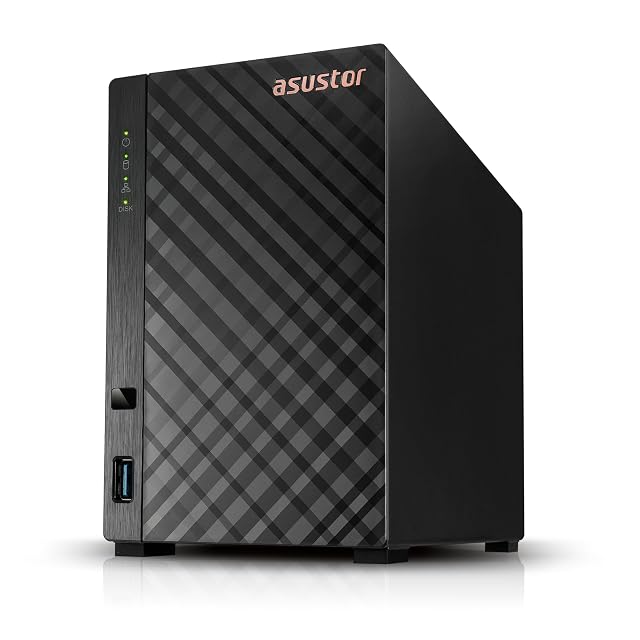
two bays · Realtek RTD1619B, four cores at 1.7 GHz · 1 GB DDR4 · one 1GbE socket · Btrfs and iSCSI snapshots named · sold without drives
A two-bay enclosure whose title states the processor, the memory and the single gigabit socket, and whose page never names the drive interface, an array arrangement or the software that runs it.
Best for: A first enclosure for a household copy of photographs and documents, where one gigabit is enough and where the buyer is content to look up the drive compatibility elsewhere.
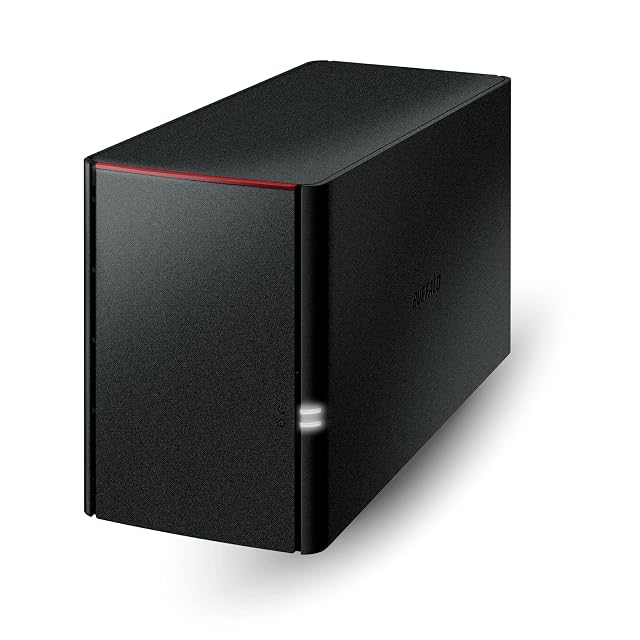
two bays · 4 TB of drives included · ships in RAID 1 with 2 TB usable · $143.00 per usable terabyte · 24 months covering the drives · macOS 15 ceiling
The bottom rung of the LinkStation 220 ladder, and the most expensive terabyte on it: two terabytes usable for $285.99, where the twelve-terabyte version of the same box asks less than a third as much per terabyte.
Best for: The smallest mirrored LinkStation, for someone who wants two terabytes protected and nothing else, and will not want more later.