Bay count, drive interface and the processor behind the applications · review
Synology DS225+, two-bay enclosure whose two sockets are given two different speeds review
A two-bay enclosure that publishes its processor, its memory ceiling and the exact module that raises it, and whose title and fifth bullet disagree about how fast its two network sockets are.
The bottom line Precise where most listings are vague, and vague on the single line that would justify the upgrade. A page that prints the part number of a memory module ought to be able to agree with itself about the speed of its own sockets.
On the listing
A two-bay enclosure with an Intel Celeron J4125 of four cores at 2.0 GHz; 2 GB of DDR4 memory; two RJ-45 sockets; a requirement that the drives come from the maker’s compatibility list; a position in the two-bay Plus series as the replacement for an earlier model; 2 GB of non-ECC DDR4 SODIMM as standard, upgradable to 6 GB as 2 GB plus 4 GB; support for the memory module D4NS01-4G; and a built-in socket arrangement of one 2.5 GbE and one 1 GbE RJ-45 port.
Two sockets, two readings
The title prints 2xRJ-45 1GbE. The fifth bullet prints one at 2.5 GbE and one at 1 GbE. Both are reported here because both are published, and the difference is not cosmetic: one reading gives the unit a wired ceiling above a gigabit for a single machine, and the other does not. Nothing on the page says which was written later.
The memory, published all the way down
2 GB fitted, 6 GB maximum, reached as 2 GB plus 4 GB, using module D4NS01-4G. That is four separate facts about one upgrade, and very few listings on this shelf publish even two of them. It is the part of this page that most deserves copying by its rivals.
The list the drives have to come from
The first bullet makes drive compatibility a condition and points elsewhere for the answer. Read that line as part of the price: the cheapest drives on the shelf may not be candidates, and the check belongs before the order rather than after the enclosure arrives.
Before ordering
Settle the socket speed with the seller in writing, and pull the drive compatibility list. One decides what the unit is worth over its predecessor; the other decides what may legally go inside it.
Availability
Priced from 367 € to 414 € across the German, French, Italian and Spanish Amazon stores the day this page was checked.
It is stocked on the American and British Amazon stores as well, in that country’s own currency. The range above leaves those out: it counts euro stores and no others.
Every figure in this section is what Keepa held on the day this page was last updated. Stock and prices move without warning.
Prices quoted in this text were read on 10 September 2026. The live price is at the top of the page.
Where it holds up, and where it stops
Strengths
The memory path is published completely: what ships, what the ceiling is, how the ceiling is reached and the part number of the module that reaches it
The first bullet says outright that the drives have to come from a compatibility list, which is a restriction stated before purchase rather than discovered after it
The processor is named to its model number, so the machine can be lined up against others carrying the same chip
Compromises
The title and the fifth bullet give the two network sockets different speeds, and the faster of the two readings is the whole reason to prefer this model over an older one
The compatibility list the first bullet requires is not reproduced anywhere on the page, so the drive question is named and not answered
No array arrangement, no consumption figure and no measurement, on a page otherwise precise enough to print a memory part number
Specifications
Bay count
Two — stated in the title as a 2-Bay unit, and the second bullet places the model in the two-bay Plus series
Drive interface
Not published on the listing as a size or a bus — the first bullet states that the unit requires compatible drives and directs the reader to the maker’s own compatibility list, which is where the answer is kept rather than here
Solid-state slot count
Not published on the listing — no M.2 slot and no cache slot is named, and the only expansion the page describes is a memory module
Processor
Intel Celeron J4125, four cores at 2.0 GHz — printed in the title, and named again in the second bullet as the quad-core processor of the new model
Memory
2 GB non-ECC DDR4 SODIMM as supplied, upgradable to 6 GB as 2 GB plus 4 GB — stated in the third bullet, with the fourth naming the module by its part number, D4NS01-4G
Ethernet port count
Two — the title prints 2xRJ-45 and the fifth bullet counts one socket of each kind. The count is the one figure on which the two agree
Port speed
Published twice and not identically. The title makes both RJ-45 sockets 1GbE; the fifth bullet gives one at 2.5 GbE and one at 1 GbE. Both are on the page and nothing resolves them
USB ports
Not published on the listing — no USB socket is counted in the title or in the five bullets, which cover drives, the processor, memory and the network sockets
Supported redundancy levels
Not published on the listing — no array arrangement is named, and the bullets stay with the hardware and its compatibility list
Published operating system
Not published on the listing by name — Diskstation in the title is the name of the range rather than of the software, and no operating system is named in any bullet
Stated idle power
Not published on the listing — no figure in watts appears, on a page that details the memory module to its part number
Stated acoustic figure
Not published on the listing — neither a decibel value nor a claim about noise is printed
Stated dimensions
Not published on the listing — no measurement of the case appears in the title or in the five bullets
Amazon reference
B0FC2888KF (same reference on 6 Amazon marketplaces)
EAN
4260730618883
The questions that come up before an order
What difference does one 2.5 GbE socket make on a two-bay enclosure?
It raises the wired ceiling above a gigabit for a single machine copying to or from the unit, which two spinning drives can approach. If both sockets are gigabit instead, that ceiling stays where it was and the extra socket only helps two machines at once. The two readings on this page describe genuinely different products.
Why does a maker require drives from a published list?
It narrows what the maker supports to combinations it has qualified, and it removes the buyer’s freedom to fit whatever is cheapest. The list is part of the specification, not an afterthought, and it belongs beside the price when two enclosures are compared. This page names the requirement and leaves the list itself elsewhere.
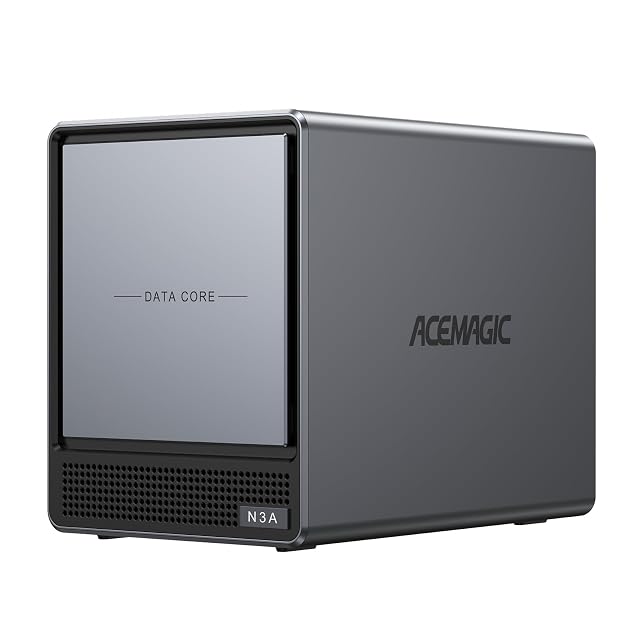
four bays for 3.5-inch drives · two M.2 NVMe slots · AMD R2544 · 8 GB DDR4 and a 128 GB system drive · no operating system supplied · 24 months of warranty
A four-bay enclosure that states its bay size, counts its solid-state slots and supplies no operating system at all, naming three the buyer may install instead.
Best for: A builder who already knows which storage system they want to run and wants the hardware to stay out of the way, rather than a buyer expecting a finished appliance.
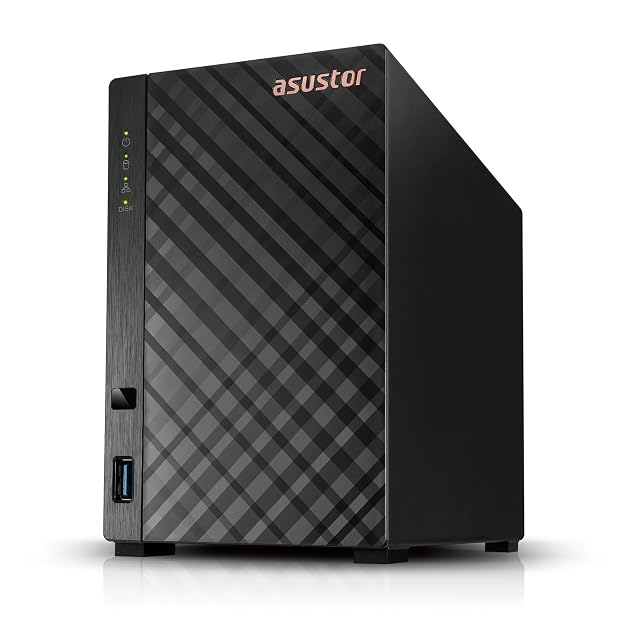
two bays · Realtek RTD1619B, four cores at 1.7 GHz · 1 GB DDR4 · one 1GbE socket · Btrfs and iSCSI snapshots named · sold without drives
A two-bay enclosure whose title states the processor, the memory and the single gigabit socket, and whose page never names the drive interface, an array arrangement or the software that runs it.
Best for: A first enclosure for a household copy of photographs and documents, where one gigabit is enough and where the buyer is content to look up the drive compatibility elsewhere.
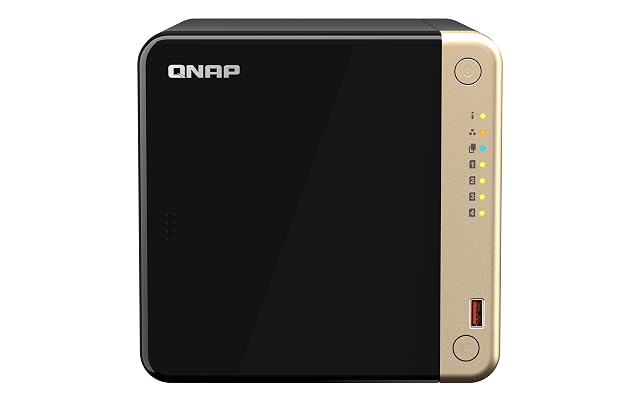
four bays · 8 gb of memory · four bullets that describe no product · title in Spanish on a German shop · reference printed short of the product record
A four-bay enclosure whose page carries a bay count, a memory figure and four bullets that would fit any object at all, printed in a language the shop does not use.
Best for: A buyer who already knows this model from elsewhere and is here only for the price, since the page itself will not tell them what they are buying.