Skip to content

Vultech UPS1500VA-PURE, pure sine wave at 1500 VA, with 1200 W read off a two-model line review

A line-interactive tower sold on its pure sine wave, whose watt figure arrives inside a sentence describing two models of the range, and whose battery backup is attached in writing to one output of three.

The bottom line A stated pure sine wave and a stated watt figure, on a page that then leaves the battery undescribed and the runtime unquoted. The line worth reading twice is the socket line: three outputs, and battery backup written against one of them.

On the listing

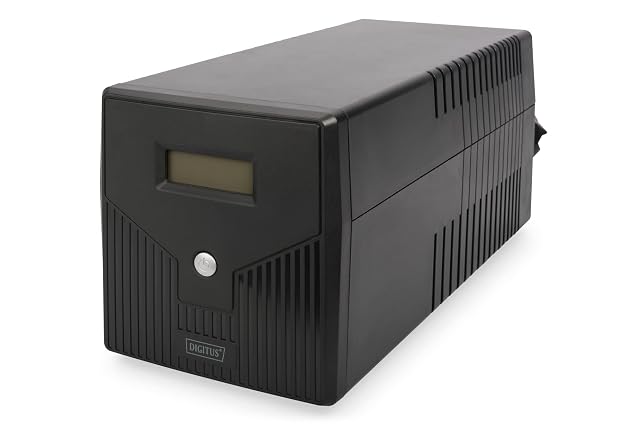
A line-interactive tower uninterruptible power supply with a pure sine wave, sold under its own reference; a range described as available at 1000 VA with 800 W and at 1500 VA with 1200 W, said to support equipment drawing up to 1200 W and aimed at users sensitive to the shape of the wave; protection claimed against electrical shocks with emergency power and surge protection, an internal voltage stabiliser, and suitability named for high-performance machines and for electronic equipment such as pellet stoves and boilers; perfect electrical compatibility with all connected equipment put down to the pure sine wave; two bypass outputs rated 10 to 16 A in the Schuko pattern and one IEC C13 output with battery backup and surge protection; a backlit LCD giving the state of the unit, the state of charge and the connected load; monitoring software over a USB cable, named for three versions of Windows; and a box containing the unit, a software disc, a USB cable and a manual.

1500 volt-amperes, and 1200 watts from a two-model line

The watt figure is published, and it arrives sideways. The first bullet describes the whole range in one sentence: 1000 VA with 800 W, and 1500 VA with 1200 W. The title sells the 1500 VA model, so the 1200 W half of that pair is the one belonging to it, and the same bullet then repeats 1200 W on its own as the output the unit supports. Both halves are the maker’s, printed on the maker’s page, and nothing here is multiplied out of the volt-ampere rating. The two go on two separate lines above, as every such pair on this shelf does.

The pure sine wave, and who it is for

Stated in the title and in two bullets. On battery the output follows a curve rather than climbing in steps, and the third bullet attributes electrical compatibility with connected equipment to it. That claim is the maker’s. What can be said more narrowly is this: a power supply with active power factor correction reads the shape of what it is given, and some refuse a stepped approximation. Whether a particular machine is one of those is a question for the manufacturer of that machine, and not for a page of comparisons.

Three outputs, and the one on the battery

The fourth bullet counts two bypass outputs in the Schuko pattern, rated 10 to 16 A, and one IEC C13 output. Battery backup and surge protection are attached, in that sentence, to the IEC output. Read as written, that leaves a single battery-backed socket on a unit rated at 1200 W, with the other two described as bypass. The wording is reported here as printed; how the three outputs are wired, and what may be connected to each, is answered by the instructions in the box.

The battery the display talks about

The fifth bullet says the backlit screen reports the state of charge and the connected load. So the unit measures its battery and shows the result, and the page never says what that battery is: no voltage, no capacity, no count. Four listings in this batch give a size that could be reordered against. This is not one of them, and it sits at the top end of the eight on price.

Before ordering

Ask which outputs are on the battery, and ask for minutes at a stated number of watts. The waveform and the two power figures are settled by the page; the socket line and the missing battery description are what decide whether the unit does the job it is bought for.

Availability

Priced from 205 € to 223 € across the German, French, Italian and Spanish Amazon stores the day this page was checked.

In the American and British Amazon catalogues with no live offer against it: the reference exists, nobody is filling it.

Every figure in this section is what Keepa held on the day this page was last updated. Stock and prices move without warning.

Prices quoted in this text were read on 10 September 2026. The live price is at the top of the page.
Where it holds up, and where it stops

Strengths

  • A pure sine wave, stated three times, which is the output a power supply with active correction is least likely to object to
  • The watt figure is published rather than left to be inferred, even though it arrives inside a line covering two models
  • The outputs are typed and given a current rating rather than counted as a group

Compromises

  • Battery backup is attached in writing to one output of the three, and the other two are described as bypass
  • No runtime, no load and nothing at all about the battery, on one of the two dearest units in this batch
  • The watt figure has to be read out of a sentence describing the whole range rather than this model alone

Specifications

TopologyLine-interactive — printed in the title and supported by the second bullet, which names an internal voltage stabiliser that corrects the supply without drawing on the battery
Stated classificationNot published on the listing — the topology is named in words and no classification code from the standard appears
VA rating1500 VA — carried by the model name in the title and repeated in the first bullet, which lists the range as available at 1000 VA with 800 W and at 1500 VA with 1200 W
Watt rating1200 W — published in the first bullet as the watt half of the 1500 VA entry in that two-model line, and repeated on its own in the same bullet as the output the unit supports. It is reported as the figure the maker pairs with this model, and it is not calculated from the volt-ampere rating
Stated runtime at a named loadNot published on the listing — seven bullets describe the waveform, the stabiliser, the outputs, the display, the software and the box contents, and none gives a time in minutes or a load to attach one to
Output waveformPure sine wave — printed in the title and named in the first and third bullets, the third of which puts electrical compatibility with connected equipment down to it
Socket countThree — stated in the fourth bullet, which counts two bypass outputs and one IEC output
Socket typeTwo bypass outputs in the Schuko pattern rated 10 to 16 A, and one IEC C13 output — stated in the fourth bullet. Battery backup and surge protection are attached in that sentence to the IEC output, and the other two are described as bypass
Battery typeNot published on the listing — no voltage, no amp-hour figure, no count and no chemistry appears, on a page whose display is said to report the state of charge
Battery replaceabilityNot published on the listing — nothing says whether the pack can be reached or changed
Communication portUSB — stated in the sixth bullet, which describes connecting the unit to a computer by USB cable for monitoring under three versions of Windows. The seventh bullet counts that cable in the box beside a software disc and a manual
Amazon referenceB08C57SLZZ (same reference on 6 Amazon marketplaces)
EAN8052780300902

The questions that come up before an order

What is a bypass output?

One that passes the incoming supply through. On this page the fourth bullet attaches battery backup and surge protection to the IEC output and describes the two Schuko outputs as bypass, which reads as filtering or straight pass-through rather than battery. That distinction decides which machine keeps running at a cut and which goes dark, and on units that make it the answer is normally printed on the case beside each socket. The wording is reported here as written; how the outputs are actually wired is a question for the instructions supplied with the unit.

Is a pure sine wave worth paying for?

It depends on what goes behind the unit, and the answer comes from the other manufacturer. A power supply with active power factor correction reads the shape of what it is given, and some of them refuse a stepped approximation or run erratically on one. Motors, transformers and simple supplies are less particular. This page states a pure sine wave, which removes the question; one other listing in this batch states a stepped output and five state nothing at all, and there it is the maker of the connected equipment who should be asked.