Skip to content

Atlantis A03-HP2003, 1500 VA and 900 W, with three runtimes quoted as percentages of an unstated figure review

A line-interactive tower publishing both ratings, a pure sine wave and two batteries by size, whose three runtimes are given as percentages without the page ever saying percentages of which figure.

The bottom line Both ratings, a pure sine wave, five typed outputs and a battery described well enough to reorder. The runtimes are the interesting failure: three of them, plotted properly against load, and no statement anywhere of what that load is a percentage of.

On the listing

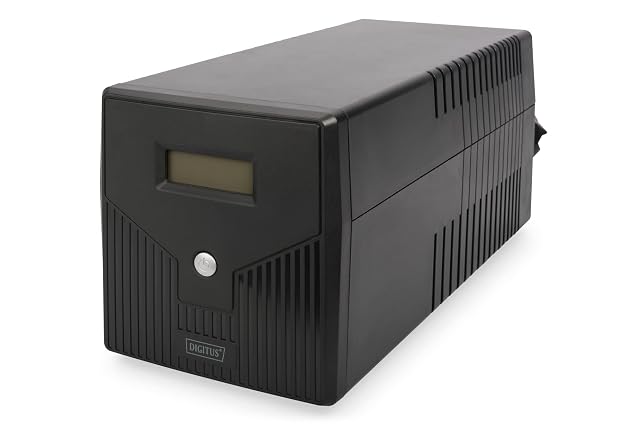
A line-interactive tower uninterruptible power supply rated at 1500 VA and 900 W with a pure sine wave; the output given again as 1500 VA and 900 W; three IEC outputs and two Schuko sockets, an integrated mains lead, one USB HID port for a computer connection and for controlling network storage, and an RJ11 and RJ45 input and output for protecting a telephone or network line; two 12 V 9 Ah batteries and a multifunction LCD showing the state of the unit and of the batteries; and management software allowing a controlled shutdown and a view of the running state, with a backup time given as a few seconds at 100 per cent, 7.3 minutes at 50 per cent and 20 minutes at 25 per cent, and a weight of 10.1 kg.

A few seconds, 7.3 minutes, 20 minutes, and of what

Three runtimes and no base. The fifth bullet plots the curve properly — the time roughly triples between half load and a quarter load, which is how a battery behaves as the draw falls — and then leaves out the one thing that would let a reader use it. Half of 1500 VA and half of 900 W are different loads. The first is apparent power; the second is real power, and only real power can be compared with the consumption printed on the back of a machine. The page does not say which it means, and this site does not choose one to make the figures work. Read as printed, they describe a shape rather than a quantity.

1500 volt-amperes and 900 watts

Both figures are in the title and both are repeated in the second bullet. That is the plain form of the pair, and it is what makes the percentage runtimes frustrating rather than useless: the two candidate bases are printed on the same page, a few lines above the figures that depend on them. The watt rating, 900, is the one a load is added up against, and it is stated as its own quantity rather than folded into the rating beside it.

The pure sine wave and the five outputs

A curve on battery rather than a stepped approximation, stated twice, and five outputs in two patterns: three IEC and two Schuko. That mix matters more than it looks. Equipment sold with a detachable mains lead usually carries an IEC plug, so three sockets of that pattern means three leads going straight in without an adapter. Which of the five stay live on battery is stated nowhere, and on a five-socket unit that is the question the case itself normally answers.

Two 12 V 9 Ah batteries

Counted, and given a voltage and a capacity each. Four of the eight listings in this batch describe their battery at all, and this is the only one to count two packs. A battery is a consumable and it is what ends the working life of one of these units, so knowing the size and the number before buying is what makes the second purchase predictable. How the two are connected inside, and what may safely be done with them, is in the instructions supplied with the unit.

Before ordering

Ask whether the percentages are of the volt-ampere rating or of the watt rating, and ask which of the five outputs carry the battery. The waveform, the ratings, the ports and the batteries are all on the page; those two questions are what turn them into a runtime and a plan for what plugs in where.

Availability

Priced from 220 € to 261 € across the German, French, Italian and Spanish Amazon stores the day this page was checked.

It is stocked on the British Amazon store as well, in that country’s own currency. The range above leaves those out: it counts euro stores and no others.

The American Amazon store returned nothing at all, so the buy button there opens a search in that country rather than a page that would not load.

Every figure in this section is what Keepa held on the day this page was last updated. Stock and prices move without warning.

Prices quoted in this text were read on 10 September 2026. The live price is at the top of the page.
Where it holds up, and where it stops

Strengths

  • Three runtime figures rather than one, which shows the shape of the curve even where the base is left unstated
  • Both batteries are counted and given a voltage and a capacity, which is enough to reorder against
  • Five outputs in two patterns, so equipment with a detachable IEC lead plugs in without an adapter

Compromises

  • The three runtimes are quoted as percentages and the page never says of which of its own two ratings
  • A few seconds at full load is written rather than measured, so the top of the range has no number
  • Nothing says which of the five sockets keep working once the mains fails

Specifications

TopologyLine-interactive — stated in the first bullet, which also gives the tower format
Stated classificationNot published on the listing — the topology is named in words and no classification code from the standard appears beside it
VA rating1500 VA — printed in the title and repeated in the second bullet as the left-hand half of the stated output
Watt rating900 W — printed in the title and repeated in the second bullet as the right-hand half of the same pair. It is published as its own quantity, and it is the figure a connected load is added up against
Stated runtime at a named loadThree times, at loads given as proportions — a few seconds at 100 per cent, 7.3 minutes at 50 per cent and 20 minutes at 25 per cent, stated in the fifth bullet. The page never says whether the percentages are of the 1500 VA rating or of the 900 W rating, and the two would give different loads, so the figures are reported exactly as printed and no base is chosen for them
Output waveformPure sine wave — printed in the title and named again in the first bullet
Socket countFive — stated in the third bullet, which counts three IEC outputs and two Schuko outputs
Socket typeThree IEC outputs and two Schuko outputs — stated in the third bullet, which adds an integrated mains lead. Which of the five stay live on battery is not said
Battery typeTwo 12 V, 9 Ah batteries — stated in the fourth bullet, which counts them and gives the voltage and the capacity of each. No chemistry is named
Battery replaceabilityNot published on the listing — the packs are counted and sized, and nothing says whether they can be changed by the owner
Communication portOne USB HID port — stated in the third bullet for connection to a computer and for controlling network storage. The same bullet names an RJ11 and RJ45 input and output for protecting a telephone or network line, which is a protected line rather than a second port
Amazon referenceB0BXBDHBGH (same reference on 5 Amazon marketplaces)
EAN8026974023168

The questions that come up before an order

Fifty per cent of what?

That is the question the page leaves open. Half of 1500 VA and half of 900 W are different loads, and only the second can be compared with the consumption printed on the back of a machine. The three figures still say something useful about shape: the time roughly triples between half and a quarter, which is how battery runtime behaves as the draw falls. What they cannot do is tell anyone how many watts may be connected for 7.3 minutes, and this site does not pick a base in order to make them say it.

What does a count of two batteries change?

For a buyer, it changes what a replacement costs and how it is ordered: two packs at 12 V and 9 Ah each rather than one. The page gives the size and the number, which is more than four of the eight listings in this batch manage, and it does not say how the two are connected inside the case. This site does not read a wiring arrangement out of a count either. What may safely be done with the packs belongs to the instructions supplied with the unit.