Topology first, then the gap between the VA figure and the watt figure · review
UGREEN NASync US3000, 120 W published with no volt-ampere figure beside it review
A unit built for one maker’s network storage that publishes a watt figure and no volt-ampere rating at all, states a transfer of zero seconds without naming an arrangement, and never counts or types its sockets.
The bottom line A watt figure, a list of enclosures by model and an application that shuts them down in order: a specific answer to a specific problem. What it is not is comparable, because the volt-ampere rating, the socket count, the waveform and any runtime in minutes are all absent.
On the listing
An uninterruptible power supply for network storage with a 120 W output; a claim that the unit moves to battery in zero seconds at a cut, so transfers finish, the system shuts down in order and drives are not damaged; monitoring of state, battery and protections from an application, with automatic shutdown, standby during an outage and restart when the mains returns; a constant 120 W output described as matched to the maker’s own enclosures, with nine models named; a nine-stage protection arrangement said to filter surges and mains disturbance; and a 12,000 mAh lithium pack in a compact case, said to give a long backup time.
120 watts, and no volt-ampere figure
The working figure without the headline one. Watts are real power, and the consumption of everything behind a unit is added up in watts, so 120 W is the number that decides what may be connected. Volt-amperes are apparent power and always the larger figure, which is why the rest of this shelf leads with them. This page carries no volt-ampere rating at all. It is the only one of the eight in that position, and the half it kept is the half a buyer works with.
Zero seconds, and the arrangement that is never named
The first bullet states that the unit moves to battery in zero seconds. That is a transfer time, and a transfer time of nothing is what a permanently inverting arrangement produces, because the load never leaves the inverter in the first place. The page does not say that, and this site does not read an arrangement out of a number. What is published is a claim about the transfer; what is missing is the word for the topology, which five other listings in this batch print plainly.
12,000 milliampere-hours, and what the figure counts
Charge, not stored energy. Milliampere-hours count how much charge the cells hold. Turning that into energy needs the voltage of the pack, and this page does not give one. So the figure cannot be set beside the 7 Ah and 9 Ah packs the lead-acid units here describe, and it cannot be turned into minutes at 120 W either. The backup time it is said to produce is described as long, which is an adjective standing where a number belongs.
The sockets nobody counts
Across a title and five bullets, the outputs are never counted and never typed. The unit is described entirely through what it protects — nine enclosures, named by model — rather than through what plugs into it. For a buyer who owns one of those nine, that may be enough to decide. For anyone else it is the first question on the page, and the page does not answer it.
Before ordering
Ask how many sockets there are and what pattern they take, and ask for a backup time in minutes at 120 W. The list of compatible enclosures is the strongest part of this listing, and it helps only a buyer who already owns something on it.
Availability
Priced at roughly 110 € on the German, French, Italian and Spanish Amazon stores the day this page was checked.
It is stocked on the American and British Amazon stores as well, in that country’s own currency. The range above leaves those out: it counts euro stores and no others.
Every figure in this section is what Keepa held on the day this page was last updated. Stock and prices move without warning.
Prices quoted in this text were read on 10 September 2026. The live price is at the top of the page.
Where it holds up, and where it stops
Strengths
A watt figure in the title, which is the rating a load is sized against rather than the one printed largest on a box
The compatible enclosures are listed by model number rather than described as a range
Automatic shutdown, standby during an outage and restart on the return of the mains are described as behaviour rather than named as a feature
Compromises
No volt-ampere rating at all, so the pair this shelf is compared on has only one half
The sockets are neither counted nor typed anywhere on the page
A long backup time is claimed with no minutes and no load, and the capacity is given in a unit that cannot be turned into either
Specifications
Topology
Not published on the listing — the first bullet states that the unit moves to battery in zero seconds, which is a transfer time rather than an arrangement. Nothing says whether the load runs from the inverter at all times or is handed to it, and no topology is read here out of a transfer figure
Stated classification
Not published on the listing — no classification code from the standard appears beside the zero-second claim
VA rating
Not published on the listing — no figure in volt-amperes appears in the title or in the five bullets, on a shelf where apparent power is normally the headline
Watt rating
120 W — printed in the title and named again in the third bullet as a constant output matched to the maker’s own enclosures. It is real power, and it is the only power figure on the page
Stated runtime at a named load
Not published on the listing — the fifth bullet claims a long backup time and gives no minutes, and no load is named for such a figure to apply to
Output waveform
Not published on the listing — nothing says whether the output on battery is a sine wave or a stepped approximation
Socket count
Not published on the listing — across a title and five bullets the outputs are never counted, on a page that describes at length what the unit protects
Socket type
Not published on the listing — no socket pattern and no connector standard is named
Battery type
A 12,000 mAh lithium pack — stated in the fifth bullet. The capacity is given in milliampere-hours with no pack voltage beside it, so the figure counts charge rather than stored energy and is reported in the unit the maker used
Battery replaceability
Not published on the listing — the pack is described as sitting in a compact case and nothing says whether it can be changed
Communication port
Not published on the listing — the second bullet describes an application that watches the unit and shuts the enclosure down on its own, and names neither the socket nor the cable that carries the instruction
Amazon reference
B0DDC9ZK8R (same reference on 6 Amazon marketplaces)
EAN
6941876246151
The questions that come up before an order
Does a watt rating without a volt-ampere rating leave anything out?
It leaves out the headline the rest of the shelf is sold on, and that is the less useful half to lose. Watts are real power, and the consumption of the machines behind a unit is added up in watts. Volt-amperes are apparent power and always the larger figure, which is why they appear on the box. A page with only a watt figure is missing the marketing number; a page with only a volt-ampere figure, as one other listing in this batch is, is missing the working one.
What does a capacity in milliampere-hours describe?
Charge, not energy. A figure of 12,000 mAh says how much charge the cells hold, and turning that into stored energy needs the voltage of the pack, which this page does not give. Two packs quoting the same milliampere-hours at different voltages hold different amounts of energy, so the figure cannot be set against the 7 Ah and 9 Ah lead-acid packs other units here describe, nor turned into minutes at 120 W. It is reported in the unit the maker printed it in.
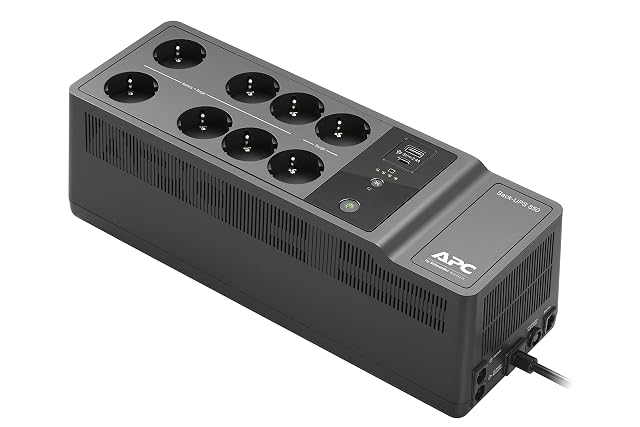
850 VA · no watt rating published · 8 Schuko sockets · surge protection named · USB Type-C and Type-A charging ports · topology, waveform, runtime and battery not published
An eight-hundred-and-fifty volt-ampere unit with eight sockets and a single bullet, whose page carries no watt figure, no runtime, no waveform and no description of the battery.
Best for: A desk with a great many plugs, bought by someone who will ask for the watt rating and the runtime chart before anything is connected behind it.
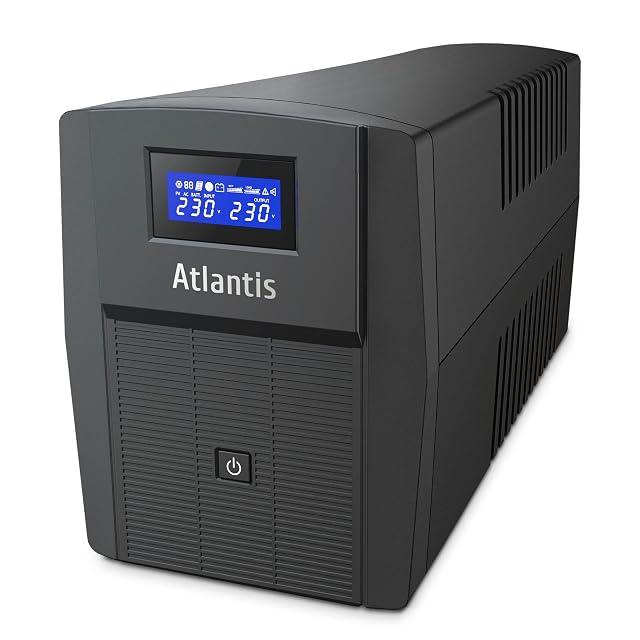
1500 VA · 900 W · line-interactive tower · pure sine wave · a few seconds at 100 %, 7.3 min at 50 %, 20 min at 25 %, base not stated · 3 IEC and 2 Schuko sockets · 2 × 12 V 9 Ah batteries · USB HID · 10.1 kg
A line-interactive tower publishing both ratings, a pure sine wave and two batteries by size, whose three runtimes are given as percentages without the page ever saying percentages of which figure.
Best for: A tower under a desk feeding equipment with IEC leads, where the pure sine wave and the two-battery pack matter and the percentage runtimes will be put to the maker.
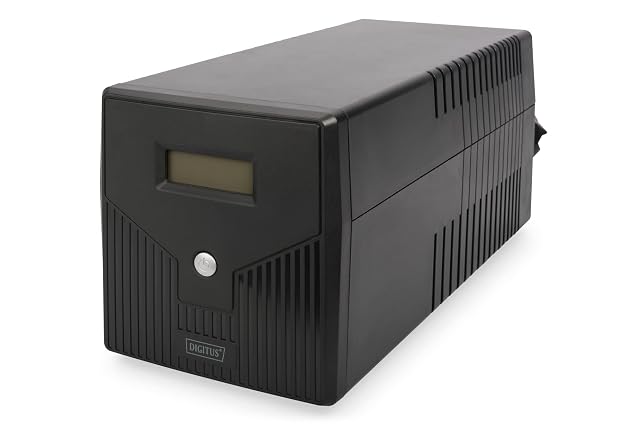
1500 VA · 900 W · line-interactive, class 2 – VI · 36 minutes at a 120 W load · transfer of 2 to 6 ms · 4 Schuko CEE 7/7 sockets · USB Type-B and RS232 · waveform and battery not published
The one listing of the eight to quote its runtime against a load in watts, and the one to publish a classification code beside its topology, on a page that then says nothing about its waveform or its battery.
Best for: A small rack or a desk running a machine and a monitor, where a runtime at a stated load and a serial port count for more than a published waveform.