Topology first, then the gap between the VA figure and the watt figure · review
Eaton 3P700UD, standby at 700 VA and 420 W, with the whole specification in the title review
A standby unit whose title publishes both power ratings, the topology, the split between battery-backed and surge-only sockets and a communication port, above three bullets that carry three words between them.
The bottom line A title doing all the work: topology, both ratings, the socket split and a named port, published plainly and kept separate. The bullets add nothing, and with them go the runtime, the waveform and every fact about the battery.
On the listing
A standby uninterruptible power supply rated at 700 VA and 420 W, sold under a range name with the reference in the title; three Schuko outputs carrying battery and surge protection and a fourth carrying surge protection only; a USB port and USB charging ports; a black case; and the marketplace reference repeated in brackets at the end of the title. Below it, three bullets: the brand, the reference, and the words for an uninterruptible power supply.
700 volt-amperes and 420 watts
Both ratings, side by side, separated by a stroke. This is the form the pair should take. Volt-amperes are apparent power, watts are real power, and the second is what a load is added up against; printing them together and printing them apart are the same act. The distance between the two is the maker’s own assumption about power factor, and it is nothing a reader should try to reconstruct from one figure. Six of the eight listings in this batch print both. This one prints them in the clearest place there is, which is the first line.
Three sockets on the battery, one on the filter
The title counts four outputs and divides them: three with battery and surge protection, one with surge protection only. No other listing here makes that division, and it is the division that decides what stays on at a cut. A printer or a desk lamp on the surge-only socket takes nothing from the battery when the mains fails, which is the reason such a socket exists. Knowing the split before ordering is what lets four machines be arranged around three battery outputs.
A USB port and USB charging ports
The title names both and keeps them apart. The port is there for a computer to hear from the unit; the charging ports feed a telephone or a tablet. They are the same shape of socket doing opposite work, and another listing in this batch names charging ports with no communication port beside them at all. What this title does not say is what the port speaks to: no software is named, no operating systems, no protocol.
Three bullets, three words
The brand, the reference, the category. Everything factual is in the title, and the title carries a great deal of it: topology, both ratings, the socket split, the socket pattern, a port and a colour. What the empty bullets cost is the rest — no runtime, no waveform, nothing about the battery, no software and no dimensions.
Before ordering
Ask for a runtime in minutes at a stated number of watts, for the waveform, and for the size of the battery. The title settles what plugs in and what stays live; it says nothing about how long, in what shape, or from what.
Availability
Priced from 130 € to 146 € across the German, French, Italian and Spanish Amazon stores the day this page was checked.
It is stocked on the American and British Amazon stores as well, in that country’s own currency. The range above leaves those out: it counts euro stores and no others.
Every figure in this section is what Keepa held on the day this page was last updated. Stock and prices move without warning.
Prices quoted in this text were read on 10 September 2026. The live price is at the top of the page.
Where it holds up, and where it stops
Strengths
Both power ratings are in the title, side by side and separated, which is the plainest way this pair can be published
The split between battery-backed and surge-only outputs is counted, which no other listing in this batch does
A communication port and charging ports are distinguished from one another rather than lumped together as USB
Compromises
The three bullets carry a brand, a reference and a category, so every fact on the page sits in the title
No runtime figure and no load, so nothing says how long the three battery outputs stay live
The battery is not described at all, which leaves a consumable part with nothing to reorder against
Specifications
Topology
Standby — printed in the title, which describes the unit as off-line. In that arrangement the load runs from the mains until the mains fails and a relay hands it to the inverter
Stated classification
Not published on the listing — the topology is named in words and no classification code from the standard appears beside it
VA rating
700 VA — printed in the title, as the left-hand half of a pair
Watt rating
420 W — printed in the title, as the right-hand half of that pair and separated from it by a stroke. The two are published together and kept apart, and neither is derived from the other
Stated runtime at a named load
Not published on the listing — no time appears in the title, and the three bullets carry the brand, the reference and the words for an uninterruptible power supply and nothing else
Output waveform
Not published on the listing — nothing says whether the output on battery is a sine wave or a stepped approximation
Socket count
Four — the title counts three outputs carrying battery and surge protection and one carrying surge protection only
Socket type
Schuko — printed in the title for all four outputs. The title separately names USB charging ports, which are not mains outputs and are not counted among the four
Battery type
Not published on the listing — no voltage, no amp-hour figure and no chemistry appears in the title or in the three bullets
Battery replaceability
Not published on the listing — nothing says whether the pack can be changed by the owner or how it is reached
Communication port
USB — printed in the title as a port and listed apart from the USB charging ports named beside it. What the port speaks to, and under which operating systems, is not stated
Amazon reference
B0F4C2YF5X (same reference on 6 Amazon marketplaces)
EAN
3553340621314
The questions that come up before an order
What does a standby unit do differently?
It leaves the load on the mains. A standby unit passes the incoming supply straight through and calls on its inverter only when that supply fails, which takes a few milliseconds and is why a transfer time appears on this kind of specification at all. A line-interactive unit adds a transformer that corrects a supply which is merely low or high without touching the battery. An online unit runs the load from its inverter permanently and has nothing to transfer. This title names the first of the three, in words.
Why does the title end with a marketplace reference?
Because the title was written for the shop rather than for a catalogue, and the code in brackets at the end is the identifier the shop itself uses. It is reported here as part of what the page prints, and nothing is repaired on the seller’s behalf. The reference and the barcode shown further down this page come from the measurement rather than from the title, which is why they are never retyped out of a product name.
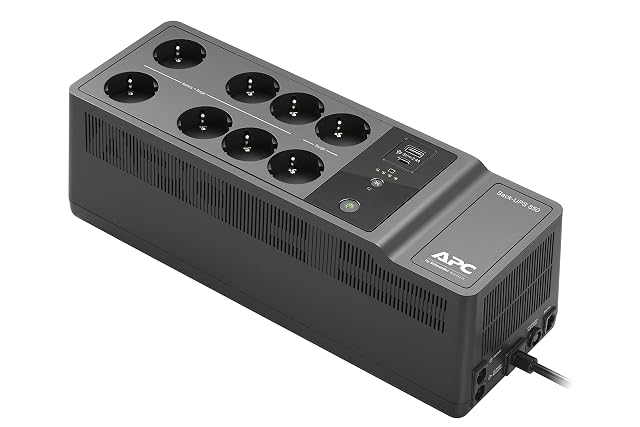
850 VA · no watt rating published · 8 Schuko sockets · surge protection named · USB Type-C and Type-A charging ports · topology, waveform, runtime and battery not published
An eight-hundred-and-fifty volt-ampere unit with eight sockets and a single bullet, whose page carries no watt figure, no runtime, no waveform and no description of the battery.
Best for: A desk with a great many plugs, bought by someone who will ask for the watt rating and the runtime chart before anything is connected behind it.
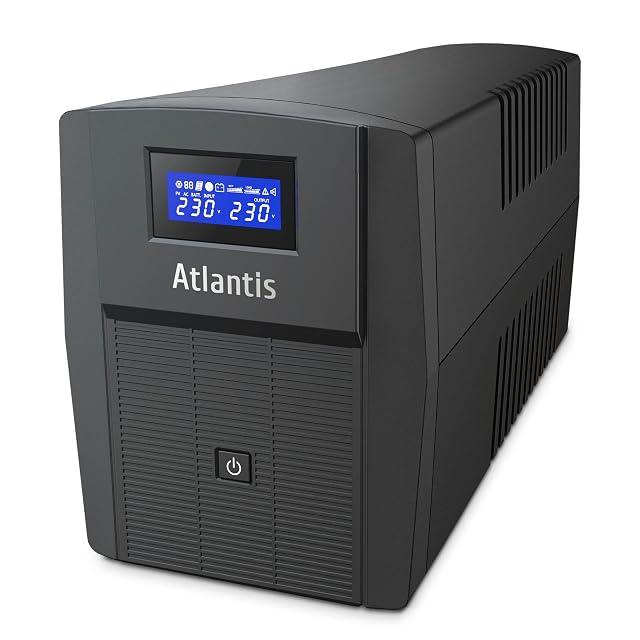
1500 VA · 900 W · line-interactive tower · pure sine wave · a few seconds at 100 %, 7.3 min at 50 %, 20 min at 25 %, base not stated · 3 IEC and 2 Schuko sockets · 2 × 12 V 9 Ah batteries · USB HID · 10.1 kg
A line-interactive tower publishing both ratings, a pure sine wave and two batteries by size, whose three runtimes are given as percentages without the page ever saying percentages of which figure.
Best for: A tower under a desk feeding equipment with IEC leads, where the pure sine wave and the two-battery pack matter and the percentage runtimes will be put to the maker.
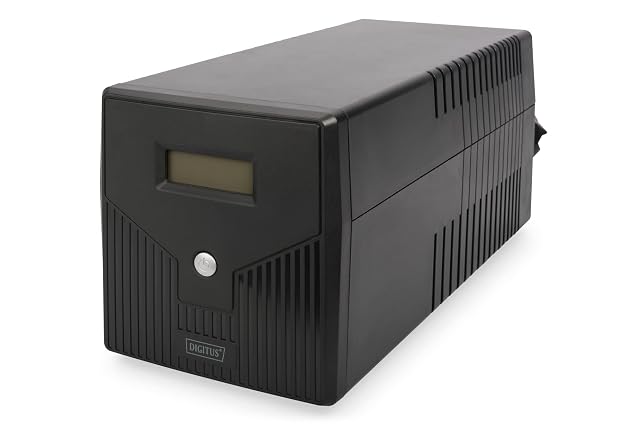
1500 VA · 900 W · line-interactive, class 2 – VI · 36 minutes at a 120 W load · transfer of 2 to 6 ms · 4 Schuko CEE 7/7 sockets · USB Type-B and RS232 · waveform and battery not published
The one listing of the eight to quote its runtime against a load in watts, and the one to publish a classification code beside its topology, on a page that then says nothing about its waveform or its battery.
Best for: A small rack or a desk running a machine and a monitor, where a runtime at a stated load and a serial port count for more than a published waveform.