A mechanism, a bridge and a case, and buyers compare the wrong one of the three · review
UnionSine HD2510 500 GB, the smallest capacity here, with read and write figures published review
A five-hundred-gigabyte portable drive that publishes read and write figures and calls them theoretical, lists what is in the box, and names neither its connector nor its measurements.
The bottom line Honest about its speeds and complete about its box, and silent about the two things a pocket drive is judged on. Thin and light are adjectives here, never measurements, and the plug at the far end of the cable is anyone’s guess.
On the listing
A five-hundred-gigabyte external drive, ultra-thin and portable in 2.5-inch form, on USB 3.0 with SATA inside; an updated version combining a mirrored logo stripe with a non-slip finish and a rounded case shaped for the hand; compatibility given as Windows, Mac, Linux, Android, television, computer, laptop, PlayStation 4 and Xbox; plug and play with no software, the controller wrapped in an anti-interference aluminium layer to spread heat and protect data; working on USB 3.0 and USB 2.0 ports with theoretical read speeds of up to 120 MB/s and write speeds of up to 103 MB/s; and a box containing the drive, a USB 3.0 cable, a manual, gift packaging and a three-year maker warranty.
Theoretical, and said so
Up to 120 MB/s reading, up to 103 MB/s writing, described as theoretical by the maker. That last word is doing real work. It marks the figures as ceilings rather than expectations, and it is the maker doing the marking rather than a reviewer doing it afterwards. Two figures with a unit and a caveat are worth more than a promise of ultra-fast transfer.
Thin, and never measured
The title says ultra-thin. The first bullet says rounded. Neither gives a millimetre, and no weight appears anywhere. For a drive whose entire pitch is that it travels well, the measurements are the specification, and they are the part that has been replaced with adjectives.
Nine platforms, no versions
Windows, Mac, Linux, Android, a television, a computer, a laptop, a console and another console. The list is long and every entry is a category rather than a version, so it says the drive works widely and never says where it stops.
Before ordering
Ask which plug the supplied cable carries at the computer end. The generation is stated twice, the connector not once, and on a machine with modern sockets that is the difference between plugging in and buying an adapter.
Availability
Priced from 36 € to 38 € across the German, French, Italian and Spanish Amazon stores the day this page was checked.
It is stocked on the British Amazon store as well, in that country’s own currency. The range above leaves those out: it counts euro stores and no others.
The American Amazon store returned nothing at all, so the buy button there opens a search in that country rather than a page that would not load.
Every figure in this section is what Keepa held on the day this page was last updated. Stock and prices move without warning.
Prices quoted in this text were read on 10 September 2026. The live price is at the top of the page.
Where it holds up, and where it stops
Strengths
Publishes read and write figures with a unit and labels them theoretical, which is more candour than most listings on this shelf offer
Lists the box contents item by item, so the cable and the warranty are both accounted for before purchase
Names the heat path — an aluminium layer around the controller — rather than promising cool running in general
Compromises
The connector at the computer end is never named, so nothing says which socket the supplied cable expects
No measurement and no weight, on a drive sold almost entirely on being thin and portable
The system compatibility list runs to nine entries and none of them carries a version, so what it excludes is unclear
Specifications
Capacity
500 GB — printed in the title, in the maker’s unit. It is the smallest capacity in this batch and the only one below a terabyte, and the figure is reported here as published
Portable or desktop format
Portable — the title calls the drive ultra-thin and portable in 2.5-inch form, and the first bullet describes a rounded case shaped for the hand
USB generation
USB 3.0 — printed in the title and named in the fourth bullet, which adds that the drive also works on USB 2.0 ports
Stated link rate
Not published on the listing as a figure in gigabits — the fourth bullet gives read speeds of up to 120 MB/s and write speeds of up to 103 MB/s and calls them theoretical, which are figures for the drive rather than a rate for the bus
Connector type
Not published on the listing — the fifth bullet counts one USB 3.0 cable among the box contents and names the plug at neither end of it
Power source
Not published on the listing in those words — no mains adapter appears among the five items the fifth bullet lists, and no sentence states whether the drive takes its power from the port
Stated dimensions
Not published on the listing — the title calls the case ultra-thin and the first bullet describes it as rounded, and no measurement appears
Weight
Not published on the listing — no figure in grams appears, on a drive sold on being thin and easy to carry
Cable supplied
One USB 3.0 cable — stated in the fifth bullet, listed alongside a manual and gift packaging
Warranty length
Three years — stated in the fifth bullet as a maker warranty, printed as part of the box contents
Amazon reference
B091FS79T8 (same reference on 5 Amazon marketplaces)
EAN
0630808446412
The questions that come up before an order
What is the difference between 120 MB/s and a link rate in gigabits?
One describes what the mechanism manages, the other what the bus allows. A USB 3.0 connection permits far more than a spinning 2.5-inch drive can produce, so the drive is the narrower path and its own figure is the useful one. This listing prints the drive figures and calls them theoretical, which is the honest version of both claims.
Why does the connector matter more than the generation on a portable drive?
Because the generation says how fast the link may run and the connector says whether it plugs in at all. A modern laptop with only Type-C sockets and a supplied cable ending in Type-A leaves the buyer needing an adapter. This page names the generation twice and the connector never.
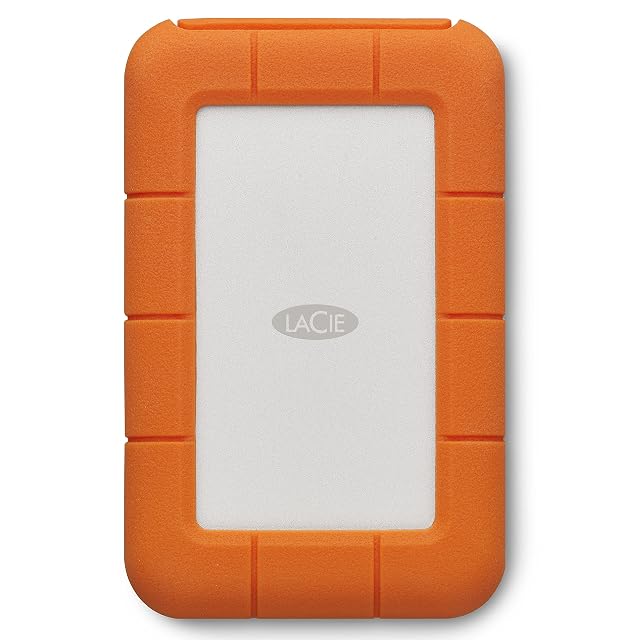
4 TB · portable · USB-C · USB 3.2 Gen 1 and Gen 2 and Thunderbolt 3 listed · shock, water and pressure resistance claimed · three-year warranty · one cable in, one out
A four-terabyte portable drive that lists five interface standards it works with, names the cable in the box and the cable that is not, and publishes a three-year warranty.
Best for: A drive that leaves the desk and goes into a bag on a site or a shoot, where the protective claims and the published warranty are the reason to pay more.
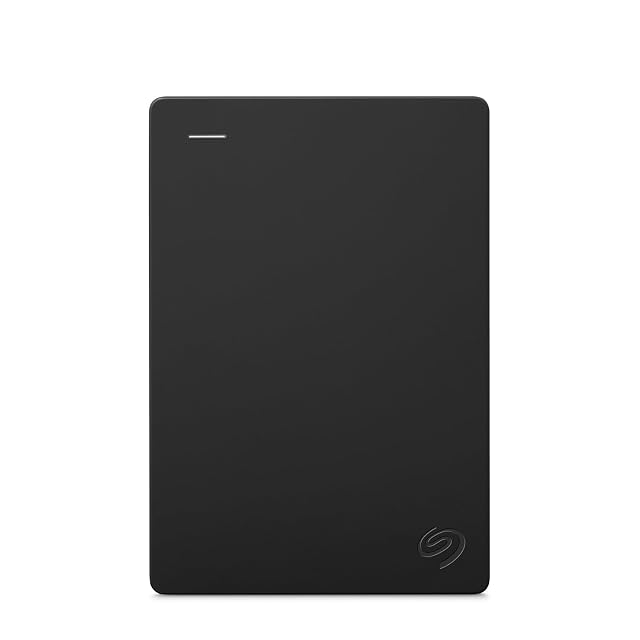
4 TB · portable · USB 3.0, backwards compatible with USB 2.0 · compatible with computers and two console families · sold exclusively through one marketplace
A four-terabyte portable drive whose page names a generation, a compatibility list and a marketplace exclusivity twice, and that never states a connector, a measurement or a warranty.
Best for: A console or laptop that has run out of room, where four terabytes at a low price per terabyte is the requirement and the interface details can be confirmed with the seller.
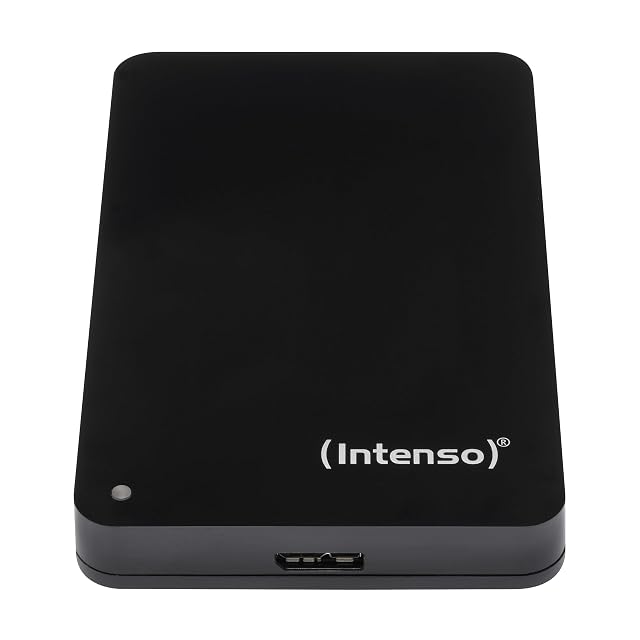
1 TB · 2.5-inch portable · USB 3.2 Gen 1×1 · certified refurbished, reconditioned in Germany · no cable, no connector, no measurement published
A one-terabyte portable drive that names its USB generation precisely and states that the mechanism inside it has been reconditioned and fitted into a new case.
Best for: A modest second copy of documents and photographs at the lowest price on the shelf, where the reconditioned mechanism is understood and accepted in advance.