One interface caps every drive on the shelf at the same ceiling · review
PNY CS900 1 TB, five bullets of plain specification review
A one-terabyte drive whose five bullets are five specifications and nothing else, publishing both sequential figures and the interface revision and none of the three endurance quantities.
The bottom line A specification sheet rather than an advertisement, and the better for it as far as it goes. Capacity, format, interface and both rates are published; the memory, the controller and all three endurance quantities are not.
On the listing
A one-terabyte internal solid-state drive in the 2.5-inch format on SATA III; a storage capacity of one terabyte; an easy and inexpensive replacement for the spinning drive in an existing machine; a serial interface at six gigabits per second, backwards compatible with the previous revision; a 2.5-inch format; and reading of up to 535 MB/s with writing of up to 515 MB/s.
Five bullets, five facts
There is no adjective on this page. Each bullet states one thing and stops: the capacity, the purpose, the interface, the format, the pair of rates. Compared with rivals here that spend two bullets on bundled software, it reads as a datasheet, and everything on it can be checked against a machine before the drive is ordered.
Both rates, under the ceiling
Up to 535 MB/s reading, up to 515 MB/s writing. The interface allows roughly half a gigabyte per second of payload, and these two sit just under it, as every drive on this shelf does. That is not a criticism of the drive; it is the shape of the family. What it means practically is that choosing between two drives here on their sequential figures is choosing between two numbers that were fixed by the connector rather than by the design.
The height a bay has to accept
The format is given in inches twice and never in millimetres. A 2.5-inch drive can be built at more than one thickness, and a thin laptop bay accepts only the slimmer one. Nothing on this page settles that, and it is the measurement most likely to send a drive back.
What is not here
No memory type. No controller. No written total, no population statistic, no term. Those are the lines on which two drives sharing an interface ceiling genuinely differ, and this page carries none of them. It is honest about what it does say and it stops early.
Before ordering
Measure the bay and ask for the height, the written total and the term. The rates are settled by the interface, so they are not what this decision turns on.
Availability
Priced from 120 € to 135 € across the German, French, Italian and Spanish Amazon stores the day this page was checked.
It is stocked on the American and British Amazon stores as well, in that country’s own currency. The range above leaves those out: it counts euro stores and no others.
Every figure in this section is what Keepa held on the day this page was last updated. Stock and prices move without warning.
Prices quoted in this text were read on 10 September 2026. The live price is at the top of the page.
Where it holds up, and where it stops
Strengths
The interface revision is given with its rate and its backwards compatibility, which is what an older machine needs to know before the drive arrives
Both sequential figures are published, and both sit slightly below the ceiling of the interface rather than at a round number
Five bullets and five facts, with no comparison to anything the buyer cannot see
Compromises
None of the three endurance quantities appears, so nothing says what the drive is rated to be written with or what the maker will replace
No memory type and no controller, which is where two drives on this interface actually differ
The height is never stated, and a bay in a thin laptop cares about that measurement more than about any rate
Specifications
Capacity
1 TB — printed in the title and given again as the first bullet on its own, in the maker’s unit and reported here in that unit
Form factor
2.5-inch — printed in the title and given again as the fourth bullet, which states the format and nothing else
Height
Not published on the listing — the format is given in inches in two places and no measurement in millimetres follows it, so the height a laptop bay has to accept is not stated
Stated sequential read figure
Up to 535 MB/s — stated in the fifth bullet as a reading speed, below the ceiling this interface allows and stated as a peak
Stated sequential write figure
Up to 515 MB/s — stated in the fifth bullet beside the read figure, twenty below it
Stated random IOPS
Not published on the listing — no figure in IOPS appears in the title or in the five bullets, which cover capacity, purpose, interface, format and the sequential pair
TBW rating
Not published on the listing — no total in terabytes written appears, on a page that publishes five specifications and stops
Stated MTBF
Not published on the listing — no figure in hours appears, and reliability is not raised in any of the five bullets
DRAM cache presence
Not published on the listing — no memory chip on the drive is claimed and no arrangement for doing without one is named, so the question is left open in both directions
Controller family
Not published on the listing — no controller and no memory type is named anywhere on the page
Warranty length
Not published on the listing — no term of any length appears, on a page whose second bullet sells the drive as an inexpensive replacement for a spinning one
Amazon reference
B07Y5VDNT9 (same reference on 6 Amazon marketplaces)
EAN
0751492629964
The questions that come up before an order
Why are all the drives on this interface quoted at nearly the same rate?
Because the interface is the limit, not the memory behind it. Six gigabits per second of signalling leaves roughly half a gigabyte per second of payload once the line coding is accounted for, and essentially every drive on this shelf reaches it. The sequential pair therefore separates almost nothing, and the differences worth finding are elsewhere: the memory type, the controller and the written total.
Does backwards compatibility with the older revision cost anything?
Only speed. A drive fitted to an older port negotiates the older rate and works normally, which on a machine of that age is the difference between an upgrade and a return. It is worth stating, and this page states it in the same bullet as the current rate rather than leaving the buyer to assume.
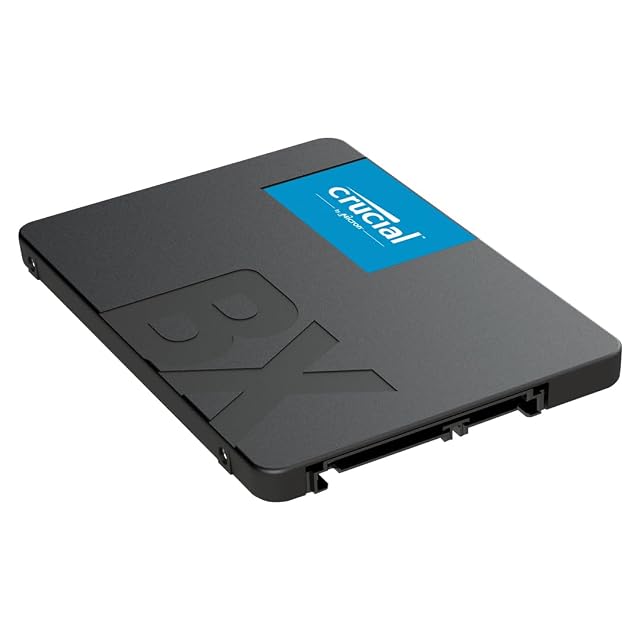
1 TB · 2.5-inch · up to 540 MB/s read · dynamic write acceleration named · 256-bit hardware encryption to three named standards · three-year limited warranty · no write figure, no TBW, no MTBF
A one-terabyte drive that publishes a term, a named write acceleration mechanism and three encryption standards by name, and that never quantifies writing or endurance.
Best for: A machine where encryption to a named standard is a requirement and the drive will be read from far more than it is written to.
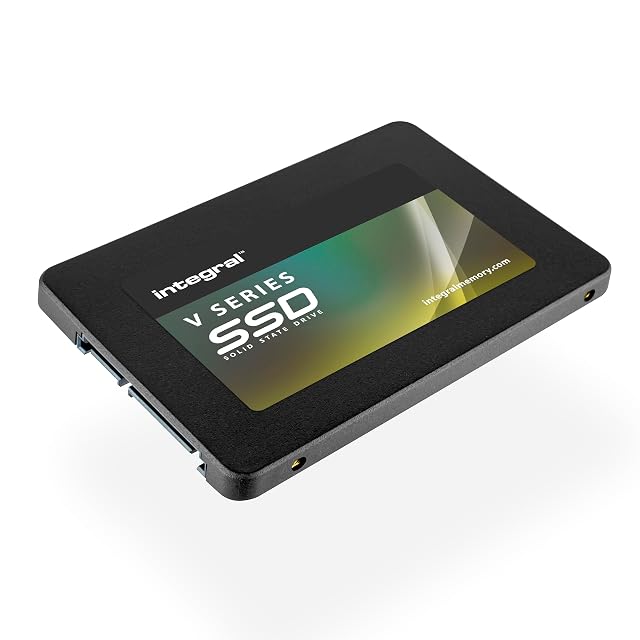
2 TB · 2.5-inch · SATA III · up to 540 MB/s read · up to 500 MB/s write · three-year warranty ending at a written total the page never states · no MTBF · no controller named
A two-terabyte drive whose warranty is explicitly limited by a written total, and whose page never says what that total is.
Best for: A desktop machine or a laptop needing two terabytes on this interface, bought by someone who will ask for the written total before relying on the term.
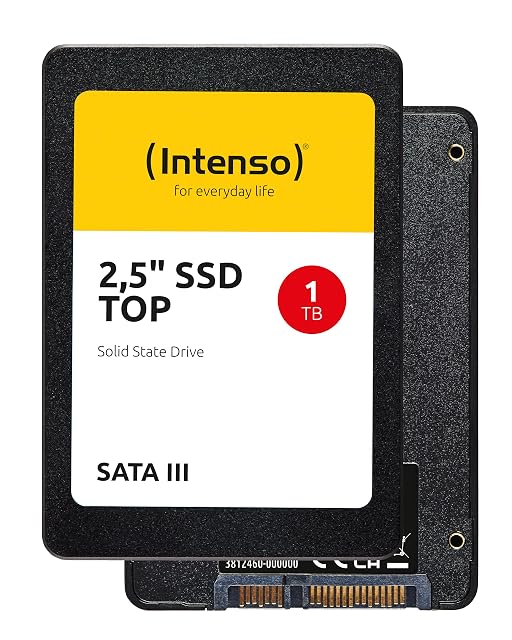
1 TB · 2.5-inch · SATA III at 6 Gbps · up to 550 MB/s read · up to 500 MB/s write · TBW rating of up to 480 TB · 2 million hours MTBF · shock resistance to 1500 G · no warranty term
A one-terabyte drive that publishes both sequential figures, a written total, a population statistic and a shock figure with its duration, and that names no warranty term at all.
Best for: A notebook or a desktop machine that is knocked about, where a shock rating and a written total matter and the term will be checked with the seller.