The first bullet is the most carefully written sentence on this shelf, and it is worth quoting in pieces. “An industry leading 1.75M hours mean time to failure (MTTF) and up to 600 terabytes written (TBW) for enhanced reliability”, followed by two footnotes: MTTF is based on internal Telcordia stress part testing, and the TBW values are calculated using the JEDEC client workload JESD219 and vary by product capacity.
Two quantities, each with the method that produced it. Neither of the other two drives on this shelf publishes a figure for either: the Gigastone pack names TBW without a number, and the SA510 names neither. A number with a method behind it can be compared with another number produced the same way; a bare word cannot be compared at all.
The statistic itself needs naming correctly. This page publishes MTTF, mean time to failure, not MTBF. MTBF describes the interval between failures of something that gets repaired, MTTF the expected life of something that does not. A solid-state drive is not repaired, so MTTF is the right statistic for it. It is a population figure: it says how a large batch behaves, not how long one drive will last.
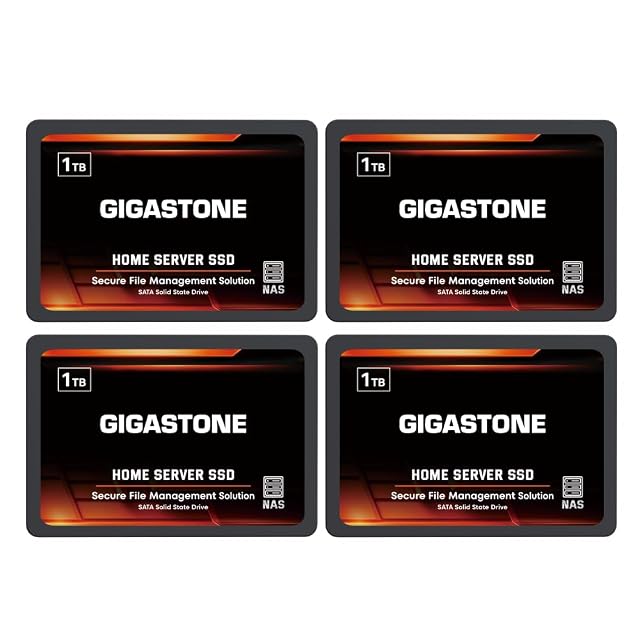
Which is the gap. No warranty term appears anywhere on this page — not in the title, not in the four bullets, not in the description. The drive publishes both endurance quantities and the methods behind them, and creates no obligation. The SA510 beside it is in the same position; only the Gigastone pack names a term, three years.
The speeds are up to 560 MB/s reading, matched by the newer SA510, and up to 530 MB/s writing, the only writing figure on this shelf. Both sit in the description rather than the bullets.
The fourth bullet claims an active power draw up to 25 per cent lower than previous generations of WD Blue SSD. The description then narrows it twice: the saving applies during sequential reads, and at the 500 GB capacity point. This is a 1 TB drive, and most of what a drive does is not a sequential read.
The second bullet names WD F.I.T. Lab certification for compatibility across a range of computers, and the third free software to monitor drive health and clone a drive.
On October 26, 2026 Amazon.com had no featured offer for this drive; third-party sellers listed it at $295, against $274 for the newer SA510. What the extra $21 buys is a write figure, a written total, a population statistic and two published methods. It does not buy a warranty term, because neither drive publishes one.
Prices quoted in this text were read on October 26, 2026. The live price is at the top of the page.
The questions that come up before an order
Is MTTF the same as MTBF?
No. MTBF describes the average interval between failures of something that is repaired and returned to service. MTTF describes the expected time to failure of something that is not repaired, which is what a solid-state drive is. This page publishes 1.75 million hours of MTTF, which is the right form, and names the testing behind it.
Why does it cost more than the newer SA510?
The page does not say. On October 26, 2026 both WD drives were sold on Amazon.com only by third-party sellers, at $295 for this one against $274 for the 1 TB SA510. What this older drive publishes that the newer one does not is a write figure, a written total, a population statistic and the method behind each.
Does the 25 per cent power saving apply to this drive?
Not as stated. The bullet claims it against previous generations of WD Blue; the description narrows it to sequential reads, at the 500 GB capacity point. This drive is 1 TB, and sequential reading is not most of what a drive does.
What warranty comes with it?
None is published. No term appears in the title, the four bullets or the description, which leaves both endurance figures without an obligation behind them.