One interface caps every drive on the shelf at the same ceiling · review
Samsung 870 EVO 1 TB, whose written total belongs to a smaller drive review
A one-terabyte drive that publishes both sequential figures and a write buffer for long workloads, and whose only written total is attached in the same sentence to a quarter-terabyte variant.
The bottom line Two rates at the top of what the interface allows, a genuinely useful buffer claim, and a written total that belongs to a drive a quarter of this size. Nothing on the page obliges the maker to anything.
On the listing
A one-terabyte internal solid-state drive in the 2.5-inch format on SATA III, quoted at 560 MB/s reading and 530 MB/s writing; a drive offered as an improvement on a spinning one for everyday use; up to three and a half times the speed of a spinning drive at those two rates; long service claimed with 150 terabytes written specified, given for the 250 GB variant; compatibility established through extensive testing with common chipsets, boards, network storage systems and video recording equipment; easy migration with the maker’s own transfer application; and an intelligent write buffer for maximum writing performance under long workloads.
A written total for another drive
One hundred and fifty terabytes, attributed to the 250 GB variant. The title sells one terabyte. Reading the bullet quickly gives this drive a written total it has not been given, which is why the endurance line above records an absence and points at where the figure comes from. Totals scale with capacity across a range; that is a general rule and not a number this page has published.
The buffer, and the workload it is for
The sixth bullet is the most useful line here. It names a write buffer intended for long, continuous work, which is precisely the case where solid-state drives differ from one another and where a sequential peak stops describing anything. What it does not do is put a figure on the sustained rate, and no page in this lot does.
Tested against recording equipment
Compatibility bullets are usually a list of operating systems. This one names chipsets, boards, network storage enclosures and video recording devices, which is a list of the machines a drive of this size actually ends up inside. It is a more useful form of the same claim and it can be checked against equipment already owned.
At the top of the ceiling
Five hundred and sixty reading, five hundred and thirty writing. Both sit at the upper end of what this interface permits, which every drive on this shelf approaches, and the spread across this shelf is a few per cent of a limit none of these drives set. The interesting differences on this shelf live in the lines this page leaves blank.
Before ordering
Ask for the written total for one terabyte and for the warranty term. The page names the right quantity and attaches it to the wrong capacity, and carries no term at all.
Availability
Priced from 258 € to 301 € across the German, French, Italian and Spanish Amazon stores the day this page was checked.
It is stocked on the American and British Amazon stores as well, in that country’s own currency. The range above leaves those out: it counts euro stores and no others.
Every figure in this section is what Keepa held on the day this page was last updated. Stock and prices move without warning.
Prices quoted in this text were read on 10 September 2026. The live price is at the top of the page.
Where it holds up, and where it stops
Strengths
A write buffer for sustained workloads is named specifically, which is the mechanism that decides what a long copy settles to
Compatibility testing is described against named classes of equipment, including recording devices, rather than as broad support
Both sequential figures are published in the title, at the top of the range this interface allows
Compromises
The only written total on the page belongs to a quarter-terabyte variant and sits in a sentence about long service
No warranty term and no population statistic, so nothing on the page carries an obligation
No controller and no memory type, which is where the sustained behaviour the sixth bullet promises would actually be decided
Specifications
Capacity
1 TB — printed in the title, in the maker’s unit and reported here in that unit. The third bullet separately names a 250 GB variant, which is a different drive in the same range
Form factor
2.5-inch — printed in the title beside the interface revision
Height
Not published on the listing — the format is given in inches and no thickness follows it in the title or in the six bullets
Stated sequential read figure
Up to 560 MB/s — printed in the title and repeated in the second bullet, where it sits beside a multiple against spinning drives
Stated sequential write figure
Up to 530 MB/s — printed in the title and repeated in the second bullet, thirty below the reading figure
Stated random IOPS
Not published on the listing — no figure in IOPS appears in the title or in the six bullets
TBW rating
Not published on the listing for this capacity — the third bullet prints 150 terabytes written and attributes it in the same sentence to the 250 GB variant, while the title sells one terabyte. The figure is on the page and it belongs to a different drive
Stated MTBF
Not published on the listing — no figure in hours appears, on a page whose third bullet is headed by a claim about long service
DRAM cache presence
Not published on the listing as memory on the drive — the sixth bullet names an intelligent write buffer for sustained workloads, which is a way of using the flash rather than a separate memory chip
Controller family
Not published on the listing — no controller and no memory type is named; the fourth bullet names compatibility testing against chipsets, boards and recording equipment instead
Warranty length
Not published on the listing — no term of any length appears in the title or in the six bullets
Amazon reference
B08PC5DKZQ (same reference on 6 Amazon marketplaces)
EAN
8806090545917
The questions that come up before an order
Is 150 terabytes written the endurance of this drive?
Not as published. The bullet carrying that figure names the 250 GB variant in the same sentence, and the title sells a one-terabyte drive. Written totals normally scale with capacity within a range, so the figure for this drive is very likely larger, and how much larger is not something a page can be read into saying. The line above records the absence and reports where the number on the page comes from.
What does a buffer for sustained workloads change?
It sets how long the opening speed of a transfer lasts. Every drive of this kind writes quickly into a fast region and more slowly once that region is full; a buffer described as intelligent adjusts how much of the flash is used that way. On a machine writing a long continuous file — a recording, a large backup — that behaviour is the whole of the experience, and it is the one thing this page names and does not measure.
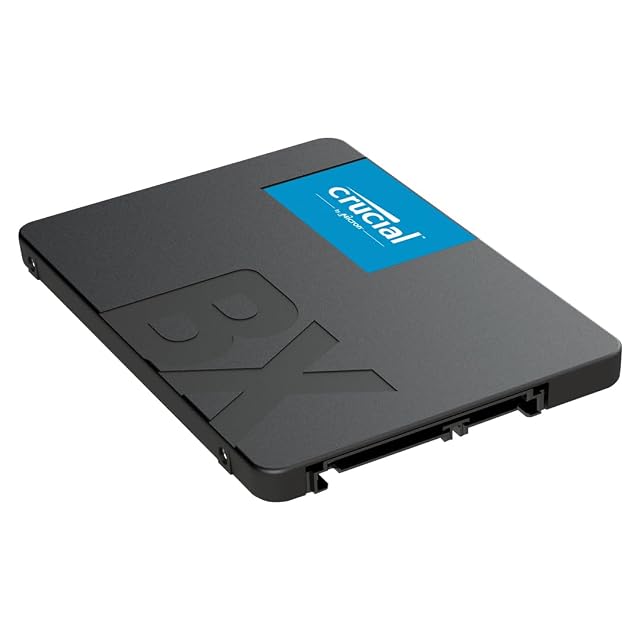
1 TB · 2.5-inch · up to 540 MB/s read · dynamic write acceleration named · 256-bit hardware encryption to three named standards · three-year limited warranty · no write figure, no TBW, no MTBF
A one-terabyte drive that publishes a term, a named write acceleration mechanism and three encryption standards by name, and that never quantifies writing or endurance.
Best for: A machine where encryption to a named standard is a requirement and the drive will be read from far more than it is written to.
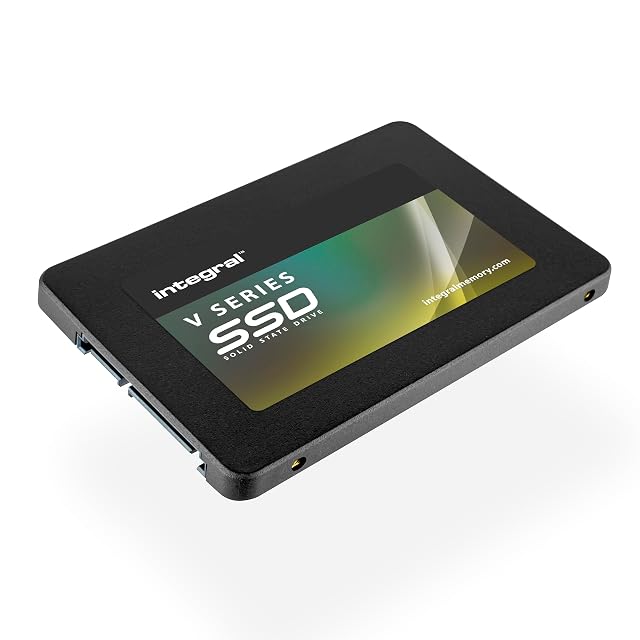
2 TB · 2.5-inch · SATA III · up to 540 MB/s read · up to 500 MB/s write · three-year warranty ending at a written total the page never states · no MTBF · no controller named
A two-terabyte drive whose warranty is explicitly limited by a written total, and whose page never says what that total is.
Best for: A desktop machine or a laptop needing two terabytes on this interface, bought by someone who will ask for the written total before relying on the term.
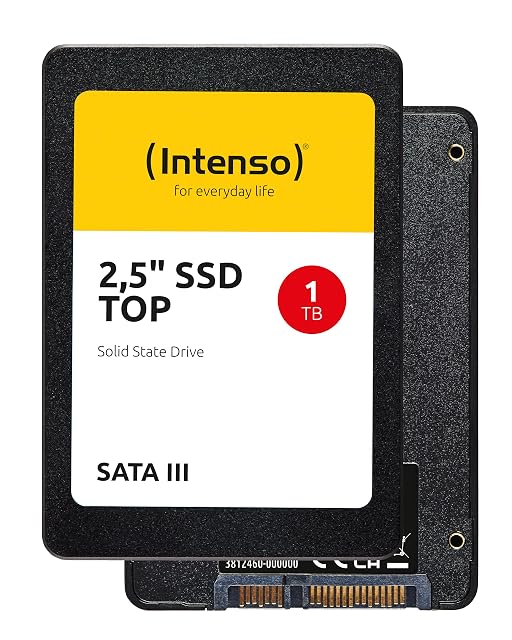
1 TB · 2.5-inch · SATA III at 6 Gbps · up to 550 MB/s read · up to 500 MB/s write · TBW rating of up to 480 TB · 2 million hours MTBF · shock resistance to 1500 G · no warranty term
A one-terabyte drive that publishes both sequential figures, a written total, a population statistic and a shock figure with its duration, and that names no warranty term at all.
Best for: A notebook or a desktop machine that is knocked about, where a shock rating and a written total matter and the term will be checked with the seller.