The slowest link in the chain decides it, and it is rarely the drive · review
Lexar ES4 2 TB, a magnet kit and an explicit limit on it review
A two-terabyte portable drive supplied with a magnetic case and ring, whose first bullet states outright what the magnets will not do, and whose page publishes both rates and no endurance quantity.
A two-terabyte external solid-state drive with a magnet kit on USB 3.2 Gen 2, quoted at up to 1050 MB/s reading and 1000 MB/s writing and offered for recent telephones, computers, Mac machines, tablets and two console families; a magnet kit for attaching the drive to a telephone by a magnetic silicone case, with a ring supplied for telephones already wearing a case and an explicit statement that wireless charging through the magnets is not supported; reading of up to 1050 MB/s and writing of up to 1000 MB/s over the named generation; compatibility with recent telephone generations, with the older ones named as unsupported; an encryption application at 256 bits named by the maker; and a box containing the drive, the magnetic silicone case, the magnetic ring and two leads.
What the magnets will not do
The first bullet says wireless charging is not supported. The arrangement the drive attaches by is the same one those telephones charge through, so the assumption is a natural one and the correction belongs exactly where it has been put: first, before anything is bought. Listings rarely lead with a limitation, and this is the most valuable line on the page.
Both rates and the generation
Reading, writing and the full generation are all published. That combination is what allows a buyer to work out whether their own socket produces the figure, and several drives on this shelf leave one of the three out. Neither rate says what a long recording settles to once the fast region inside is full, which no page in this group addresses.
The size that is not given
A drive held to a telephone by magnets is carried by them through every movement the telephone makes, and how big and how heavy it is decides whether that arrangement is comfortable or precarious. Neither figure appears anywhere on this page. It is the one measurement this design cannot do without, and it is missing.
Two telephone generations, and the ones excluded
The third bullet names the supported models and names the older ones as unsupported. That is a genuine boundary rather than a broad claim of compatibility, and it is checkable before the order. For anyone else the magnetic accessories are dead weight and the drive becomes an ordinary one on a lead.
Before ordering
Ask for the weight and the measurements, and for a term. The compatibility and the limitation are stated more clearly than on any rival here; the physical object and the endurance side are not described at all.
Where it holds up, and where it stops
Strengths
The first bullet states plainly that wireless charging through the magnets is not supported, which is the assumption the design invites
Both rates and the full generation are published, so the figures and the standard behind them can both be read
Two leads and two magnetic accessories are counted in the box list, with the ring covering telephones already wearing a case
Compromises
No measurement and no weight, on a drive whose whole design depends on hanging off the back of a telephone
The compatibility statement excludes older telephones by name, which narrows the product sharply
None of the three endurance quantities, and no rating of any kind for the shell or the case
Specifications
Capacity
2 TB — printed in the title, in the maker’s unit and reported here in that unit without conversion
Interface standard
USB 3.2 Gen 2 — printed in the title and named again in the second bullet, both times with the generation written out rather than left at the family
Stated link rate
Not published on the listing as a figure in gigabits per second — the page names the generation and quotes both rates in megabytes per second, leaving the link rate to the standard
Connector type
Not published on the listing as a socket on the drive — the box list counts two leads, one running between two symmetrical connectors and one ending in the older rectangular plug, and neither names the end that meets the drive
Stated sequential read figure
Up to 1050 MB/s — printed in the title and repeated in the second bullet, both times as a reading speed
Stated sequential write figure
Up to 1000 MB/s — printed in the title and repeated in the second bullet, fifty below the reading figure
Stated ingress or drop rating
Not published on the listing — no ingress code, no drop height and no shell material is named, on a drive supplied with a silicone case and designed to hang off a telephone
Dimensions
Not published on the listing — no measurement appears in the title or in the five bullets, on a product whose attachment to a telephone depends on its size
Weight
Not published on the listing — no figure in grams appears, on a drive held to the back of a telephone by magnets
Cable supplied
Two leads — the box list counts one running between two symmetrical connectors and one ending in the older rectangular plug, alongside the drive, a magnetic silicone case and a magnetic ring. No length is given for either lead
TBW rating
Not published on the listing — no total in terabytes written appears anywhere on the page
Stated MTBF
Not published on the listing — no figure in hours appears in the title or in the five bullets
Warranty length
Not published on the listing — no term of any length appears, on a page that does name an encryption application by its own name
Amazon reference
B0DLH2R5R4
EAN
0843367137886
On Amazon.com
Amazon.com had an offer at $297 on November 9, 2026.
The questions that come up before an order
Why does a magnetic drive say what its magnets will not do?
Because the arrangement it attaches by is the same one used for wireless charging on those telephones, and a buyer seeing the magnets reasonably assumes both. Stating the limit in the first bullet, before anything else, prevents a return. It is the most useful sentence on the page and it is the kind of thing most listings leave for a buyer to discover.
What does the excluded telephone generation change?
Everything, for an owner of one. The magnetic ring at the back is a hardware feature of particular models, and telephones without it have nothing for the case to hold onto. The page names the supported generations and names the excluded ones, which is a clearer statement of fit than most compatibility bullets here manage, and it is the first thing to check.
Our score
8.5/ 10
Careful about what it will not do and silent about what it weighs. Both rates, the generation, the box contents and the compatibility limits are all published; the size of an object designed to hang off a telephone is not, and neither is any endurance figure.
Against the rest of the network and storage gear
This network and storage gear share the category and the price bracket. Only what each one states is shown; an incomplete column would mislead.
Model
Price
Capacity
Weight
Lexar ES4 2 TB, a magnet kit and an explicit limit on it
$290
2 TB — printed in the title, in the maker’s unit and reported here in that unit without conversion
Not published on the listing — no figure in grams appears, on a drive held to the back of a telephone by magnets
1 TB — printed twice in the title, in the maker’s unit and reported here in that unit. The fourth bullet separately names capacities of up to 4 TB across the range
Not published on the listing — no figure in grams appears in the title or in the five bullets
What separates the models, in network and storage gear
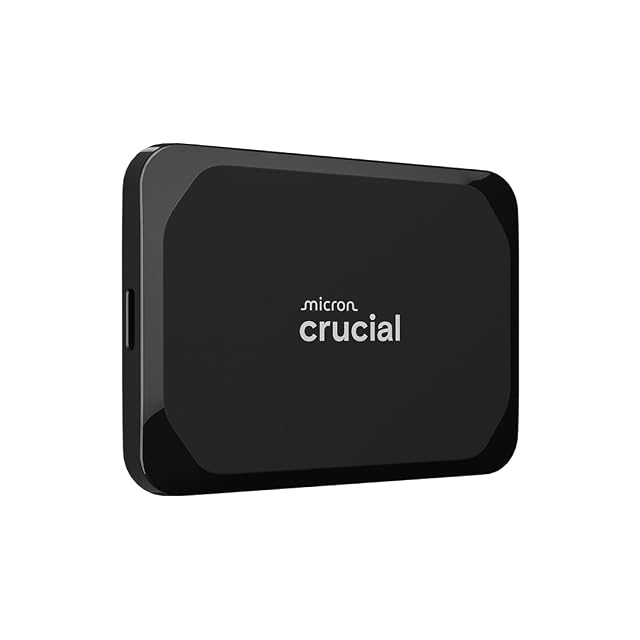
If price decides: Crucial X9 1 TB, a drop height and a generation left unfinished, at $180.
Highest Capacity in the table: this model (2 TB — printed in the title, in the maker’s unit and reported here in that unit without conversion).
This model holds the table’s highest figure for Capacity.
The buyer this one serves, among network and storage gear
A recent telephone used for filming, where the magnetic case is the point and the drive will spend its life attached rather than in a bag.
What this one costs among network and storage gear
A reference exists on these Amazon stores: France, Germany, Italy, Spain, United Kingdom, United States. Listed is not the same as in stock — availability changes daily.
Specifications: the manufacturer sheet for network and storage gear and the matching Amazon product page. Prices and availability: Keepa. Every figure on this page names its source.
On November 23, 2026, the price was in line with its 90-day average.
Lowest new price on Amazon.com (Amazon and third-party sellers), tracked by Keepa. Checked November 23, 2026. Prices change often: the live price is in the buy box.
1 TB · USB-C 3.2, generation not published · up to 1050 MB/s read · drop resistance to 2 m (7 ft) · one lead named, no length · no write figure · no TBW, no MTBF, no warranty
A one-terabyte portable drive that publishes a drop height and a single reading figure, names a lead without measuring it, and stops its interface designation one word short of a generation.
Best for: A laptop bag where a drive gets knocked about, and where the published drop height and the named backup arrangements matter more than a second rate.
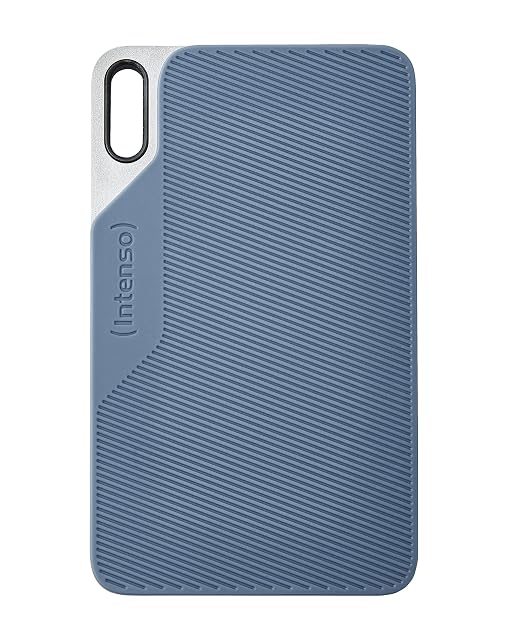
1 TB · USB 3.2 Gen 1×1 · up to 500 MB/s as a transfer rate · two leads in the box · rubberized surface, no rating · no dimensions, no weight · no TBW, no MTBF, no warranty
A one-terabyte portable drive that counts two supplied leads and names the interface generation, and that never states the socket on the drive, a rate in gigabits or a single endurance quantity.
Best for: A household backup that moves between a computer and a console, where two supplied leads and a stated interface matter more than a full sheet of figures.
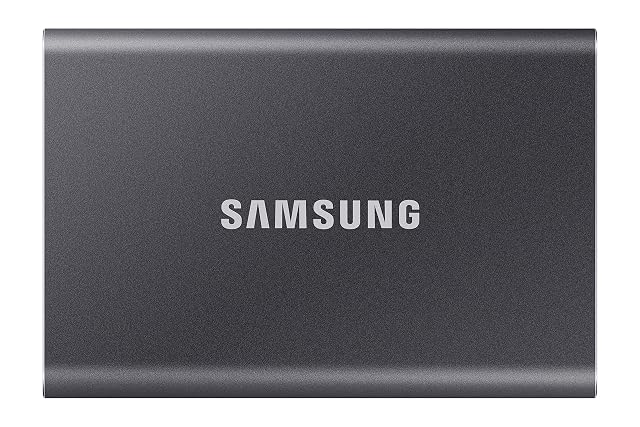
1 TB · USB 3.2 Gen 2 · up to 1,050 MB/s read, 1,000 MB/s write · drop-tested to 6 ft · aluminum unibody · USB-C to C and C to A cables · AES 256-bit encryption · 59 g
Samsung’s T7 is a 1 TB portable SSD on USB 3.2 Gen 2, rated at up to 1,050 MB/s read and 1,000 MB/s write, in an aluminum unibody drop-tested to 6 feet, with both USB-C to C and USB-C to A cables in the box.
Best for: A laptop bag or camera kit where speed, two cables and a tested drop height matter more than a water rating.