The slowest link in the chain decides it, and it is rarely the drive · review
Intenso TX100 1 TB, two leads supplied and no socket named review
A one-terabyte portable drive that counts two supplied leads and names the interface generation, and that never states the socket on the drive, a rate in gigabits or a single endurance quantity.
A one-terabyte external solid-state drive on USB 3.2 Gen 1×1; a rubberized surface described as durable and protective against knocks; data transfer of up to 500 MB/s over the interface named; two supplied leads for connecting to computers, laptops, telephones and two console families; a compact body at one terabyte, with 250 GB, 500 GB and 2 TB also available; and a box containing the drive, both leads and an instruction sheet.
The slowest link, and which part of it is published
A portable drive is a drive, a bridge and a cable, and the result is whatever the weakest of those allows. This page names the interface generation and counts two leads, which covers two of the three. What it does not do is name the socket on the drive itself, so the shape at the drive end has to be taken from the leads rather than from a statement.
One figure for two directions
Up to 500 MB/s, given as a transfer rate. Reading and writing are not separated. On a portable drive the difference between them is usually the thing a buyer notices, because copying files onto the drive is what a backup is, and this page gives one number for both. Nothing states what a long transfer settles to once the fast region inside is full.
Rubber is not a rating
The first bullet describes a rubberized surface protecting the drive from knocks. There is no ingress code, no drop height and no standard. It is a material described honestly and it is not a specification, so a buyer choosing on ruggedness has nothing here to compare against a rival that publishes a code.
The box list, which is the useful part
Two leads, both named, and an instruction sheet. On a shelf where several drives ship with one lead or with none, a page that counts both shapes has answered the question that most often ends in a second purchase. Neither length is given, and short leads are common on drives of this kind.
Before ordering
Ask which socket is on the drive and how long the leads are. The interface and the box contents are settled; the physical connection and every endurance figure are not.
Where it holds up, and where it stops
Strengths
Two leads are supplied and both are named, which settles the most common reason a portable drive gets returned
The interface designation is given in full rather than abbreviated to a generation, so it can be matched against a computer’s published socket
The other capacities in the range are listed, which makes the page useful before the choice of size has been made
Compromises
One figure covers both directions, so neither reading nor writing is separately quantified
No rate in gigabits per second, which is the number that would say what the link itself allows
None of the three endurance quantities, and no rating behind the claim of protection
Specifications
Capacity
1 TB — printed in the title and repeated in the fourth bullet, which also names 250 GB, 500 GB and 2 TB as the other capacities in the range
Interface standard
USB 3.2 Gen 1×1 — printed in the title and named again in the second bullet, both times with the full designation rather than a generation alone
Stated link rate
Not published on the listing as a figure in gigabits per second — the second bullet gives up to 500 MB/s as a data transfer rate for the interface it names, which is a different quantity from the rate of the link itself
Connector type
Not published on the listing as a socket on the drive — the third and fifth bullets count two supplied leads, one running between two symmetrical connectors and one ending in the older rectangular plug, and neither says which end meets the drive
Stated sequential read figure
Not published on the listing as a reading figure — the 500 MB/s in the second bullet is given as a transfer rate for the interface without separating reading from writing
Stated sequential write figure
Not published on the listing — the same single transfer figure covers both directions, and no rate for writing appears on its own anywhere
Stated ingress or drop rating
Not published on the listing — the first bullet names a rubberized surface said to protect against knocks, with no ingress code, no drop height and no standard behind it
Dimensions
Not published on the listing — the fourth bullet calls the drive compact and prints no measurement
Weight
Not published on the listing — no figure in grams appears in the title or in the five bullets
Cable supplied
Two leads — the third bullet names one running between two symmetrical connectors and one ending in the older rectangular plug, and the fifth bullet repeats both in the box list beside the drive and an instruction sheet. Neither length is stated
TBW rating
Not published on the listing — no total in terabytes written appears anywhere on the page
Stated MTBF
Not published on the listing — no figure in hours appears in the title or in the five bullets
Warranty length
Not published on the listing — no term of any length appears, on a page whose first bullet is about protecting valuable data
Amazon reference
B0CM27V653
EAN
4034303033584
On Amazon.com
Amazon.com had an offer at $149 on November 9, 2026.
The questions that come up before an order
Why does a transfer rate in megabytes differ from a link rate in gigabits?
They measure different things. The link rate is what the connection between the computer and the drive can carry, published in gigabits per second by the standard. The transfer rate is what actually crosses it after the protocol overhead, and it is quoted in megabytes per second. A single figure in megabytes tells you what the maker expects to see; the gigabit figure tells you which standard the socket has to meet. This page has the first and not the second.
Why do two leads matter more on a portable drive than on anything else?
Because the drive is only as fast as the slowest part of the chain, and the lead is part of the chain. A drive supplied with one lead ending in a plug your computer does not have is a drive plus a purchase. Two leads covering both common shapes means the drive works on a recent laptop and on an older machine or a console without anything else being bought.
Our score
7.2/ 10
The box contents carry this page: two leads, both named, on a drive whose socket is never stated. Everything about speed comes down to one figure covering two directions, and nothing about endurance is published at all.
Against the rest of the network and storage gear
This network and storage gear share the category and the price bracket. Only what each one states is shown; an incomplete column would mislead.
Model
Price
Capacity
Weight
Intenso TX100 1 TB, two leads supplied and no socket named
$149
1 TB — printed in the title and repeated in the fourth bullet, which also names 250 GB, 500 GB and 2 TB as the other capacities in the range
Not published on the listing — no figure in grams appears in the title or in the five bullets
1 TB — printed twice in the title, in the maker’s unit and reported here in that unit. The fourth bullet separately names capacities of up to 4 TB across the range
Not published on the listing — no figure in grams appears in the title or in the five bullets
What separates the models, in network and storage gear
If price decides: this model, at $149.
The buyer this one serves, among network and storage gear
A household backup that moves between a computer and a console, where two supplied leads and a stated interface matter more than a full sheet of figures.
What this one costs among network and storage gear
A reference exists on these Amazon stores: France, Germany, Italy, Spain, United Kingdom, United States. Listed is not the same as in stock — availability changes daily.
Details checked on November 10, 2026.
Sources
Specifications: the manufacturer sheet for network and storage gear and the matching Amazon product page. Prices and availability: Keepa. Every figure on this page names its source.
On November 23, 2026, the price was in line with its 90-day average.
Lowest new price on Amazon.com (Amazon and third-party sellers), tracked by Keepa. Checked November 23, 2026. Prices change often: the live price is in the buy box.
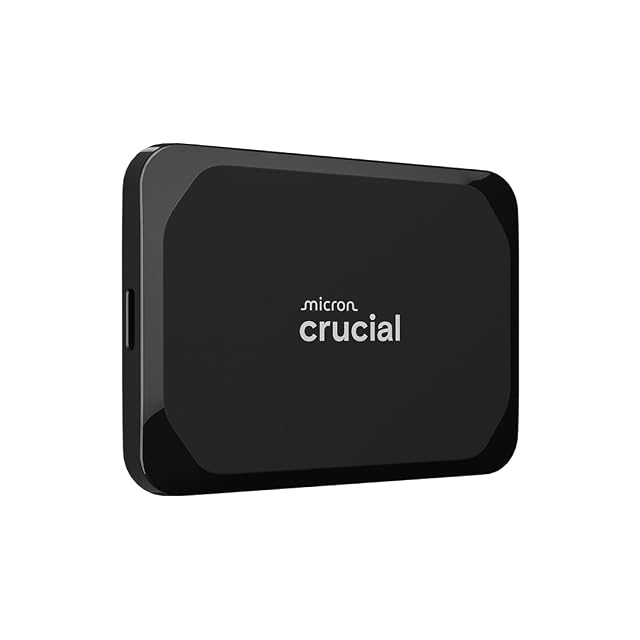
1 TB · USB-C 3.2, generation not published · up to 1050 MB/s read · drop resistance to 2 m (7 ft) · one lead named, no length · no write figure · no TBW, no MTBF, no warranty
A one-terabyte portable drive that publishes a drop height and a single reading figure, names a lead without measuring it, and stops its interface designation one word short of a generation.
Best for: A laptop bag where a drive gets knocked about, and where the published drop height and the named backup arrangements matter more than a second rate.
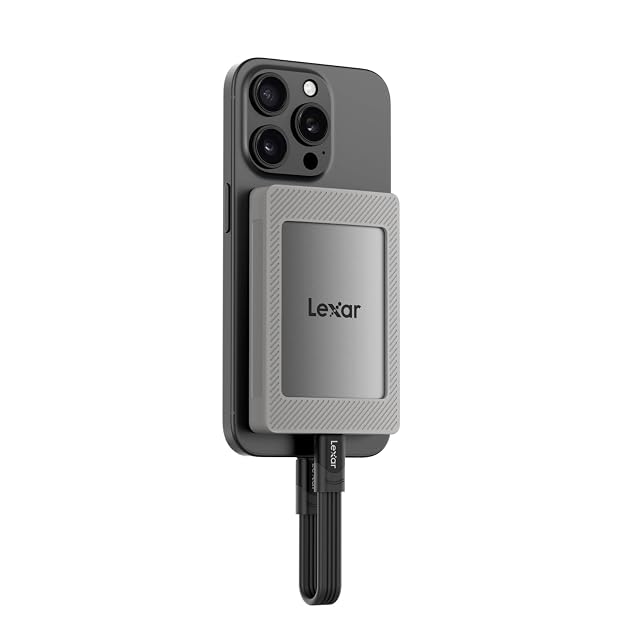
2 TB · USB 3.2 Gen 2 · up to 1050 MB/s read · up to 1000 MB/s write · magnetic case and ring supplied · two leads in the box · encryption at 256 bits · no dimensions, no weight · no TBW, no MTBF, no warranty
A two-terabyte portable drive supplied with a magnetic case and ring, whose first bullet states outright what the magnets will not do, and whose page publishes both rates and no endurance quantity.
Best for: A recent telephone used for filming, where the magnetic case is the point and the drive will spend its life attached rather than in a bag.
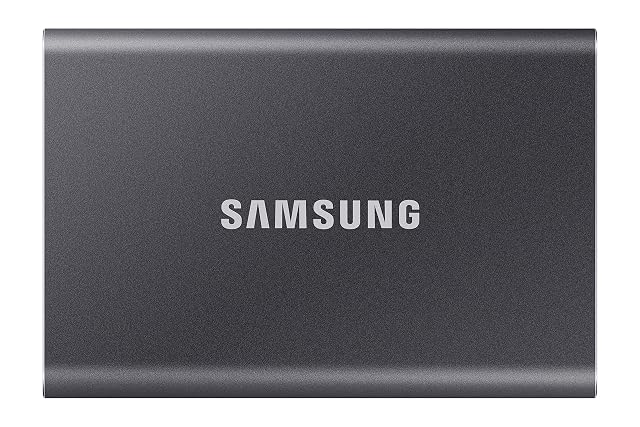
1 TB · USB 3.2 Gen 2 · up to 1,050 MB/s read, 1,000 MB/s write · drop-tested to 6 ft · aluminum unibody · USB-C to C and C to A cables · AES 256-bit encryption · 59 g
Samsung’s T7 is a 1 TB portable SSD on USB 3.2 Gen 2, rated at up to 1,050 MB/s read and 1,000 MB/s write, in an aluminum unibody drop-tested to 6 feet, with both USB-C to C and USB-C to A cables in the box.
Best for: A laptop bag or camera kit where speed, two cables and a tested drop height matter more than a water rating.