Recording method and stated workload rating are what separate these from desktop drives · review
Western Digital Red Plus 4 TB, 5400 rpm, with five bullets and no second figure review
A four-terabyte drive for enclosures whose title carries every figure the page has, and whose five bullets describe continuous operation, compatibility testing and lower running costs without printing a single value.
The bottom line Three figures in the title and five bullets of description behind it. What the drive is for is stated clearly; what it is specified to withstand is not stated at all, and neither is how it writes.
On the listing
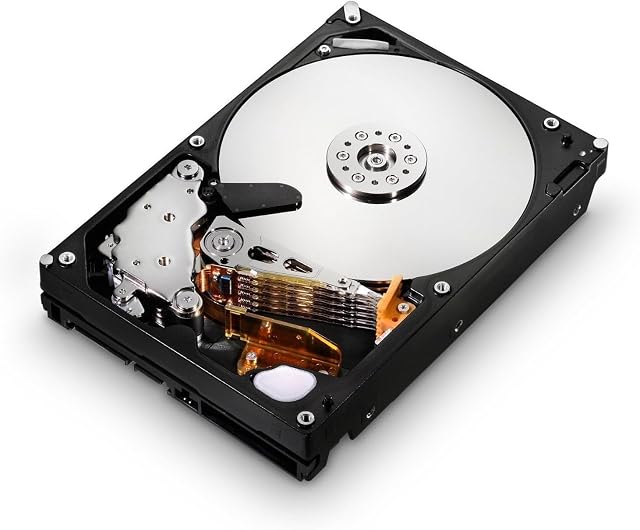
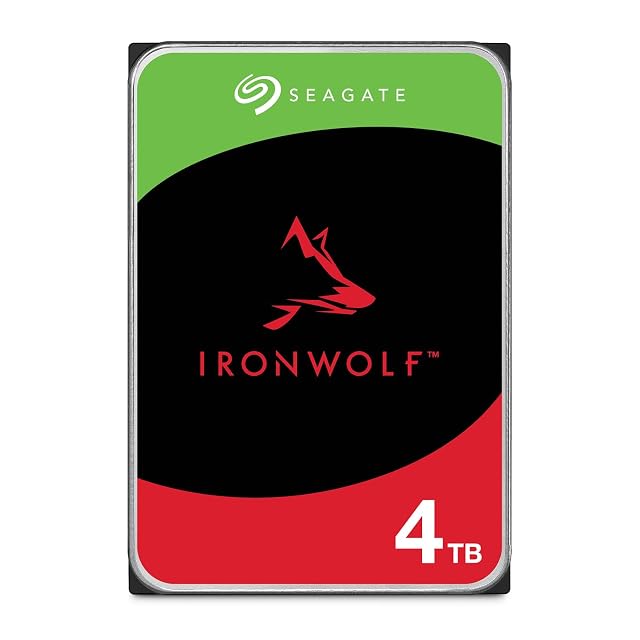
A four-terabyte internal drive for network storage in 3.5-inch form, at 5400 rpm on a SATA 6 Gb/s interface; drive parameters optimised by the maker for the workloads of network storage systems; designed for systems that run continuously, where highly reliable storage is described as essential; tested with many enclosure makers for broad compatibility; optimised for lower total cost of ownership, using less power than earlier models and running cooler; and, despite the lower draw, enough bandwidth for the mixed demands of multi-drive systems.
Every figure is in the title
Capacity, rotational speed, form factor, interface. Four values, all above the bullets, and the five bullets that follow add none. No cache, no hours, no years, no watts, no decibels. It is a coherent page and a thin one: it explains what the drive is for at some length and never says what it is specified to do.
Less power than what
Two bullets say the drive draws less and runs cooler than earlier models. Neither names those models. A comparison without a baseline cannot be checked and cannot be lined up against a rival, which is the difference between a figure in watts and a sentence about efficiency.
Round the clock, and no rating
The second bullet is the reason this drive costs more than a desktop one: it is built to run without stopping. A workload rating in terabytes per year is how that claim is normally quantified, and it is missing here. What remains is the intention, stated plainly, without the number that would let two intentions be compared.
Before ordering
Get the cache figure, the workload rating and the recording method from the maker’s own datasheet. The listing is honest about what the drive is for and silent about every quantity that would place it.
Availability
Priced from 210 € to 216 € across the German, French, Italian and Spanish Amazon stores the day this page was checked.
It is stocked on the American and British Amazon stores as well, in that country’s own currency. The range above leaves those out: it counts euro stores and no others.
Every figure in this section is what Keepa held on the day this page was last updated. Stock and prices move without warning.
Prices quoted in this text were read on 10 September 2026. The live price is at the top of the page.
Where it holds up, and where it stops
Strengths
The rotational speed is printed in the title, which places the drive on the slower and cooler half of the shelf before any bullet is read
The second bullet is explicit that the drive is intended for systems that never stop, which is the distinction that justifies the price gap against a desktop drive
Compatibility testing with enclosure makers is named as a programme rather than implied, which is checkable against the enclosure already owned
Compromises
No cache figure, no MTBF and no warranty term, so three of the four things buyers compare on this shelf are simply absent
The power claims are comparative against earlier models that are never named, which leaves nothing to compare against
No recording method, on a drive sold specifically for multi-drive enclosures
Specifications
Capacity
4 TB — printed in the title, in the maker’s unit, and reported here in that unit without conversion
Recording method
Not published on the listing — neither CMR nor SMR appears in the title or in the five bullets, on a drive whose second and fifth bullets are both about behaviour inside a multi-drive enclosure
Stated workload rating
Not published on the listing as a figure — the first bullet says the drive parameters are tuned for the workloads of network storage systems and the second names continuous operation, and no annual figure in terabytes follows either
Rotational speed
5400 rpm — printed in the title. It is the only mechanical figure the page carries besides the capacity and the interface
Cache size
Not published on the listing — no cache figure appears in the title or in any of the five bullets
Interface
SATA at 6 Gb/s — printed in the title
Warranty length
Not published on the listing — no term of any length appears, on a page that discusses total cost of ownership in the fourth bullet
Stated MTBF
Not published on the listing — no figure in hours appears, and reliability is described in words instead, as a drive designed for systems that run all day and all night
Stated idle power
Not published on the listing as a figure — the fourth and fifth bullets both say the drives use less power than earlier models and run cooler, which is a comparison against an unnamed baseline rather than a value in watts
Stated acoustic figure
Not published on the listing — no decibel value appears, and heat rather than noise is the fourth bullet’s subject
Amazon reference
B0G5YDXKS7 (same reference on 6 Amazon marketplaces)
EAN
0718037905754
The questions that come up before an order
What does 5400 rpm buy on a drive for an enclosure?
Less heat, less power and usually less noise, in exchange for slower access to data. Inside an enclosure serving files over a network, the network link is often the narrower path anyway, which is why slower spindles are common on this shelf. It is a deliberate trade rather than a cheaper compromise.
Does tuned for network storage workloads mean the same as a workload rating?
No. A workload rating is a published figure in terabytes written and read per year, and it states the duty the drive is specified for. Tuning is a description of firmware behaviour with no number attached. This page has the description and not the figure, so the specified annual duty is unknown from the listing alone.
4 TB · 5700 rpm · 64 MB cache · SATA 6 Gb/s · 800,000 hours MTBF · refurbished with no operating hours · recording method not published
A refurbished four-terabyte drive that publishes a rotational speed, a cache figure and an MTBF, and that names neither its recording method nor any warranty term.
Best for: A bulk volume in a multi-drive enclosure where the workload is light and steady, bought by someone who has already decided how they will handle a failure.
4 TB · SATA 6 Gb/s · 1 million hours MTBF · three-year warranty with data recovery · no rpm figure · range figures printed beside the model figures
A four-terabyte drive for enclosures that publishes an MTBF, a warranty term and a recovery service, and whose only cache and capacity figures in the bullets belong to the range rather than to this model.
Best for: A multi-bay enclosure where a published warranty and a recovery service matter more than knowing every figure, and where the drive will be one of several.
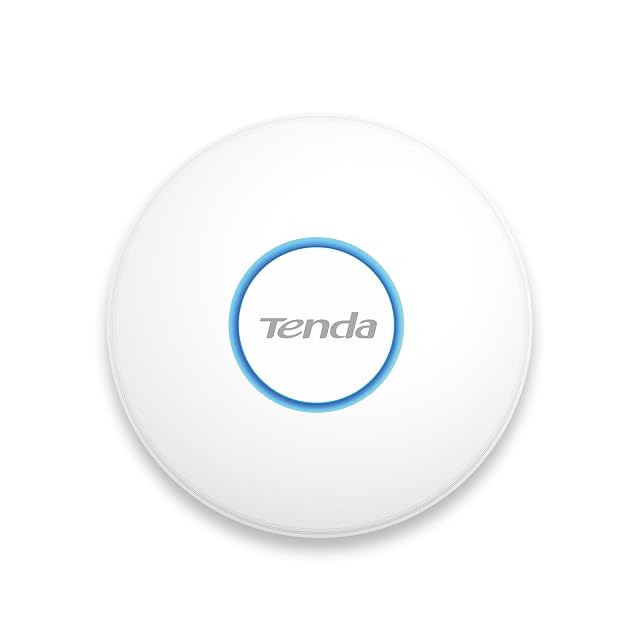
Wi-Fi 6 · AX3000 over 2976 published · both bands rated · PoE+ with an adapter in the box · wall or ceiling, 176 mm disc · 150 m²
The most completely specified access point here: both band rates, both power routes, a mounting choice and a measured body, with only the stream count left out.
Best for: A flat, office or cafe of about 150 m² wanting one well-documented ceiling unit that will run from a plug if no PoE switch exists.