Recording method and stated workload rating are what separate these from desktop drives · review
Hitachi MegaScale DC 4 TB, refurbished, with a stated MTBF and no warranty term review
A refurbished four-terabyte drive that publishes a rotational speed, a cache figure and an MTBF, and that names neither its recording method nor any warranty term.
The bottom line The mechanical figures are all here and the specified-duty figures mostly are not. A refurbished drive with a published MTBF, no warranty term and no recording method asks the buyer to accept two unknowns at once.
On the listing
A four-terabyte internal drive for network storage in 3.5-inch form, at 5700 rpm with 64 MB of cache on a SATA 6 Gb/s interface; sold fully tested and refurbished with no operating hours and in as-new condition; round-the-clock availability with an MTBF of 800,000 hours; Advanced Format with 512-byte emulation; a dual-stage actuator and an enhanced rotational vibration safeguard for robustness in multi-drive environments; and cloud storage with a low application workload named as the intended use.
What 800,000 hours counts
A population figure, with a footnote marker and no footnote. The number describes how often drives fail across a large sample under conditions the manufacturer defines, and the marker printed beside it exists precisely to name those conditions. The note is not on the page. The figure is reported here as published, and the conditions behind it are not available to the reader.
The line the title does not carry
This title prints capacity, form factor, interface, rotational speed and cache. Five figures, and no word about how the platters are written. For a drive offered for multi-drive enclosures that is the sixth figure, and its absence is worth reading as information rather than as an oversight.
Refurbished, and what comes with it
Zero operating hours and as-new condition are claims worth having, and they arrive without a term attached. There is no warranty length anywhere on this page. On a new drive that omission is awkward; on a refurbished one it is the first question a buyer would ask.
The same part number, twice
A second listing in this catalogue prints this part number at 7200 rpm. This page publishes 5700, because that is what this seller publishes. Neither page corrects the other, and a buyer who cares about the difference should confirm the speed of the actual drive being shipped.
Before ordering
Ask two questions of the seller: the recording method, and what happens if the drive fails. Both are unanswered here, and on a refurbished mechanism they are the two that decide the risk.
Availability
Priced from 130 € to 143 € across the German, French, Italian and Spanish Amazon stores the day this page was checked.
The American and British Amazon stores returned nothing at all, so the buy button there opens a search in that country rather than a page that would not load.
Every figure in this section is what Keepa held on the day this page was last updated. Stock and prices move without warning.
Prices quoted in this text were read on 10 September 2026. The live price is at the top of the page.
Where it holds up, and where it stops
Strengths
Publishes an MTBF figure at all, which two of the three drives sold here for enclosures do not
The multi-drive engineering is named specifically — a dual-stage actuator and a rotational vibration safeguard — rather than promised in general terms
The refurbished condition is stated in the first line rather than buried, together with the claim of zero operating hours
Compromises
No recording method, on a drive sold for an enclosure where that answer changes how a rebuild behaves
No warranty term of any length, which is the line a refurbished drive most needs
The MTBF figure carries a footnote marker and the page carries no footnote, so the conditions behind the number are unavailable
Specifications
Capacity
4 TB — printed in the title, in the maker’s unit. The figure is reported here as published and is not converted into any other unit
Recording method
Not published on the listing — neither CMR nor SMR appears in the title or in the two bullets, on a drive whose rotational speed, cache and interface are all printed. It is the answer that decides how the drive behaves under sustained writing, and it is the one figure missing from an otherwise detailed title
Stated workload rating
Not published on the listing as a figure in terabytes per year — the second bullet names round-the-clock availability and describes the application as cloud storage with a low application workload, which is a description of duty rather than a rating
Rotational speed
5700 rpm — printed in the title. A second listing in this catalogue prints the same part number at 7200 rpm, and each page here publishes the figure its own seller publishes
Cache size
64 MB — printed in the title
Interface
SATA at 6 Gb/s — printed in the title and named again in the second bullet as a 6 Gbit/s SATA interface
Warranty length
Not published on the listing — the first bullet sells the drive as fully tested and refurbished with no operating hours and in as-new condition, and gives no term of any length beside it
Stated MTBF
800,000 hours — stated in the second bullet, where the figure carries a footnote marker whose note appears nowhere on the page. MTBF is a population statistic in hours; it is not a lifespan and not a warranty
Stated idle power
Not published on the listing — no figure in watts appears, on a drive offered for continuous operation
Stated acoustic figure
Not published on the listing — no decibel value appears, and the second bullet reaches for vibration handling instead, naming a dual-stage actuator and a rotational vibration safeguard
Amazon reference
B0856419C1 (same reference on 4 Amazon marketplaces)
EAN
0714752534378
The questions that come up before an order
What does an MTBF of 800,000 hours describe?
A failure rate across a large population of drives under stated conditions, expressed as a mean time between failures. It is not a prediction about the drive in your hand and it is not a duration the drive is expected to run for. Warranty length is a commercial term, and a workload rating is a specified annual duty; the three are published separately because they measure different things.
Why does a missing recording method matter more inside an enclosure?
Because rebuilding an array is a long sustained write across the whole drive, which is exactly the condition where the two methods behave differently. Conventional recording writes tracks side by side; shingled recording overlaps them and rewrites neighbours when data changes. A listing silent on the point leaves that behaviour unknown until it is needed.
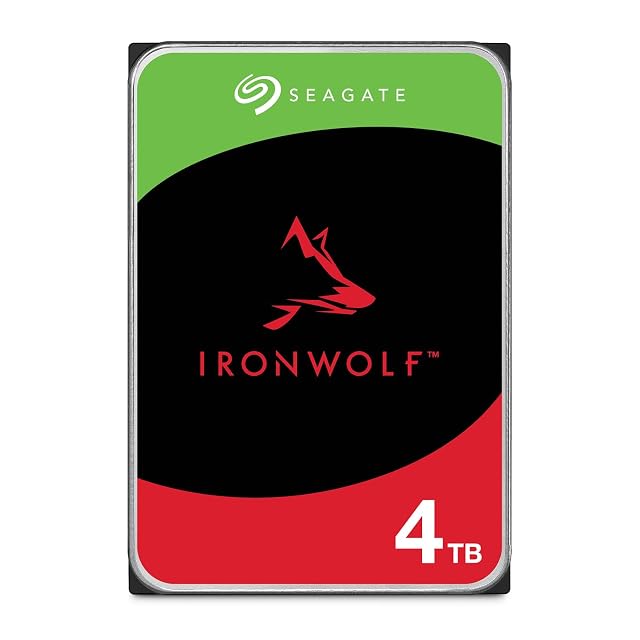
4 TB · SATA 6 Gb/s · 1 million hours MTBF · three-year warranty with data recovery · no rpm figure · range figures printed beside the model figures
A four-terabyte drive for enclosures that publishes an MTBF, a warranty term and a recovery service, and whose only cache and capacity figures in the bullets belong to the range rather than to this model.
Best for: A multi-bay enclosure where a published warranty and a recovery service matter more than knowing every figure, and where the drive will be one of several.
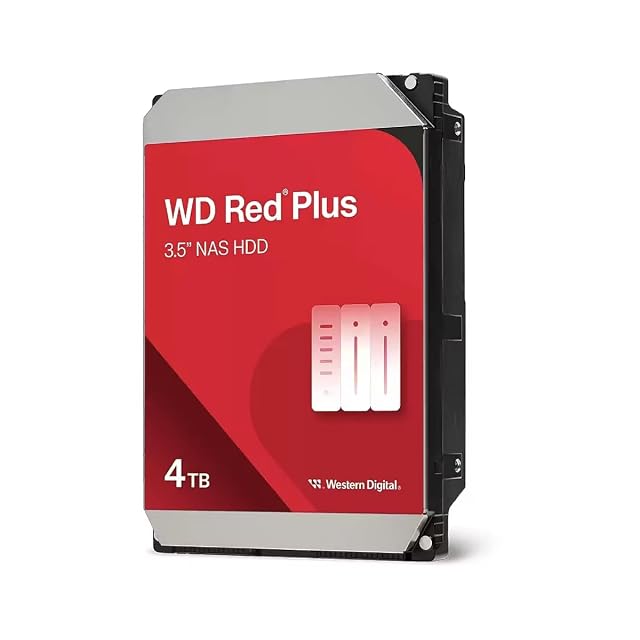
4 TB · 5400 rpm · SATA 6 Gb/s · tuned for enclosure workloads · no cache, no MTBF, no warranty, no recording method
A four-terabyte drive for enclosures whose title carries every figure the page has, and whose five bullets describe continuous operation, compatibility testing and lower running costs without printing a single value.
Best for: A quiet enclosure in a lived-in room where the slower spindle is wanted deliberately, bought by someone who will get the remaining figures from the maker’s own datasheet.
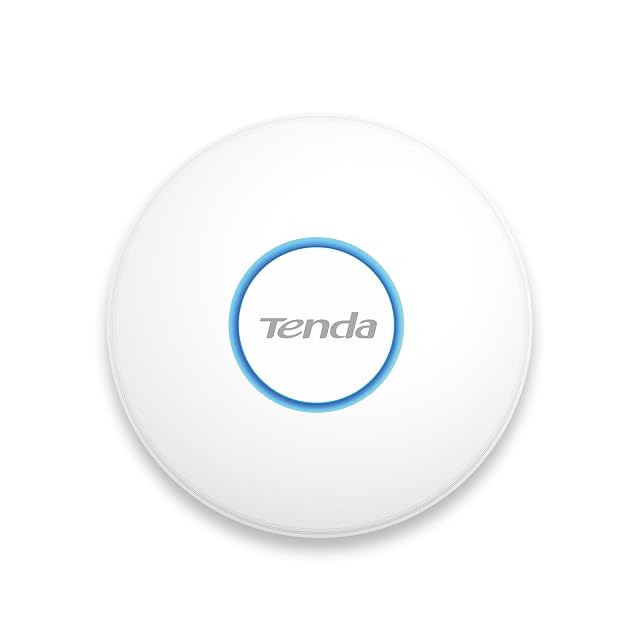
Wi-Fi 6 · AX3000 over 2976 published · both bands rated · PoE+ with an adapter in the box · wall or ceiling, 176 mm disc · 150 m²
The most completely specified access point here: both band rates, both power routes, a mounting choice and a measured body, with only the stream count left out.
Best for: A flat, office or cafe of about 150 m² wanting one well-documented ceiling unit that will run from a plug if no PoE switch exists.