Recording method and stated workload rating are what separate these from desktop drives · review
Western Digital WD Red Plus 12 TB review
The only drive on this shelf that publishes how its workload rating is calculated, with the largest cache here, and the most expensive terabyte on the shelf.
The title: WD Red Plus 12 TB, 7200 rpm, SATA 6 GB/s, CMR, 512 MB cache, 3.5-inch, WD120EFBX. The bullets: the range spans 1 to 14 TB, with support for up to 8 bays; up to 180 TB a year workload rate, with its formula; NASware firmware; testing for compatibility with NAS systems in a 24x7 environment; and a three-year limited warranty. The description names RAID rebuilding on ZFS and other file systems.
The shelf it sits on
Drive
Capacity
rpm
Cache
Recording
Workload
MTBF
Warranty
Amazon.com, October 26, 2026
WD Red Plus
4 TB
5400
128 MB
CMR
—
—
not stated
$194.99, $48.75 a TB
Seagate IronWolf
4 TB
5400
64 MB
CMR
—
1 million h
3 years + 3 of Rescue
$260.00, $65.00 a TB
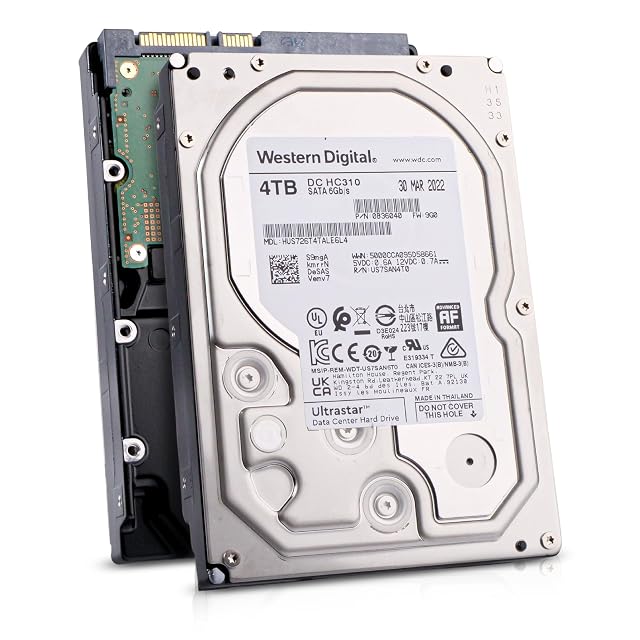
Ultrastar DC HC310 (renewed)
4 TB
7200
256 MB + NVC
CMR
550 TB/yr
2 million h
not stated
no offer
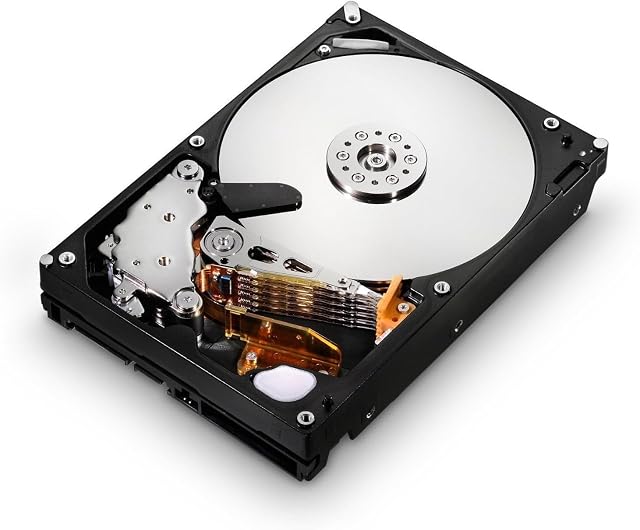
HGST MegaScale DC (refurbished)
4 TB
5700
64 MB
not stated
—
800,000 h
not stated
no US listing
Seagate IronWolf
8 TB
7200
256 MB
CMR
—
1 million h
not stated
$499.99, $62.50 a TB
WD Red Plus
12 TB
7200
512 MB
CMR
180 TB/yr
—
3 years
$789.00, $65.75 a TB
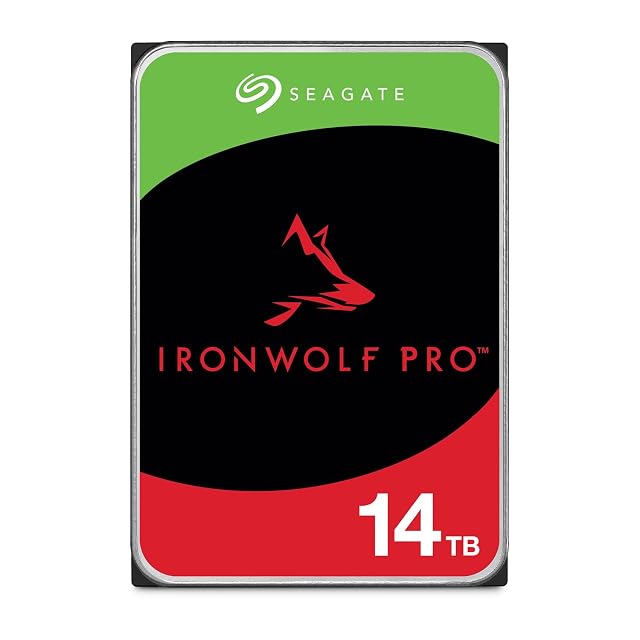
Seagate IronWolf Pro
14 TB
not stated
256 MB
CMR
300 TB/yr
1.2 million h
5 years + 3 of Rescue
$631.00, $45.07 a TB
A rating with its arithmetic
The second bullet defines the workload rate as user data transferred, annualized by power-on hours. Two other drives here give a bare rating — 300 TB a year on the IronWolf Pro, 550 on the renewed Ultrastar — and none gives the formula.
The price
$789.00 on October 26, 2026, $65.75 a terabyte, the most expensive storage on this shelf. The 14 TB IronWolf Pro cost $158.00 less for two more terabytes and a five-year warranty.
Prices quoted in this text were read on October 26, 2026. The live price is at the top of the page.
Where it holds up, and where it stops
Strengths
The only listing here that publishes the formula behind its workload rating, 180 TB a year
7200 rpm, CMR and 512 MB of cache, the largest on this shelf, all in the title
A three-year limited warranty, stated
Compromises
$65.75 a terabyte on Amazon.com on October 26, 2026, the most expensive on this shelf; the 14 TB IronWolf Pro cost $158.00 less
No MTBF, which five other drives here publish
The title prints the interface as 6 GB/s, gigabytes where SATA III is six gigabits
Specifications
Capacity
12 TB — printed in the title, in the maker’s unit, and reported here in that unit without conversion. The first bullet also prints 1-14 TB, which is the span of the range rather than this drive
Recording method
CMR — printed in the title
Stated workload rating
Up to 180 TB a year, with the calculation published — the second bullet defines the rate as user data transferred to or from the drive, annualized as terabytes transferred multiplied by 8760 divided by the recorded power-on hours. It is the only listing on this shelf that publishes the formula behind its own figure. A workload rating is the duty the drive is specified for, not a countdown
Rotational speed
7200 rpm — printed in the title, as on the 8 TB IronWolf and the renewed Ultrastar; the two 4 TB drives with a US listing print 5400
Cache size
512 MB — printed in the title, the largest on this shelf; the next is 256 MB
Interface
SATA, published two ways and not consistently — the title prints "SATA 6 GB/s" in gigabytes and the first bullet prints "Data Transfer Rate:6Gbps" in gigabits. SATA III runs at 6 gigabits per second, so the two differ by a factor of eight and the page never resolves them
Warranty length
Three years, limited — stated in the fifth bullet. A warranty is a commercial term and is neither the workload rating above it nor a statement about how long the drive will run
Stated MTBF
Not published on the listing — no figure in hours appears, where five other drives on this shelf give one
Stated idle power
Not published on the listing — no figure in watts appears anywhere on the page
Stated acoustic figure
Not published on the listing — no decibel value appears, and vibration is addressed through the NASware firmware named in the third bullet rather than through a figure
Amazon reference
B08V1L1WYD
EAN
0718037886190
On Amazon.com
Amazon.com had an offer at $789 on October 26, 2026.
Where this unit differs
Put against the median of its own group on this site — not against every network product sold.
Capacity12 TB — printed in the title, in the maker’s unit, and reported here in that unit without conversion. The first bullet also prints 1-14 TB, which is the span of the range rather than this drive+200 % against the median of this group
Cache size512 MB — printed in the title, the largest on this shelf; the next is 256 MB+100 % against the median of this group
Rotational speed7200 rpm — printed in the title, as on the 8 TB IronWolf and the renewed Ultrastar; the two 4 TB drives with a US listing print 5400+26 % against the median of this group
The questions that come up before an order
How is the workload rate calculated?
The second bullet gives it: terabytes transferred to or from the drive, annualized as TB transferred × (8760 / recorded power-on hours). A drive switched on all year and moving 180 TB is at its rating.
Why does it cost more than the 14 TB IronWolf Pro?
On October 26, 2026 it cost $789.00 against $631.00. The page offers 7200 rpm stated and twice the cache; the IronWolf Pro offers two more terabytes, five years of warranty, an MTBF and a higher workload rating.
Against the rest of the network and storage gear
This network and storage gear share the category and the price bracket. Only what each one states is shown; an incomplete column would mislead.
Model
Price
Capacity
Recording method
Stated workload rating
Rotational speed
Western Digital WD Red Plus 12 TB
$789
12 TB — printed in the title, in the maker’s unit, and reported here in that unit without conversion. The first bullet also prints 1-14 TB, which is the span of the range rather than this drive
CMR — printed in the title
Up to 180 TB a year, with the calculation published — the second bullet defines the rate as user data transferred to or from the drive, annualized as terabytes transferred multiplied by 8760 divided by the recorded power-on hours. It is the only listing on this shelf that publishes the formula behind its own figure. A workload rating is the duty the drive is specified for, not a countdown
7200 rpm — printed in the title, as on the 8 TB IronWolf and the renewed Ultrastar; the two 4 TB drives with a US listing print 5400
14 TB — printed in the title and in the second bullet, in the maker’s unit and reported here unchanged. It is the largest capacity on this shelf
CMR — printed in the title. Conventional recording writes tracks side by side rather than overlapping them, so changing data does not force neighboring tracks to be rewritten, which is what decides how a rebuild behaves in a large array
300 TB a year — stated in the description rather than in any bullet, alongside twenty-four-seven accessibility. It is the duty the drive is specified for and not a quota that runs down. A buyer reading only the bullets would not find it
Not published on the listing — no rpm figure appears in the title, the bullets or the description; the second bullet gives speeds up to 250 MB/s instead. The 8 TB IronWolf on this shelf prints 7200 rpm in its title
8 TB — printed in the title and in the second bullet, in the maker’s unit and reported here unchanged
CMR — printed in the title. Conventional recording writes tracks side by side and does not rewrite neighbors when data changes, which is what decides how an array rebuild behaves
Not published on the listing as a figure in terabytes a year — the first bullet gives an enclosure ceiling of up to eight bays and several users, which is a deployment limit rather than an annual duty. Three other drives on this shelf publish a rating
7200 rpm — printed in the title, as on the WD Red Plus 12 TB and the renewed Ultrastar; the 4 TB IronWolf and the 4 TB WD Red Plus here print 5400
4 TB — printed in the title. The second bullet also prints 16 TB, which is the ceiling of the IronWolf range and not this drive
CMR — printed in the title
Not published on the listing as a figure in terabytes per year — the first bullet gives an enclosure ceiling of eight bays and several users, which is a deployment limit rather than an annual duty
5400 rpm — printed in the title; the description gives speeds up to 180 MB/s
What separates the models, in network and storage gear
If price decides: Seagate IronWolf 4 TB (ST4000VN006), at $260.
Highest Capacity in the table: Seagate IronWolf Pro 14 TB (14 TB — printed in the title and in the second bullet, in the maker’s unit and reported here unchanged. It is the largest capacity on this shelf).
The buyer this one serves, among network and storage gear
An eight-bay NAS or smaller rebuilding large arrays, where 7200 rpm, a large cache and a published workload figure are wanted.
What this one costs among network and storage gear
Amazon reports what buyers took in the month before this page was last checked: at least 50.
The figure is a floor, rounded by Amazon, and read through Keepa — it says what buyers picked, not what a maker claims.
Sources
Specifications: the manufacturer sheet for network and storage gear and the matching Amazon product page. Prices and availability: Keepa. Every figure on this page names its source.
4 TB renewed · CMR · 550 TB a year · 7200 rpm · 256 MB with non-volatile cache · 512e sectors · 2 million hours · no warranty term
A renewed enterprise drive carrying the highest workload rating and the highest MTBF on this shelf, and no warranty term of any kind to stand behind either figure.
Best for: A spare or a cold-storage drive for a buyer who accepts a renewed drive without a stated warranty, once an offer is listed again.
4 TB · 5700 rpm · 64 MB cache · SATA 6 Gb/s · 800,000 hours MTBF · refurbished with no operating hours · recording method not published
A refurbished four-terabyte drive that publishes a rotational speed, a cache figure and an MTBF, and that names neither its recording method nor any warranty term.
Best for: A bulk volume in a multi-drive enclosure where the workload is light and steady, bought by someone who has already decided how they will handle a failure.
14 TB · CMR · 300 TB a year · 256 MB cache · 1.2 million hours · five years plus three of recovery · 24 bays · no rpm figure
The largest capacity, the longest warranty and the highest bay ceiling on this shelf, and the cheapest terabyte among the new drives here at $45.07 on Amazon.com on October 26, 2026 — on a page that publishes no rotational speed.
Best for: A NAS of any size, up to 24 bays, where the largest drive, the longest warranty and the lowest price per terabyte on this shelf all point the same way.