NOYAFA NF-8508, nine-function tester reporting length from 2.5 to 200 metres vs Tolesum multifunction RJ45 tester with an LCD screen, PoE checking and a torch
Length reporting and a charged battery, or a remote unit and a power calculation?
Both of these read out on a screen rather than a row of lights, and both test PoE to 60 V DC. The NOYAFA NF-8508 names nine functions, reports length from 2.5 to 200 metres, and runs from a 1500 mAh pack charged over USB Type-C. The Tolesum tester names its PoE work in more detail — voltage, current and the power drawn — supplies an RJ45 remote, and states twice that cells are not included.
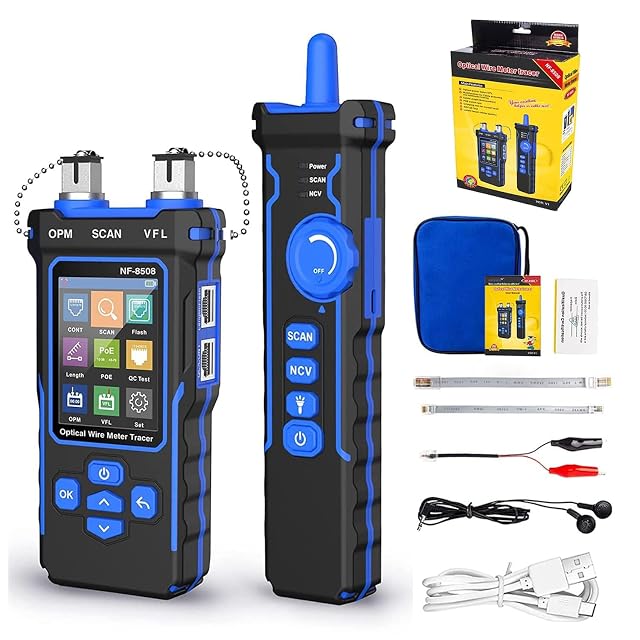
NOYAFA NF-8508, nine-function tester reporting length from 2.5 to 200 metres
NF-8508, nine-function tester reporting length from 2.5 to 200 metres
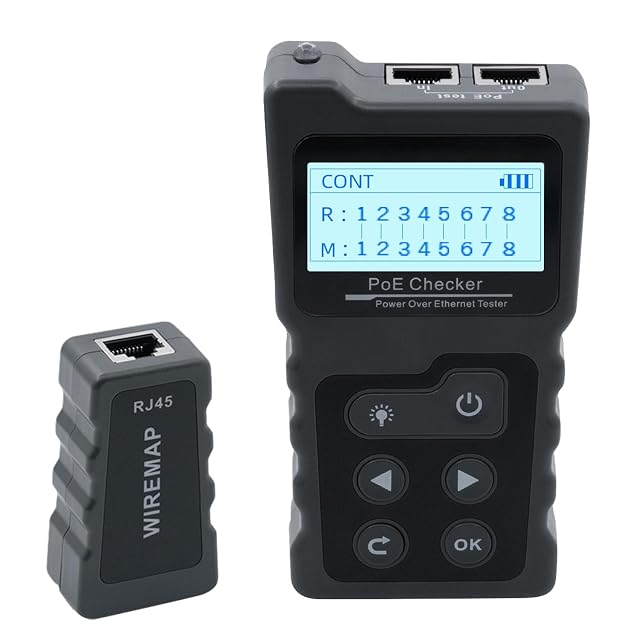
multifunction RJ45 tester with an LCD screen, PoE checking and a torch
Tester type
Multifunction with a large LCD, nine functions named; the non-contact voltage function is printed NCV in the title and NVC in the bullet, both recorded as published
Multifunction with an LCD; the tests are named as POE, CONT, Power and Loopback, with a built-in light
Connector types accepted
RJ45 and RJ11, with network, telephone and coaxial leads named for the length function
RJ45 only, with Cat 5e, Cat 6 and Cat 6a named; no telephone and no coaxial connector appears
Wire map detection
Yes — wire mapping named for Cat 5 and Cat 6, and a network wiring test among the nine functions
Yes — short circuits, crossed conductors and breaks found automatically and shown on the screen
Split pair detection
Not published — a pair that is continuous but wrongly twisted is not mentioned
Not published — a pair that is continuous but wrongly twisted is not among the faults named
Length reporting
Yes, from 2.5 to 200 metres, the only distance figure on this shelf; reporting a distance is not the same as certifying a run against a category, which is a different instrument and is not claimed
Not published — locating a line and a port is named, which is finding a cable rather than measuring one
Tone and probe function
Cable tracing named, with digital, analogue and PoE modes; no separate probe among the contents and no tone frequency published
Cable tracing named, with a transmitter and a cable finder; no separate probe among the contents and no tone frequency published
Remote units supplied
Not published — none appears in the title or the six bullets
One RJ45 remote interface, described as needing no additional preparation
PoE detection
Yes — polarity and switch voltage verified, withstands 60 V DC, automatic switching between 10M, 100M and 1000M
Yes — af and at covered, voltage, polarity and mode, withstands 60 V DC, and the voltage and current between supply and device measured to work out the power drawn
Power source
A 1500 mAh lithium-ion pack at 3.7 V charged over USB Type-C, with 8 to 10 hours of working time
Not published — cells are said twice not to be included, and neither the type nor the number is given
A tick means one listing published something the other did not, or published
a better figure. It does not mean the product is better, and the column is not
a score out of anything: a maker who says less loses lines here without losing
a comparison. The two verdicts below are where the page is settled.
Which one, for whom
Buy the NOYAFA NF-8508, nine-function tester reporting length from 2.5 to 200 metres
The NF-8508 is the instrument to take up a ladder. It reports length from 2.5 to 200 metres, which nothing else on this shelf does, it accepts telephone and coaxial leads as well as RJ45, and it arrives charged rather than needing cells you have to guess at. Two things to know: it lists no remote unit at all, which limits what one person can do at two ends of a run, and its own bullet spells the voltage function differently from its title.
Buy the Tolesum multifunction RJ45 tester with an LCD screen, PoE checking and a torch
The Tolesum is the better PoE instrument of the two. It names the af and at standards, measures voltage and current between the supply and the attached device, and works out the power actually drawn — which is the figure that decides whether a switch budget is being exceeded. It supplies a remote, which the NOYAFA does not. It measures no distances, and it needs cells that the seller states twice are not in the box.
The questions that come up before an order
Does “length from 2.5 to 200 m” mean the cable is certified?
No. Reporting a distance tells you how long a run is, or where a break sits along it. Certifying a run means measuring it against the performance limits of a category — crosstalk, return loss and the rest — which is a different class of instrument costing many times this. The NOYAFA page claims the first and not the second, and this comparison records it that way.
Why does neither tester detect a split pair?
Their listings do not claim it. A split pair is continuous end to end and wired to the right pins, so a continuity test passes it — the fault is in which conductors are twisted together. Both pages name shorts, breaks and crossed conductors; neither names this one, and the row is recorded as not published rather than as absent from the hardware.
multifunction tester with a large LCD · RJ45 and RJ11 · length from 2.5 to 200 m · PoE to 60 V DC · optical power meter and visual fault locator · wire mapping · 1500 mAh pack charged over Type-C
The only unit here that reports a distance, from 2.5 to 200 metres, alongside an optical power meter, a visual fault locator and a PoE check on a rechargeable pack.
Best for: Work across a building where a fault has to be located along a run rather than merely found, and where fibre and copper both turn up in the same day.
multifunction tester with an LCD · RJ45 · Cat 5e, Cat 6 and Cat 6a · PoE to af and at, withstands 60 V DC · loopback · cable tracing named · carrying case · cells not supplied
A screen-based tester that checks power on a live socket, measures the voltage and current a device draws, and reports faults on an LCD rather than on a row of lights.
Best for: A network with cameras or access points fed over their network cables, where the question is usually about power rather than about continuity.