Skip to content

Crucial P310 1 TB, one read figure and three percentages vs Lexar EQ790 1 TB, five years of warranty with no total beside them

One page gives percentages, the other gives the second rate — which is the better document?

These two agree on more than most pairs on this shelf: 1 TB, M.2 2280, PCIe Gen 4, five years limited. The Crucial P310 quotes 7100 MB/s for reading and then spends three bullets on percentage claims against drives it does not name. The Lexar EQ790 quotes 7000 and 5000, and names host memory buffer and SLC cache — two arrangements for working without a memory chip on the board.

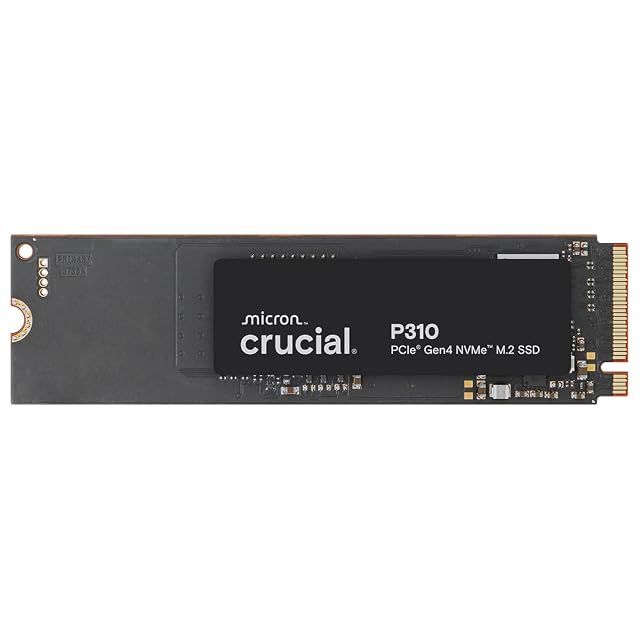
Crucial P310 1 TB M.2 2280 NVMe solid-state drive on PCIe Gen 4

Crucial P310 1 TB, one read figure and three percentages

Wins 1 of 12

Check price

≈ $178 / £125 / 169 €

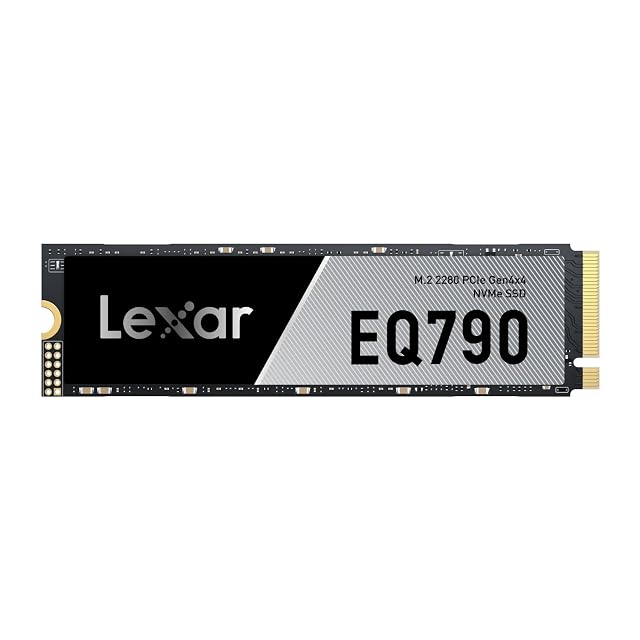
Lexar EQ790 1 TB M.2 2280 NVMe solid-state drive on PCIe Gen 4

Lexar EQ790 1 TB, five years of warranty with no total beside them

Wins 2 of 12

Check price

≈ £140 / 160 €

Line by line

Compared on P310 1 TB, one read figure and three percentages EQ790 1 TB, five years of warranty with no total beside them
Capacity 1 TB, printed twice in the title 1 TB, in the title
Form factor code M.2 2280, directly after the capacity M.2 2280, in a title four items long
PCIe generation PCIe Gen4, framed as an upgrade to that generation PCIe Gen4, named again as a PCIe 4.0 interface
Lane count Not published — no lane figure follows the generation Not published — no lane figure follows the generation
Stated sequential read figure Up to 7100 MB/s Up to 7000 MB/s
Stated sequential write figure Not published — booting, loading and transferring are described instead Up to 5000 MB/s, two thousand below the read figure beside it
Stated random IOPS Not published — the performance claims are three percentages instead Not published
TBW rating Not published, on a page about lengthening a machine’s working life Not published, on a page that does publish the term such a total normally bounds
Stated MTBF Not published Not published
Warranty length Five years, limited Five years, limited, from the maker, with none of its conditions given
DRAM cache Not published — neither a memory chip nor a host memory arrangement is named Not published as memory on the drive — host memory buffer and SLC cache are named, both arrangements for working without a chip on the board
Heatsink Not published — no thermal part is named, on a drive sold for laptops and handheld consoles Not published — no heatsink, no thermal pad, no temperature behaviour

A tick means one listing published something the other did not, or published a better figure. It does not mean the product is better, and the column is not a score out of anything: a maker who says less loses lines here without losing a comparison. The two verdicts below are where the page is settled.

Which one, for whom

Buy the Crucial P310 1 TB, one read figure and three percentages

The P310 has the higher of the two read figures by 100 MB/s and the weaker page. Three of its five bullets make percentage claims against drives that are never named, which is a comparison a reader cannot check, and the writing direction gets no figure at all. Both drives are covered for five years, so the term is not the tiebreaker here — the missing second rate is.

Buy the Lexar EQ790 1 TB, five years of warranty with no total beside them

The EQ790 publishes both halves of the sequential pair, which on this shelf is the exception rather than the rule, and it says what it does instead of a memory chip: host memory buffer and an SLC cache region. Naming that arrangement is more useful than leaving the question open, because it tells you the drive borrows system memory. It gives up 100 MB/s on reading and matches its rival everywhere else.

The questions that come up before an order

What does “host memory buffer” mean for a drive with no DRAM?

It means the drive borrows a small amount of the computer’s memory to hold its mapping tables instead of carrying a memory chip of its own. The Lexar page names the arrangement; the Crucial page names nothing either way. Naming it is not a performance claim — it is a description of how the drive is built, and this comparison treats it as one.

Both are covered for five years. Does that say anything about endurance?

Not on its own. A term is a commercial commitment; a total in terabytes written is the volume of writing the drive is rated for, and neither of these pages publishes one. Five years with no total beside it leaves the endurance question open on both drives.

The full reviews

  • Crucial P310 1 TB, one read figure and three percentages

    1 TB · M.2 2280 · PCIe Gen 4 · up to 7100 MB/s read · five-year limited warranty · three percentage claims against unnamed drives · no write figure, no TBW, no MTBF

    A one-terabyte Gen 4 drive with a five-year term and a single sequential figure, whose remaining bullets compare it in percentages against drives the page never names.

    Best for: A laptop or a handheld where a long term and a stated efficiency claim matter, and where receiving large files is not the daily job.

    ≈ $178 / £125 / 169 €

  • Lexar EQ790 1 TB, five years of warranty with no total beside them

    1 TB · M.2 2280 · PCIe Gen 4 · up to 7000 MB/s read · up to 5000 MB/s write · host memory buffer and SLC cache named · five-year limited warranty · no TBW, no MTBF

    A one-terabyte Gen 4 drive with a short title, both sequential figures, a five-year term and neither of the two endurance quantities that would say what such a term is measured against.

    Best for: A Gen 4 slot where a stated term counts for more than a full sheet of figures, in a machine that will not be written to heavily.

    ≈ £140 / 160 €

Every price named in a summary was read on the date that review carries. What a shop asks today is shown beside the product, and it moves.