Skip to content

TP-Link Deco X50, three-node dual-band Wi-Fi 6 set vs Tenda Nova MW12, three-node tri-band mesh system

A third radio, or a generation the listing is willing to name?

Two three-packs, four square metres apart on coverage, and nine gigabit sockets each. The TP-Link Deco X50 is dual-band Wi-Fi 6 with both radios rated, three sockets on each unit, and AX3000 on the box over 2976 Mbit/s of published parts. The Tenda Nova MW12 is tri-band with an AC2100 badge, no generation number claimed for the units themselves, and nine sockets counted across the pack without saying how they divide.

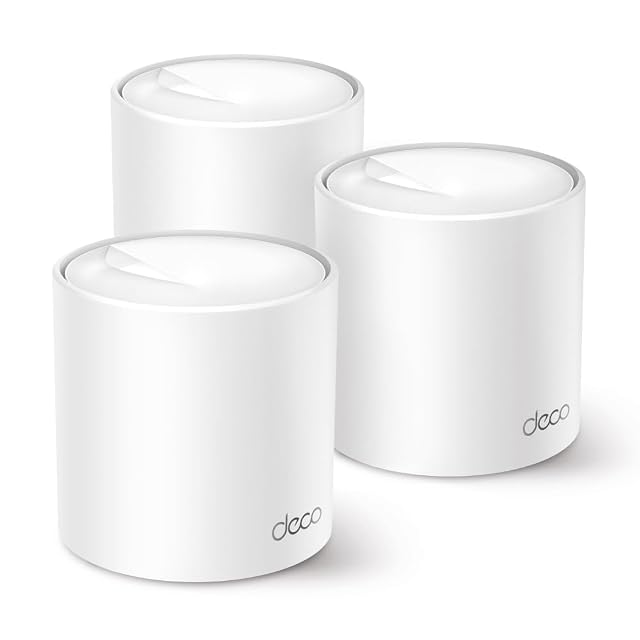
TP-Link Deco X50 set of three white cylindrical mesh units

TP-Link Deco X50, three-node dual-band Wi-Fi 6 set

Wins 5 of 11

Check price

≈ £229 / 183 €

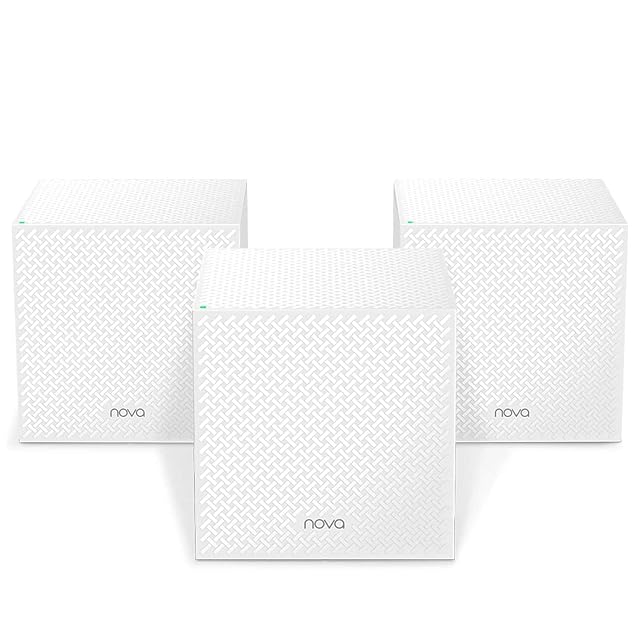
Tenda Nova MW12 set of three small white cube-shaped mesh units

Tenda Nova MW12, three-node tri-band mesh system

Wins 1 of 11

Check price

≈ 85 €

Line by line

Compared on Deco X50, three-node dual-band Wi-Fi 6 set Nova MW12, three-node tri-band mesh system
Wi-Fi generation Wi-Fi 6, in the title and the first bullet Not published — the class figure carries an AC prefix and no generation number is claimed for the units
IEEE designation Not published — no letter pair among the seven bullets Not published — compatibility is described by naming internet providers instead
Stated class figure AX3000, with both parts published: 2402 and 574 Mbit/s, coming to 2976 AC2100, repeated in the bullets, with no division between the three radios
Band plan Dual-band with both radios rated Tri-band; the three frequencies are not named and none is rated
Backhaul type Not published — devices are described moving between units, with nothing on the link between them Not published — stations are described working together, with nothing on the link between them
Node count Three Three, described as Nova stations
Pack composition Three identical units, with other Deco models able to join the same network Three stations working together, extendable to twelve in total
Stated coverage area Up to 604 m², with more than 150 simultaneous devices and a recommendation for four to six bedrooms 600 m² for the three-station pack, 2200 m² at twelve stations, with a ceiling of 100 simultaneous devices
Ethernet port count Three per unit, so nine across the pack Nine across the pack, without saying how they divide between the three stations
Port speed Gigabit on the three sockets of each unit Gigabit on all nine sockets
Separate WAN socket Not published — the sockets on each unit are described as a group and none is marked for the incoming line Not published — the nine are counted as one group and none is designated

A tick means one listing published something the other did not, or published a better figure. It does not mean the product is better, and the column is not a score out of anything: a maker who says less loses lines here without losing a comparison. The two verdicts below are where the page is settled.

Which one, for whom

Buy the TP-Link Deco X50, three-node dual-band Wi-Fi 6 set

The Deco X50 is the set with the fuller page. Both radios rated, the badge arithmetic visible, three sockets stated per unit rather than nine somewhere across the pack, and a device ceiling of more than 150 against 100. It is dual-band where its rival has three radios, and on a mesh system the third radio is usually the one carrying traffic between units — but the Tenda page never says that is what it does, so the advantage is not one either listing establishes.

Buy the Tenda Nova MW12, three-node tri-band mesh system

The Nova MW12 has the third radio and the longer runway: twelve stations and 2200 m² if the house demands it, where the Deco set is sold as three. Its listing is the weaker document. AC2100 is the badge of an older class, no generation number is claimed anywhere, the nine sockets are a pack total rather than a per-unit count, and the device ceiling is a third lower. Buy it for the room to grow, not for what the page proves.

The questions that come up before an order

Is tri-band automatically better for a mesh?

It usually means a radio can be set aside for the traffic between units, which keeps that traffic off the band your devices use. The Tenda listing does not say that is how its third radio is used — it names three bands and stops. Neither page here publishes a backhaul arrangement, so the question stays open on both.

Nine sockets on each: are they the same thing?

Not quite. The Deco listing states three sockets on every unit, which tells you what you get wherever you put one. The Nova listing counts nine across the pack and never divides them, so a room needing three wired connections cannot be planned from the page. The count matches; what the count tells you does not.

The full reviews

  • TP-Link Deco X50, three-node dual-band Wi-Fi 6 set

    Wi-Fi 6 · AX3000 badge over 2976 Mbit/s published · dual-band · three nodes · 604 m² · three Gigabit sockets per unit

    A three-node set that publishes both band rates and three sockets on every unit, and rounds a published 2976 Mbit/s up to an AX3000 badge.

    Best for: A house of four to six bedrooms where each unit can offer a wired socket or two, and where a cable between units is not available.

    ≈ £229 / 183 €

  • Tenda Nova MW12, three-node tri-band mesh system

    AC2100 class figure · tri-band · three nodes · 600 m² stated · nine Gigabit sockets across the pack · no generation named

    A three-node tri-band system that publishes an area, a device ceiling and a socket count, and never names the Wi-Fi generation its class figure belongs to.

    Best for: A house of three or four bedrooms wanting three units and a wired socket in each room, where the generation of the radios matters less than the area covered.

    ≈ 85 €

Every price named in a summary was read on the date that review carries. What a shop asks today is shown beside the product, and it moves.