Form factor code, PCIe generation and lane count, before any speed figure · review
Crucial P310 1 TB, one read figure and three percentages review
A one-terabyte Gen 4 drive with a five-year term and a single sequential figure, whose remaining bullets compare it in percentages against drives the page never names.
The bottom line A five-year term, a length code and one rate, surrounded by three comparisons that cannot be checked. The term is the reason to consider it and the written total that would qualify the term is not on the page.
On the listing
A one-terabyte M.2 2280 solid-state drive on PCIe Gen4 for laptops, desktop machines and handheld consoles, quoted at up to 7100 MB/s; better performance on that generation for booting, loading games and transferring files; more capacity and a longer working life for a device, with a limited five-year warranty included; almost twenty per cent more speed when booting and gaming; twenty per cent more performance under real conditions than an earlier drive of the same generation when starting an operating system and opening applications; and a ratio of performance to power said to be up to forty per cent better than earlier drives of that generation.
Seven thousand one hundred, read only
One rate, printed twice. Writing is never quantified, which matters more here than it would on a drive sold for reading alone: the first bullet names transferring files as one of the things the figure improves, and transferring files onto a drive is writing. The number given describes the other direction.
Three percentages and no baseline
Twenty per cent, twenty per cent, forty per cent. Each is measured against an earlier drive of the same generation, which is a category rather than a product. There is nothing dishonest in that framing and nothing checkable either. A buyer comparing two pages needs a rate on both, and this page offers a rate on one side and a ratio on the other.
Five years, without a written total
The term is real and it is stated by the maker. Terms of this kind normally end at a period or at a stated number of terabytes written, whichever arrives first, and the second half is not here. On a drive sold partly on lengthening the life of a machine, the total that would bound the promise is the figure a buyer would want most.
Performance per watt, in a handheld
The efficiency claim is the most sensible of the three percentages, because in a battery-powered machine the ratio is genuinely the right quantity. It still names no baseline. What it does say clearly is what the drive was designed around, and for a handheld that is a reasonable thing to choose.
Before ordering
Ask for the write figure and the written total. The term is generous, the length code is published, and the two numbers that would let this drive be compared against the next one are both missing.
Availability
Priced from 169 € to 217 € across the German, French, Italian and Spanish Amazon stores the day this page was checked.
It is stocked on the American and British Amazon stores as well, in that country’s own currency. The range above leaves those out: it counts euro stores and no others.
Every figure in this section is what Keepa held on the day this page was last updated. Stock and prices move without warning.
Prices quoted in this text were read on 10 September 2026. The live price is at the top of the page.
Where it holds up, and where it stops
Strengths
A five-year term is published, and it is the only one of the three endurance quantities that obliges the maker to anything
The efficiency claim is framed as performance per watt, which is the quantity that decides battery life rather than a raw rate
The length code and the generation are both in the title, where a buyer holding a board manual will look first
Compromises
No sequential write figure, so half of the pair most rivals here print is absent
Three of the five bullets are percentages measured against drives that are never named
No written total and no population statistic, which leaves the five-year term without either of the figures normally published beside it
Specifications
Capacity
1 TB — printed twice in the title, in the maker’s unit and reported here in that unit without conversion
Form factor code
M.2 2280 — printed in the title directly after the capacity
PCIe generation
PCIe Gen4 — printed in the title and named again in the first bullet, which frames the drive as an upgrade to that generation
Lane count
Not published on the listing — no lane figure follows the generation in the title or in any of the five bullets
Stated sequential read figure
Up to 7100 MB/s — printed in the title and repeated in the first bullet, where it is offered as the figure behind faster booting, loading and transferring
Stated sequential write figure
Not published on the listing — the first bullet names booting, loading games and transferring files beside the read figure, and no separate rate for writing appears anywhere
Stated random IOPS
Not published on the listing — no figure in IOPS appears; the performance claims in the third, fourth and fifth bullets are all percentages instead
TBW rating
Not published on the listing — no total in terabytes written appears, on a page whose second bullet is about lengthening the working life of a machine
Stated MTBF
Not published on the listing — no figure in hours appears anywhere in the title or the five bullets
Warranty length
Five years, limited — stated at the end of the second bullet, after a sentence about adding capacity and extending the life of a device
DRAM cache
Not published on the listing — no memory chip on the drive and no host memory arrangement is named
Heatsink
Not published on the listing — no heatsink and no thermal part is named, on a drive the title sells for laptops and handheld consoles
Amazon reference
B0DC8VPSHV (same reference on 6 Amazon marketplaces)
EAN
0649528943644
The questions that come up before an order
What does a percentage claim need to be checkable?
A named baseline. Twenty per cent faster than what, measured on which machine, doing which task. Three bullets here carry percentages and describe the comparison drive only as an earlier drive of the same generation, which could be several. The figures are not wrong; they simply cannot be lined up against a rival that publishes a rate in megabytes per second.
Why publish performance per watt on a drive?
Because in a laptop or a handheld the battery is the constraint the drive shares with everything else in the machine. Two drives reaching a similar rate can draw very different amounts of power to get there, and the one drawing less leaves more for the screen and the processor. It is a real quantity, and this page gives it as a comparison rather than as a value in watts.
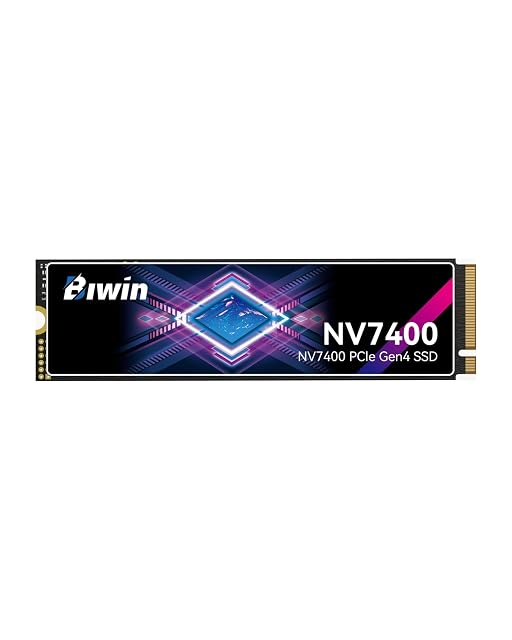
1 TB · M.2, length not published · PCIe Gen 4 ×4 · NVMe 2.0 · up to 7400 MB/s read · up to 1000K IOPS · 1.5 million hours MTBF · five-year limited warranty · no TBW · graphene thermal pad
A one-terabyte Gen 4 drive that publishes a population statistic and a warranty term in the same sentence, keeps them apart from any written total, and never states a sequential write figure.
Best for: A Gen 4 slot in a machine that runs warm, where a named thermal material and a published population statistic count for more than a complete pair of sequential figures.
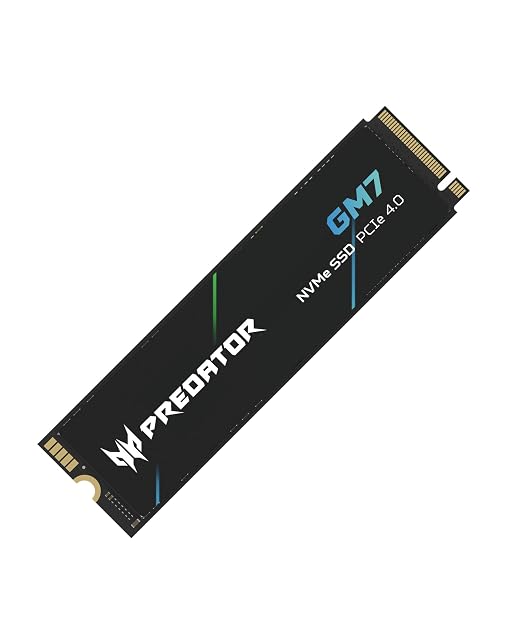
1 TB · M.2 2280 · PCIe 4.0 · NVMe 2.0 · up to 7400 MB/s read · up to 6500 MB/s write · 1.5 million hours MTBF · SLC caching named · no TBW, no warranty
A one-terabyte Gen 4 drive that publishes a population statistic in hours, both sequential figures and backwards compatibility with the previous generation, and that names no warranty term at all.
Best for: A Gen 4 board, or an older one of the previous generation, where the length code and the stated compatibility matter and the buyer will chase the term separately.
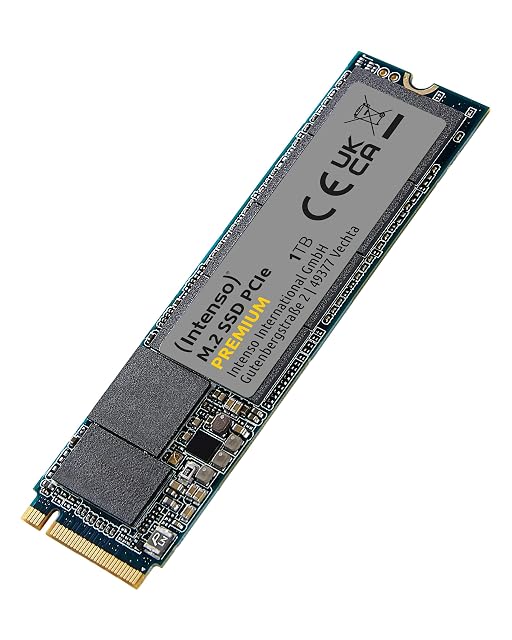
1 TB · M.2 2280 · PCI Express Gen 3 ×4 · NVMe 1.3 · up to 2100 MB/s read · up to 1700 MB/s write · no TBW, no MTBF, no warranty term
A one-terabyte drive on the older PCIe generation whose title and bullets publish the interface, the length code and both sequential figures, and whose page carries none of the three endurance quantities.
Best for: A board with a slot of the older generation, where the sequential pair is the requirement and the buyer does not need an endurance total on paper before ordering.