Form factor, interface and rotational speed before the capacity · review
Seagate FireCuda 4 TB, the one drive on the shelf that prints CMR review
A four-terabyte desktop drive that publishes its recording method, its annual workload rating and its maximum sustained transfer rate, and that carries a recovery service where a warranty term would be.
The bottom line The best-published drive of the twenty-one, and the one that answers the question the shelf usually avoids. The gap is at the other end: a recovery service is offered where a warranty term belongs, and no hardware term appears at all.
On the listing
A four-terabyte internal drive in 3.5-inch form at 7200 rpm, using conventional magnetic recording, with 256 MB of cache on a SATA interface at 6 Gb/s, in silver, with three years of a data recovery service and a model number printed in the title; described as suiting ambitious players and creative work, with workload rates of 300 TB a year for sustained full load; and a maximum sustained transfer rate of 255 MB/s.
CMR, in the title
One listing in twenty-one prints a recording method, and this is it. Conventional recording writes tracks side by side. The alternative overlaps them for density and rewrites neighbouring tracks when data changes, which shows up as very different behaviour during long writes. Publishing the answer costs the maker nothing and saves the buyer a search; the rest of this shelf leaves it out.
Three hundred terabytes a year
The first bullet gives an annual duty for sustained full load. That is a figure to plan against — a rate the drive is specified for, year after year, not a total it consumes. It sits on its own line here for that reason, apart from the recovery service and apart from any statistic in hours.
The three years that are not a warranty
The title and the first bullet both name three years of a data recovery service. Recovering data and replacing hardware are different undertakings with different conditions, and only the first is offered here. No product warranty length appears anywhere on this page, which is worth noticing precisely because a three-year figure is printed twice.
255 MB/s, and what sits behind it
A maximum sustained transfer rate is published in the fifth bullet. It is the figure that decides whether the drive or the connection is the narrower path in a given machine, and very few listings on this shelf print one at all.
Before ordering
Ask the seller for the product warranty term, and note that the part number in the title differs from the one in the catalogue record. Both are reported here and neither is corrected into the other.
Availability
Priced from 210 € to 308 € across the German, French, Italian and Spanish Amazon stores the day this page was checked.
It is stocked on the British Amazon store as well, in that country’s own currency. The range above leaves those out: it counts euro stores and no others.
In the American Amazon catalogue with no live offer against it: the reference exists, nobody is filling it.
Every figure in this section is what Keepa held on the day this page was last updated. Stock and prices move without warning.
Prices quoted in this text were read on 10 September 2026. The live price is at the top of the page.
Where it holds up, and where it stops
Strengths
Prints CMR in the title, which no other drive listing in this lot does, and which is the answer that decides behaviour under sustained writing
Publishes an annual workload rating of 300 TB, so the duty the drive is specified for is a figure rather than an adjective
A maximum sustained transfer rate is stated, which lets the drive be compared against the link it will sit behind
Compromises
The three-year term on this page is a recovery service, and no product warranty length is published anywhere on it
No MTBF, so one of the three published reliability quantities is missing while the other two are present
The title and the product record carry two different part numbers, and nothing on the page reconciles them
Specifications
Capacity
4 TB — printed in the title and repeated in the second bullet, in the maker’s unit and reported here unchanged
Form factor
3.5-inch — printed in the title
Height
Not published on the listing — no measurement in millimetres appears beside the form factor in inches
Interface
SATA at 6 Gb/s — stated in the third bullet. The title prints the same figure with a capital B in the unit, and neither form is corrected here
Rotational speed
7200 rpm — printed in the title and repeated in the first and third bullets
Cache size
256 MB — printed in the title and repeated in the first and fourth bullets, described as loading applications and files quickly
Stated workload rating
300 TB per year — stated in the first bullet, given as the rate for sustained full load. It is a specified annual duty and not a countdown to anything
Warranty length
Not published on the listing as a warranty — the title and the first bullet name three years of a data recovery service, which retrieves data rather than replacing hardware. No product warranty term appears on the page
Stated MTBF
Not published on the listing — no figure in hours appears, on a page that does publish an annual workload rating
Stated acoustic figure
Not published on the listing — no decibel value appears, on a 7200 rpm drive aimed at desktop machines people sit beside
Stated idle power
Not published on the listing — no figure in watts appears in the title or in the five bullets
Amazon reference
B09SBKXNKQ (same reference on 6 Amazon marketplaces)
EAN
0763649173848
The questions that come up before an order
What does printing CMR tell a buyer that most listings do not?
That tracks are written side by side rather than overlapped. Shingled recording overlaps them for density and rewrites neighbouring tracks when data changes, which behaves differently under long sustained writes. Twenty of the twenty-one listings in this batch never say which they use; this one does, in the title, and that is the point of the line.
Is a workload rating of 300 TB a year a limit or a lifespan?
It is a specified annual duty — the amount of reading and writing the maker designs the drive around in a year. It is not a total the drive counts down from, and it is not a lifespan. MTBF is a separate population statistic and a warranty is a separate commercial term, which is why the three appear on their own lines here.
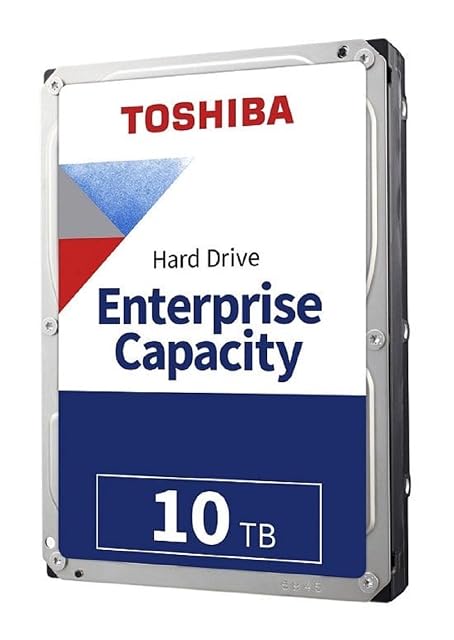
10 TB · 3.5-inch · 7200 rpm · 256 MB cache in the title only · SATA with no rate · one bullet that drops the cache figure
A ten-terabyte enterprise-capacity drive whose single bullet reprints the title and leaves out the cache, and whose interface is named as SATA without a generation or a rate.
Best for: A machine that needs the most capacity per bay available here, where the buyer will confirm the interface generation and the duty figures from the datasheet.
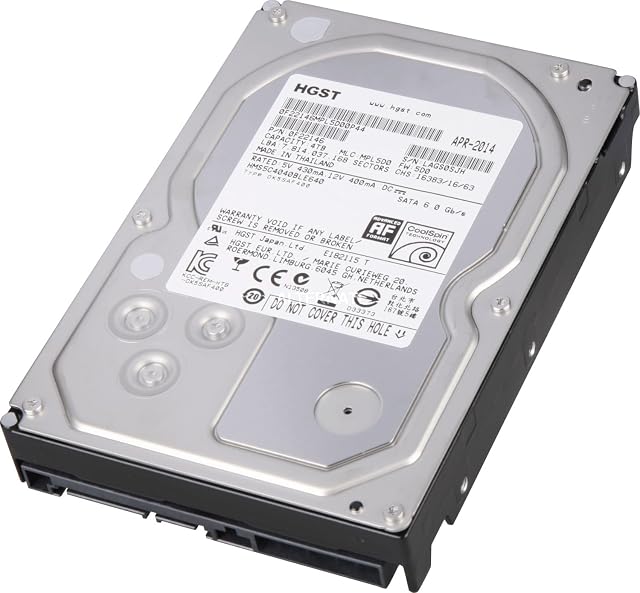
4 TB · 3.5-inch · 7200 rpm · 64 MB cache · SATA 6 Gb/s · one bullet, which repeats the title · no duty figure of any kind
A four-terabyte drive whose single bullet reprints its title word for word, publishing every mechanical figure and not one figure about what the drive is specified to withstand.
Best for: A bulk volume in a desktop machine where the drive will not be pushed hard, bought by someone comparing on figures alone and getting the rest from the datasheet.
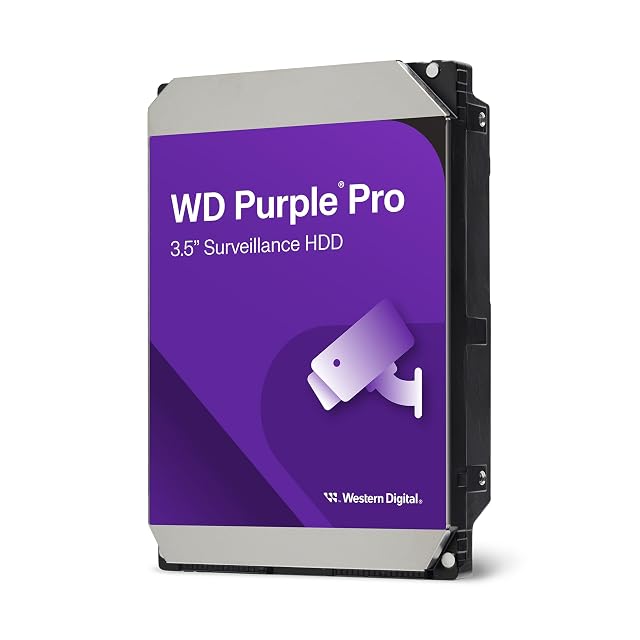
8 TB · 3.5-inch · 7200 rpm · 256 MB cache · 550 TB per year workload · OptiNAND and AllFrame named · interface not published
An eight-terabyte drive with the highest published workload rating in this batch, whose four bullets say nothing about the product and whose interface is never named.
Best for: A machine that writes continuously — a recorder, a surveillance store, a busy archive — where the annual duty figure is the deciding line and the interface can be confirmed elsewhere.