Skip to content

Seagate FireCuda 4 TB, the one drive on the shelf that prints CMR vs Western Digital Purple Pro 8 TB, 550 TB a year, and no interface at all

Twice the capacity and the higher duty, or the drive whose page says how it records?

Both are 3.5-inch drives at 7200 rpm with 256 MB of cache, and their pages diverge sharply. The Seagate FireCuda 4 TB prints CMR — the only drive on this shelf to name its recording method — states SATA at 6 Gb/s and gives 300 TB a year. The Western Digital Purple Pro 8 TB doubles the capacity, publishes the highest annual duty here at 550 TB, and names no interface at all, behind four bullets promising quality, durability, robustness and flexible design.

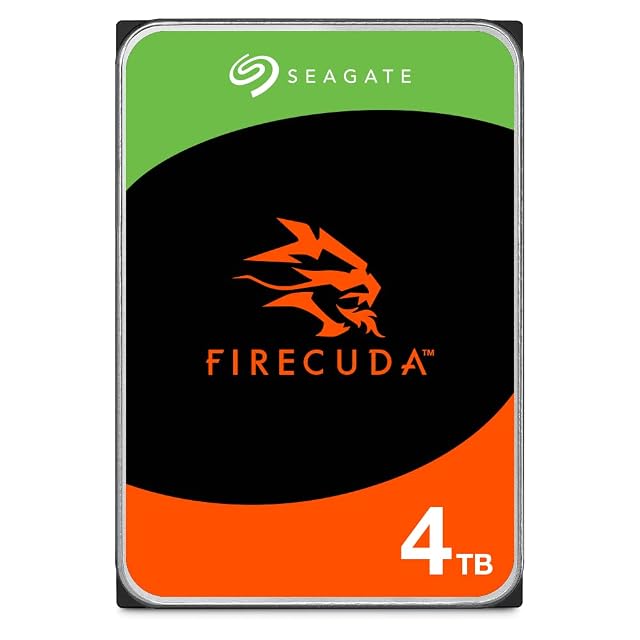
Seagate FireCuda 4 TB 3.5-inch internal hard drive in silver with a SATA connector

Seagate FireCuda 4 TB, the one drive on the shelf that prints CMR

Wins 1 of 11

Check price

≈ £246 / 210 €

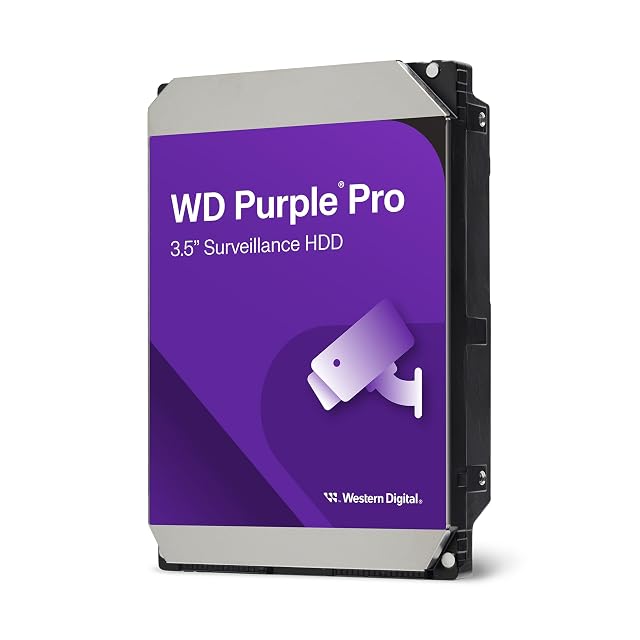
WD Purple Pro 8 TB 3.5-inch internal hard drive with a SATA connector

Western Digital Purple Pro 8 TB, 550 TB a year, and no interface at all

Wins 2 of 11

Check price

≈ $400 / £373 / 429 €

Line by line

Compared on FireCuda 4 TB, the one drive on the shelf that prints CMR Purple Pro 8 TB, 550 TB a year, and no interface at all
Capacity 4 TB, in the maker’s unit 8 TB, in the maker’s unit, no conversion applied
Form factor 3.5-inch 3.5-inch
Height Not published — no millimetre figure beside the inches Not published — no millimetre figure beside the inches
Interface SATA at 6 Gb/s; the title prints the same figure with a capital B in the unit, and neither form is corrected here Not published — no SATA, no SAS, no connector and no rate; the only drive on this shelf whose interface is absent
Rotational speed 7200 rpm, printed three times 7200 rpm, printed in the title
Cache size 256 MB, printed three times 256 MB, printed in the title
Stated workload rating 300 TB per year, given as the rate for sustained full load — a specified annual duty, not a countdown to anything 550 TB per year, the highest figure of its kind in this batch — again an annual duty rather than a total to be consumed
Warranty length Not published as a warranty — three years of a data recovery service are named, which retrieves data rather than replacing hardware Not published — no term of any length appears
Stated MTBF Not published, on a page that does publish an annual workload rating Not published, on a page that does publish an annual workload rating
Stated acoustic figure Not published, on a 7200 rpm drive aimed at desktop machines people sit beside Not published, and none of the four bullets mentions noise
Stated idle power Not published Not published

A tick means one listing published something the other did not, or published a better figure. It does not mean the product is better, and the column is not a score out of anything: a maker who says less loses lines here without losing a comparison. The two verdicts below are where the page is settled.

Which one, for whom

Buy the Seagate FireCuda 4 TB, the one drive on the shelf that prints CMR

The FireCuda is the drive whose page answers the question that decides whether a drive belongs in an array: how does it record? CMR, printed, and the only listing on this shelf to say so. It states its interface, gives 300 TB a year and 255 MB/s sustained. What it calls three years is a data recovery service, not a warranty — those retrieve data rather than replace hardware, and the page names no product term.

Buy the Western Digital Purple Pro 8 TB, 550 TB a year, and no interface at all

The Purple Pro is twice the drive on capacity and duty: 8 TB and 550 TB a year, the highest annual figure here, with OptiNAND and AllFrame named. Its page then omits the interface entirely, which on a bare internal drive is the connector you have to plug into something. Four bullets go on quality material, durability, robustness and flexible design. It is almost certainly SATA; the listing does not say, and this site does not decide it.

The questions that come up before an order

Is 550 TB a year an amount the drive can write before it dies?

No. A workload rating is a specified annual duty — the volume of reading and writing the drive is rated to handle in a year of service. It is not a countdown, not a lifespan and not the same as the TBW figure on a solid-state drive. Two drives here publish one, which is more than most of this shelf manages.

Why does CMR matter?

Because the alternative recording method overlaps its tracks, which slows sustained writing badly — and rebuilding a failed array is exactly that. The FireCuda page prints CMR; every other drive on this shelf, including the Purple Pro, leaves the question unanswered. On a drive going into a multi-bay enclosure, it is worth chasing down before ordering.

The full reviews

  • Seagate FireCuda 4 TB, the one drive on the shelf that prints CMR

    4 TB · 3.5-inch · 7200 rpm · CMR · 256 MB cache · SATA 6 Gb/s · 300 TB per year workload · 255 MB/s sustained

    A four-terabyte desktop drive that publishes its recording method, its annual workload rating and its maximum sustained transfer rate, and that carries a recovery service where a warranty term would be.

    Best for: A desktop machine that writes a great deal — video work, large game libraries, editing scratch space — where the recording method and the annual duty both need to be known before purchase.

    ≈ £246 / 210 €

  • Western Digital Purple Pro 8 TB, 550 TB a year, and no interface at all

    8 TB · 3.5-inch · 7200 rpm · 256 MB cache · 550 TB per year workload · OptiNAND and AllFrame named · interface not published

    An eight-terabyte drive with the highest published workload rating in this batch, whose four bullets say nothing about the product and whose interface is never named.

    Best for: A machine that writes continuously — a recorder, a surveillance store, a busy archive — where the annual duty figure is the deciding line and the interface can be confirmed elsewhere.

    ≈ $400 / £373 / 429 €

Every price named in a summary was read on the date that review carries. What a shop asks today is shown beside the product, and it moves.