Skip to content

Samsung 870 EVO 1 TB, whose written total belongs to a smaller drive vs Crucial BX500 1 TB, three years and a named encryption standard

One drive publishes the speeds, the other publishes the term — which gap matters more?

These two sit in the same bay and answer different questions. The Samsung 870 EVO puts 560 MB/s and 530 MB/s in its title and never states how long it is covered for. The Crucial BX500 states three years, limited, and prints one rate. Between them the pair covers the endurance figures badly: neither publishes a total in terabytes written for the capacity being sold.

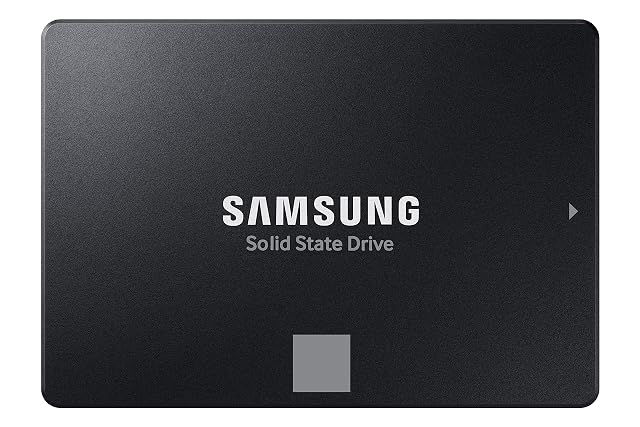
Samsung 870 EVO 1 TB internal 2.5-inch SATA solid-state drive

Samsung 870 EVO 1 TB, whose written total belongs to a smaller drive

Wins 2 of 11

Check price

≈ $379 / £235 / 258 €

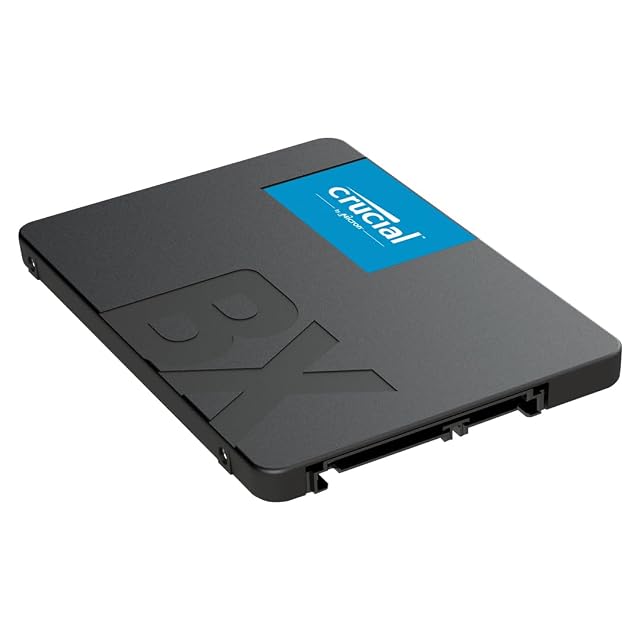
Crucial BX500 1 TB internal 2.5-inch SATA solid-state drive

Crucial BX500 1 TB, three years and a named encryption standard

Wins 1 of 11

Check price

≈ $198 / £150 / 159 €

Line by line

Compared on 870 EVO 1 TB, whose written total belongs to a smaller drive BX500 1 TB, three years and a named encryption standard
Capacity 1 TB, in the maker’s unit; a 250 GB variant is named separately 1 TB, in the maker’s unit; up to 4 TB is named as the range ceiling
Form factor 2.5-inch, printed beside the interface revision 2.5-inch, with laptops and desktops named as the intended homes
Height Not published — inches given, no thickness follows Not published — no millimetre figure, on a page that names laptops
Stated sequential read figure Up to 560 MB/s, in the title and repeated in the second bullet Up to 540 MB/s, in the title, repeated nowhere
Stated sequential write figure Up to 530 MB/s, thirty below the reading figure Not published — write acceleration is named, the rate it reaches is not
Stated random IOPS Not published Not published
TBW rating Not published for this capacity — 150 TB is printed and attributed to the 250 GB variant Not published, on a page that does print the term such a total normally bounds
Stated MTBF Not published — long service is claimed in words Not published — validation hours and qualification checks are given instead, which count effort rather than failures
DRAM cache presence Not published as memory on the drive — a write buffer for sustained loads is named Not published as memory on the drive — a single-level cell region of the flash is named
Controller family Not published — compatibility testing is described instead Not published — the flash type is named, the controller behind it is not
Warranty length Not published — no term of any length appears Three years, limited

A tick means one listing published something the other did not, or published a better figure. It does not mean the product is better, and the column is not a score out of anything: a maker who says less loses lines here without losing a comparison. The two verdicts below are where the page is settled.

Which one, for whom

Buy the Samsung 870 EVO 1 TB, whose written total belongs to a smaller drive

The 870 EVO is the one that tells you how fast it is meant to move data in both directions: 560 MB/s reading, 530 MB/s writing, both in the title. What it never tells you is how long Samsung stands behind it — no term appears anywhere on the listing — and the 150 TB written on the page belongs to the 250 GB drive in the same range, not to the terabyte being sold. Buy it for the two rates, and read the warranty in the box rather than on the page.

Buy the Crucial BX500 1 TB, three years and a named encryption standard

The BX500 is the only one of the pair to state a term: three years, limited. It also names its encryption to three published standards, which the 870 EVO listing leaves out entirely. The cost is the writing direction — 540 MB/s is the single rate given, and the acceleration described in the first bullet never gets a figure. Its short wins column is a count of what the listing withholds, not of how the drive performs.

The questions that come up before an order

Does the 150 TB on the Samsung page apply to the 1 TB drive?

No. The bullet that prints 150 terabytes written names the 250 GB variant in the same sentence, and the title sells 1 TB. The figure is on the page and it belongs to a different drive, which is why this comparison records the 1 TB drive as publishing no total at all.

Is a three-year warranty the same thing as a three-year lifespan?

No, and neither is a TBW figure or an MTBF figure. A warranty is a commercial term, a TBW is a volume of writing the drive is rated for, and an MTBF describes failures across a population under defined conditions. Three published figures, three different meanings — and here only one of the three appears, on one of the two drives.

The full reviews

  • Samsung 870 EVO 1 TB, whose written total belongs to a smaller drive

    1 TB · 2.5-inch · SATA III · up to 560 MB/s read · up to 530 MB/s write · a written total published for the 250 GB variant · buffer named for sustained loads · no MTBF, no warranty term

    A one-terabyte drive that publishes both sequential figures and a write buffer for long workloads, and whose only written total is attached in the same sentence to a quarter-terabyte variant.

    Best for: A machine that records or receives long continuous files, where a named buffer for sustained work matters and the endurance figures will be looked up elsewhere.

    ≈ $379 / £235 / 258 €

  • Crucial BX500 1 TB, three years and a named encryption standard

    1 TB · 2.5-inch · up to 540 MB/s read · dynamic write acceleration named · 256-bit hardware encryption to three named standards · three-year limited warranty · no write figure, no TBW, no MTBF

    A one-terabyte drive that publishes a term, a named write acceleration mechanism and three encryption standards by name, and that never quantifies writing or endurance.

    Best for: A machine where encryption to a named standard is a requirement and the drive will be read from far more than it is written to.

    ≈ $198 / £150 / 159 €

Every price named in a summary was read on the date that review carries. What a shop asks today is shown beside the product, and it moves.