Skip to content

TP-Link TL-SG116P, sixteen-socket switch with every socket powered vs NETGEAR GS308EP, eight-socket managed switch with all sockets powered

Twice the powered sockets, or a page you can actually configure?

One of these is a bigger unpowered decision than it looks. The TP-Link TL-SG116P powers sixteen sockets from a shared 120 W and names the two IEEE classes it supports. The NETGEAR GS308EP powers eight from 62 W, never prints a PoE class number, and is the only one of the pair with a configuration interface — VLANs, traffic priority, per-socket power control. The budgets are not comparable as totals: each is what its own sockets share.

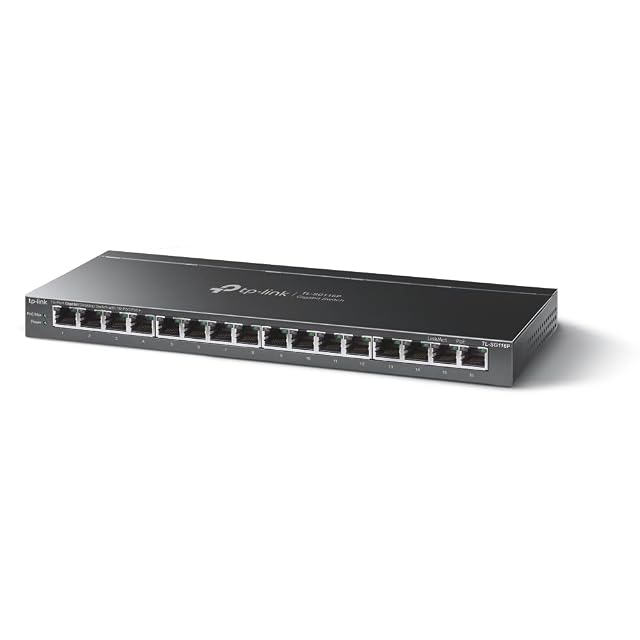
TP-Link TL-SG116P sixteen-port gigabit PoE switch in a black fanless metal case

TP-Link TL-SG116P, sixteen-socket switch with every socket powered

Wins 5 of 9

Check price

≈ 113 €

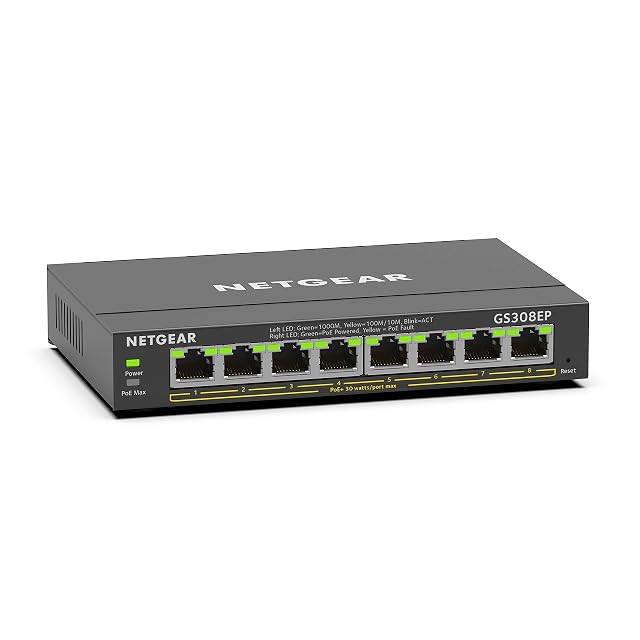
NETGEAR GS308EP eight-port gigabit PoE switch in a fanless metal case

NETGEAR GS308EP, eight-socket managed switch with all sockets powered

Wins 2 of 9

Check price

≈ £90 / 78 €

Line by line

Compared on TL-SG116P, sixteen-socket switch with every socket powered GS308EP, eight-socket managed switch with all sockets powered
PoE standard supported IEEE 802.3af and 802.3at, in the title and the second bullet Not published as an IEEE number — the sockets are called PoE+, and the only 802.3 figure on the page is 802.3az, which is the energy-efficiency standard
Per-port power budget Up to 30 W at one socket Not published — per-socket control is named as a feature, no ceiling is stated
Total power budget 120 W shared by all sixteen powered sockets 62 W shared by the eight powered sockets
Powered port count Sixteen, which is every socket on the unit Eight, which is every socket on the unit
Port count Sixteen RJ45 sockets at 10/100/1000 Mbit/s Eight Ethernet sockets at 1.0 Gbps
Port speed 10/100/1000 Mbit/s on all sixteen; no BASE-T designation printed 1.0 Gbps with automatic negotiation, with Cat5e and Cat6 named as the cable grades
Managed or unmanaged Not published as either word — plug and play, with a fixed priority mode on sockets 1 to 4, an isolation mode and automatic PoE recovery as built-in behaviours Managed — VLANs, QoS, socket monitoring and per-socket power control, through a software interface
Uplink type Not published — all sixteen sockets carry power and none is set aside Not published — all eight are counted together and none is set aside
Cooling Fanless, tied in the eighth bullet to lower consumption and less noise Fanless metal case, with 802.3az named as lowering consumption

A tick means one listing published something the other did not, or published a better figure. It does not mean the product is better, and the column is not a score out of anything: a maker who says less loses lines here without losing a comparison. The two verdicts below are where the page is settled.

Which one, for whom

Buy the TP-Link TL-SG116P, sixteen-socket switch with every socket powered

The TL-SG116P is the one to buy when the question is how many cameras or access points can hang off it. Sixteen powered sockets, 120 W between them, 30 W at any one of them, and both IEEE classes printed — the NETGEAR page prints none. It has no settings page at all; what it has instead are three fixed behaviours, including a priority mode wired to sockets 1 to 4, which you accept as they come.

Buy the NETGEAR GS308EP, eight-socket managed switch with all sockets powered

The GS308EP is half the switch and the only configurable one. VLANs, QoS, per-socket power control and monitoring are a different kind of purchase from eight more powered sockets, and if segmenting a home network is the point, the TP-Link cannot do it at any price. Its listing is the weaker document, though: no IEEE class number, no per-socket ceiling, and 62 W to share among eight sockets.

The questions that come up before an order

Can I add the two budgets together if I buy both?

No — and neither figure should be read as available at every socket. A total power budget is what that unit’s powered sockets share between them. Add up what the connected devices ask for and check the sum against the switch they are plugged into, one switch at a time.

The NETGEAR page prints 802.3az. Is that a PoE class?

No. IEEE 802.3az is energy-efficient Ethernet, which is about consumption when links are idle. The PoE classes are 802.3af and 802.3at, and this listing names its sockets PoE+ without printing either number. That is why the standard row is recorded as not published.

The full reviews

Every price named in a summary was read on the date that review carries. What a shop asks today is shown beside the product, and it moves.