A single router is judged on its band plan and its port speeds, not on a class number · review
ASUS RT-AX52 Pro, dual-band AX3000 Wi-Fi 6 router review
One of two routers here to print an 802.11 designation, sold on the European Amazon stores, and one of several to leave every Ethernet socket uncounted.
It is a European model with no Amazon.com offer on October 26, 2026. It is sold on the European Amazon stores, often with a European plug or power adapter, and a US buyer would be relying on an importer.
Models on this shelf that Amazon.com did sell on that date:
Support for the 802.11ax standard for greater efficiency and throughput; 1024-QAM with a total network speed of about 3000 Mbps, made of 574 Mbit/s at 2.4 GHz and 2402 Mbit/s at 5 GHz; MU-MIMO and OFDMA for allocating channels efficiently across several devices at once; and seamless roaming by adding any compatible AiMesh router. Four bullets.
The designation, printed
802.11ax. Of the ten routers in this group it is one of two to print it, with the TP-Link Archer AX21. Everywhere else the generation appears as Wi-Fi 6 or as an AX prefix on a badge, and the buyer is left to translate. This site treats compatibility as something read off published standards rather than deduced from a product name, which is exactly why this line is worth pointing at.
The badge and its parts
574 plus 2402 is 2976. The badge says AX3000. The gap is twenty-four Mbit/s of rounding, and it is visible only because the listing publishes the parts.
The box, undescribed
No sockets. No USB. No antennas. No dimensions. A router is also a piece of furniture with cables coming out of it, and this page contains nothing about that half of the product.
Before ordering
Confirm the LAN socket count and speed with the seller. A dual-band unit quoted at 2402 Mbit/s on 5 GHz will meet its real ceiling at whatever the wired sockets are rated, and the page does not say what that is.
Where it holds up, and where it stops
Strengths
Prints 802.11ax, so a client can be checked against the designation rather than against a marketing name
Publishes both band rates, which makes the twenty-four Mbit/s of rounding in the badge visible on the same page
States that the network extends by adding any compatible AiMesh router, so the unit is not a dead end when the house grows
Compromises
Four bullets in total, and not one of them counts a socket, a USB port or an antenna
The stream count is absent, so the 2402 Mbit/s cannot be traced to a channel width and a number of streams
Nothing on the page describes the physical unit at all — no dimensions, no antenna arrangement, no indication of how it sits on a desk
Specifications
Wi-Fi generation
Wi-Fi 6 — stated in the title
IEEE designation
802.11ax — stated in the first bullet, one of two printed among the ten routers here, with the TP-Link Archer AX21
Stated class figure
AX3000 — stated in the title, with both parts published: 574 Mbit/s at 2.4 GHz and 2402 Mbit/s at 5 GHz, which come to 2976, so the badge rounds up by 24
Band count
Two — stated with a rate each: 2.4 GHz at 574 Mbit/s and 5 GHz at 2402 Mbit/s
Stream count
Not published on the listing — MU-MIMO, OFDMA and 1024-QAM are named, and no stream figure appears for either radio
WAN port speed
Not published on the listing — the four bullets cover the standard, the speed, the capacity technologies and mesh expansion, and none names a socket for the incoming line
LAN port speed
Not published on the listing — no wired socket is counted, so none is rated
Port count
Not published on the listing — neither the title nor any bullet counts a socket of any kind
USB ports
Not published on the listing — no USB socket is named anywhere on the page
Antenna arrangement
Not published on the listing — no antenna is counted, rated or described as internal or external
Amazon reference
B0F54HFLCR
EAN
4711387891971
On Amazon.com
It is a European model with no Amazon.com offer on October 26, 2026.
The questions that come up before an order
Why does an 802.11 designation matter when the generation number is already given?
The designation is what a client device publishes about itself. Matching 802.11ax against 802.11ax is a direct check; matching Wi-Fi 6 against a marketing name on a laptop specification sheet is an indirect one. Only two listings among these ten routers print the designation.
What does AiMesh add to a single router?
It lets a second compatible router from the same maker join as a node rather than as a separate network, so a device moves between them under one name. It is the alternative to buying a mesh set outright, and this listing states it plainly.
Our score
7.8/ 10
The clearest radio designation of the seven and the thinnest description of the box around it. For a Wi-Fi 6 household planning to add an AiMesh node later, the radio side is stated; everything wired has to come from elsewhere.
The buyer this one serves, among network and storage gear
A household with Wi-Fi 6 clients that intends to add a second mesh-capable unit from the same maker later.
What this one costs among network and storage gear
A reference exists on these Amazon stores: France, Germany, Italy, Spain, United Kingdom. Listed is not the same as in stock — availability changes daily.
Details checked on October 26, 2026.
Sources
Specifications: the manufacturer sheet for network and storage gear and the matching Amazon product page. Prices and availability: Keepa. Every figure on this page names its source.
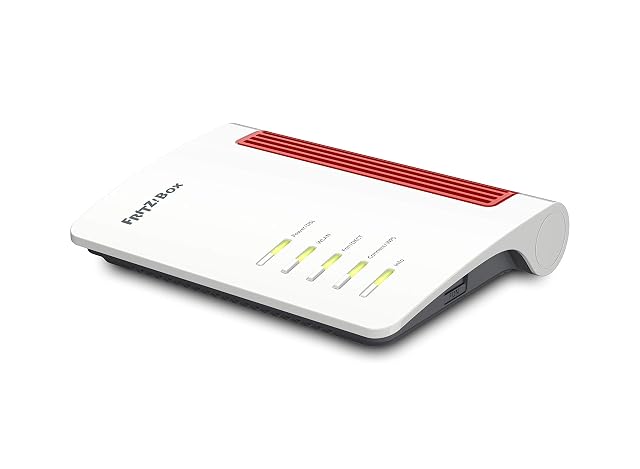
Wi-Fi 6 · 2.4 Gbit/s stated, exactly 1800 plus 600 · DSL modem built in · VoIP and DECT · not one Ethernet socket counted
The only router here with a modem and a telephone exchange inside it, and the only one whose headline figure is exactly the sum of the two rates printed beneath it.
Best for: A household on a DSL line that wants the modem, the telephony and the radios in one box rather than three.
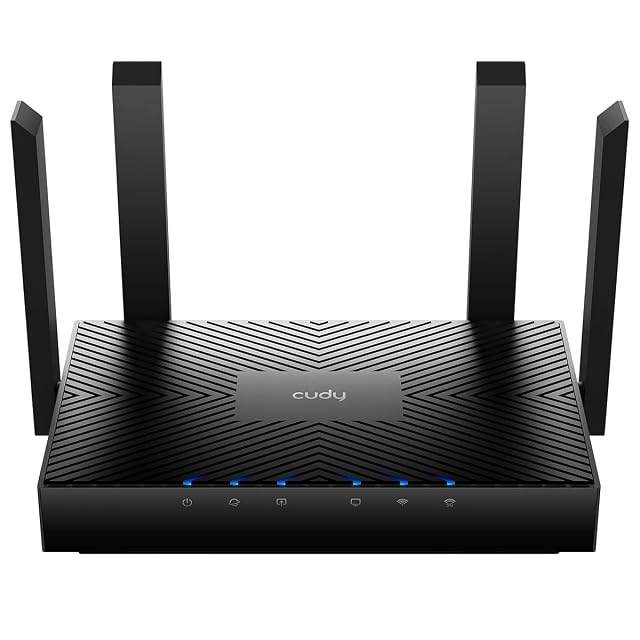
Wi-Fi 6 · AX3000 = 2402 + 574 Mbit/s · 160 MHz and 1024-QAM · 1 WAN + 3 LAN Gigabit · WireGuard, OpenVPN, IPsec, PPTP and L2TP server and client
A Wi-Fi 6 router whose Amazon.com listing splits its AX3000 badge into two band rates, counts four Gigabit ports and names five VPN protocols, as server and client.
Best for: A household that wants a VPN server or client on the router itself and three wired devices, on a connection of up to a gigabit.