The bottom line A well built adapter for a recent machine, described mostly through the devices it plugs into. The contradiction inside its plug-and-play bullet is small and worth reading, and the unnamed chip is what makes the Windows driver a search rather than a download.
On the listing
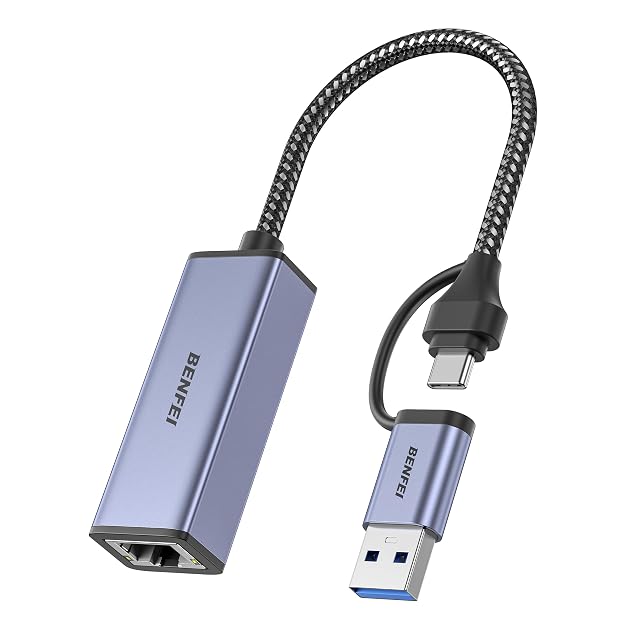
A USB-C LAN adapter given as up to 2500 Mbps and backwards compatible with 1000, 100 and 10 Mbps, named for gaming, high-definition film and office work; a stable wired connection added to a computer or phone through the Type-C socket, aimed at machines with no Ethernet socket or an unreliable wireless connection; a bullet headed plug and play naming Windows, macOS and iPadOS and adding that a driver has to be installed for Windows; broad compatibility with most systems and devices carrying a Type-C socket, with the iPhone 17 and 16 series, MacBook Pro M4, Mac mini M4, iPad Air and Pro, Dell XPS 17 and 15 and HP Spectre and Envy x360 named; and a solid aluminium case for heat dissipation, matched to the colour of a laptop and small enough to carry.
Plug and play, except on Windows
A driver has to be installed for Windows. It is the last sentence of the bullet whose heading promises the opposite. Both are on the page and both are reported here. What is missing is the part that would make the sentence useful: the name of the chip, and therefore the name of the driver.
Aluminium, for heat
The fifth bullet gives the material and then gives the reason. A 2.5-gigabit adapter works harder than a gigabit one and a metal shell moves that warmth across its whole surface. The matching colour is a second thought; the heat is the first, and it is stated as such.
The host link nobody rates
Type-C is named a dozen times over. What runs through it is never described at all — no generation, no figure, nothing. The socket at the other end of the adapter is rated to 2500 Mbps, and what the machine offers the plug is left entirely to the machine.
Before ordering
If the machine runs Windows, find the driver before the adapter arrives. The page says one is needed and does not say whose it is.
Availability
Priced from 22 € to 24 € across the German, French, Italian and Spanish Amazon stores the day this page was checked.
It is stocked on the American and British Amazon stores as well, in that country’s own currency. The range above leaves those out: it counts euro stores and no others.
Every figure in this section is what Keepa held on the day this page was last updated. Stock and prices move without warning.
Prices quoted in this text were read on 10 September 2026. The live price is at the top of the page.
Where it holds up, and where it stops
Strengths
Names the shell material and ties it to heat, which is the honest reason for metal on an adapter that runs at 2.5 gigabits
Names actual machines it is meant for rather than describing compatibility in the abstract, which is checkable against the laptop on the desk
States the fallback rates, 1000, 100 and 10 Mbps, so behaviour on an older switch is readable
Compromises
The bullet headed plug and play ends by saying Windows needs a driver, and the page never resolves the two halves of its own sentence
No chip is named, so the driver that Windows is told to install is not identified
Neither a USB generation nor a host rate, which leaves the ceiling of the 2.5 gigabits unstated
Specifications
USB generation
Not published on the listing — no generation and no USB number appears in the title or in any of the five bullets. The connector is named as USB-C throughout and the link behind it is never described
Stated link rate
Not published on the listing for the host link — the only rate on the page, up to 2500 Mbps, belongs to the Ethernet socket
Connector type
USB Type-C — stated in the title and in all five bullets, named for machines and phones with a Type-C socket and no Ethernet of their own
Ethernet port speed standard
Up to 2500 Mbps, backwards compatible with 1000, 100 and 10 Mbps — stated in the first bullet; no BASE-T designation is printed anywhere on the page
Controller family
Not published on the listing — no chip, no chip maker and no part number appears anywhere, on a page that requires a driver to be installed on Windows and does not say which one
Stated operating system support
Windows, macOS and iPadOS — stated in the third bullet, which is headed plug and play and then states that a driver has to be installed for Windows. The fourth names devices rather than systems: iPhone 17 and 16 series, MacBook Pro M4, Mac mini M4, iPad Air and Pro, Dell XPS 17 and 15, HP Spectre and Envy x360 among others
Housing material
Aluminium — stated in the fifth bullet as a solid aluminium case for better heat dissipation, described as matching the colour of a laptop
Cable arrangement
Not published on the listing — no lead, no length and no statement of whether the plug is fixed to the body appears in the title or in any of the five bullets; the adapter is described only as small and easy to carry
Amazon reference
B0CD1FDKT1 (same reference on 6 Amazon marketplaces)
EAN
6941876220526
The questions that come up before an order
Does an aluminium shell do anything on an adapter this small?
It spreads heat, which a 2.5-gigabit adapter produces more of than a gigabit one, and it does so across the whole body rather than at one point. The fifth bullet gives that as the reason. The other effect is mechanical: metal survives a bag better than a thin plastic shell.
How can a bullet be headed plug and play and then ask for a driver?
Because the two halves describe different systems. The bullet names Windows, macOS and iPadOS as a smooth experience and then adds that Windows needs a driver installed. Both sentences are reported here as printed. Which of them applies depends on the machine, and the page does not separate them.
USB 3.0 · 5 Gbit/s bus stated · USB-C plug · 10/100/1000 Mbit/s · 802.3, 802.3u, 802.3ab and 802.3az named · Category 6 asked for · 18-month warranty
A gigabit adapter that names four Ethernet standards and then asks for Category 6 cable if the gigabit is to be had, which is the chain stated by the maker rather than by us.
Best for: A laptop with a Type-C socket and no Ethernet, on a network already wired with Category 6 or better, where the gigabit is the whole requirement.
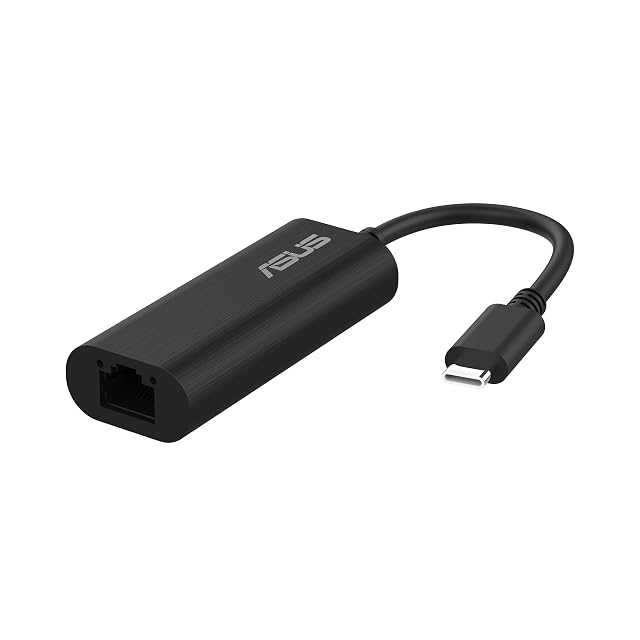
2.5G Ethernet named · USB-C · no driver stated · no host rate · no chip · no housing material · no operating system listed
A 2.5-gigabit Type-C adapter from a large name whose page publishes four short bullets and answers two of the eight questions this hub asks.
Best for: A buyer who is choosing on the name on the box and on a recent machine, where a Type-C socket and a 2.5-gigabit switch are already known quantities.
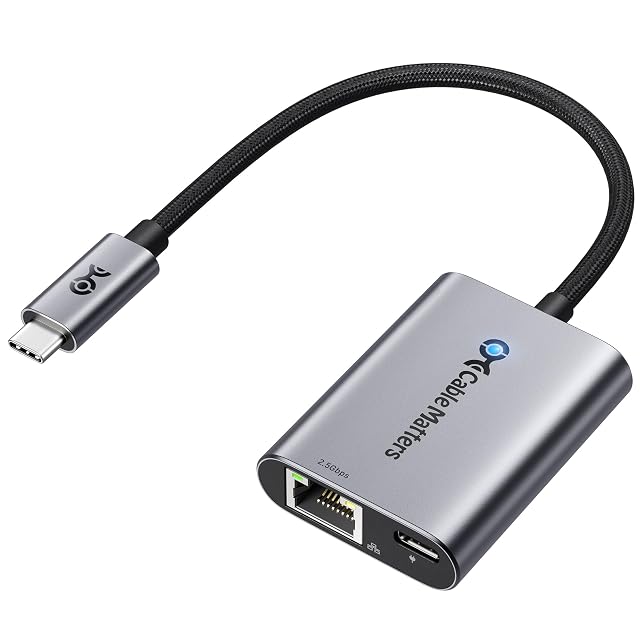
up to 2500 Mbit/s · USB-C · a second USB-C socket for charging to 140 W under USB-PD 3.1 · aluminium body · braided pigtail lead · controller maker named without a model
A 2.5-gigabit adapter that gives the single Type-C socket of a laptop back by carrying up to 140 W of charging alongside the network.
Best for: A modern laptop with a single Type-C socket that has to be charged and wired at the same time, on a desk where the adapter stays plugged in.