A mechanism, a bridge and a case, and buyers compare the wrong one of the three · review
TOSHIBA Canvio Partner 4 TB, whose generation is printed two ways review
A four-terabyte portable drive that publishes a link rate of five gigabits per second and gives its USB generation as 3.2 in the title and 3.0 in the bullets.
The bottom line A rate in gigabits, a named protection feature and a capacity that suits a travelling machine, on a page that cannot agree with itself about which USB generation the drive uses.
On the listing
A four-terabyte portable external drive in 2.5-inch form, given as USB 3.2 in the title and compatible with Mac and Windows; 4 TB of room for documents, photographs, music and video; a USB 3.0 interface with a transfer rate of up to 5 Gbps; immediate use with no software or drivers once plugged into a computer’s USB socket; a small, light, compact body made to be carried; and construction to the maker’s quality and reliability standards, with shock sensors protecting data against accidental knocks and falls.
Two generations, one drive
The title prints one designation and the second bullet prints another. The names were reorganised at some point in the standard’s history, which is why both can appear without either being a typing error, and they do not carry the same meaning. Both are reported here; nothing on the page resolves them.
Five gigabits, published
Up to 5 Gbps, in the second bullet. Two of the eight external drives on this shelf print a link rate with a unit, and this is one of them. It is the ceiling the connection allows, not what a spinning mechanism inside a portable case produces, and having it stated is what makes the two comparable at all.
Shock sensors, and what they are not
The fifth bullet names a feature rather than a virtue, which is the right way round. Sensors that park the heads on sudden movement address the exact failure a spinning drive suffers in a bag. There is no drop height and no standard named beside them, so this is a mechanism described and not a rating published.
What connects it
No cable, no connector, no box list. A page that publishes a transfer ceiling and two generation names never says which socket the drive carries, which is the first thing a buyer with a modern laptop needs to know.
Before ordering
Ask which socket is on the drive and which cable ships with it. The rate is published, the generation is published twice, and the plug is not published at all.
Availability
Priced from 161 € to 215 € across the German, French, Italian and Spanish Amazon stores the day this page was checked.
It is stocked on the American and British Amazon stores as well, in that country’s own currency. The range above leaves those out: it counts euro stores and no others.
Every figure in this section is what Keepa held on the day this page was last updated. Stock and prices move without warning.
Prices quoted in this text were read on 10 September 2026. The live price is at the top of the page.
Where it holds up, and where it stops
Strengths
Publishes a link rate with a unit, which only one other external drive on this shelf does
Names a physical protection feature specifically — shock sensors — rather than describing the drive as robust
States compatibility with both major desktop platforms in the title, where it is read first
Compromises
The USB generation is given two different ways on the same page, and the two describe different capabilities
No cable and no connector, so a drive sold on its interface never says what reaches it
Small, light and compact are three claims in one bullet, and none of them carries a figure
Specifications
Capacity
4 TB — printed in the title and repeated in the first bullet, in the maker’s unit and reported here in that unit
Portable or desktop format
Portable — the title names it a portable 2.5-inch drive and the fourth bullet describes it as small, light and compact and easy to carry
USB generation
Published twice and not identically. The title prints USB 3.2; the second bullet prints a USB 3.0 interface. Both are on the page and nothing resolves which describes the socket on the drive
Stated link rate
Up to 5 Gbps — stated in the second bullet as the transfer rate of the interface it names. It is one of only two link rates published on this shelf
Connector type
Not published on the listing — the title says the drive suits Mac and Windows, and neither the socket on the drive nor the plug at the computer end is named
Power source
Not published on the listing — the third bullet has the drive working the moment it is plugged into a computer’s USB socket, and no mains adapter and no statement about drawing power from the port appears
Stated dimensions
Not published on the listing — the fourth bullet calls the drive small, light and compact, and gives no measurement
Weight
Not published on the listing — no figure in grams appears beside the claim that the drive is light
Cable supplied
Not published on the listing — no lead is counted in any of the five bullets, and no box contents are given
Warranty length
Not published on the listing — no term of any length appears, on a page whose fifth bullet is about quality and reliability standards
Amazon reference
B0BGXY2NZ4 (same reference on 6 Amazon marketplaces)
EAN
4260557512395
The questions that come up before an order
Do USB 3.2 and USB 3.0 describe the same thing?
Not exactly. The names were reorganised, so an older designation and a newer one can cover the same rate while the newer family also covers faster arrangements. The rate published here, up to 5 Gbps, matches the slower end of that family. Both designations are on the page and the site reports both rather than choosing between them.
What do shock sensors do on a portable drive?
They detect sudden movement and park the heads before contact, which is the failure a spinning drive suffers when it is dropped while running. It is a real mechanical feature and worth naming. It is not a drop rating, since no height and no standard is published beside it.
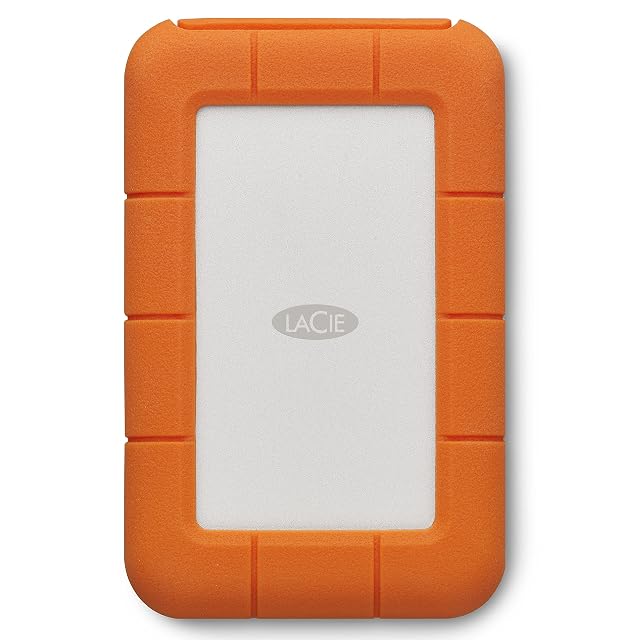
4 TB · portable · USB-C · USB 3.2 Gen 1 and Gen 2 and Thunderbolt 3 listed · shock, water and pressure resistance claimed · three-year warranty · one cable in, one out
A four-terabyte portable drive that lists five interface standards it works with, names the cable in the box and the cable that is not, and publishes a three-year warranty.
Best for: A drive that leaves the desk and goes into a bag on a site or a shoot, where the protective claims and the published warranty are the reason to pay more.
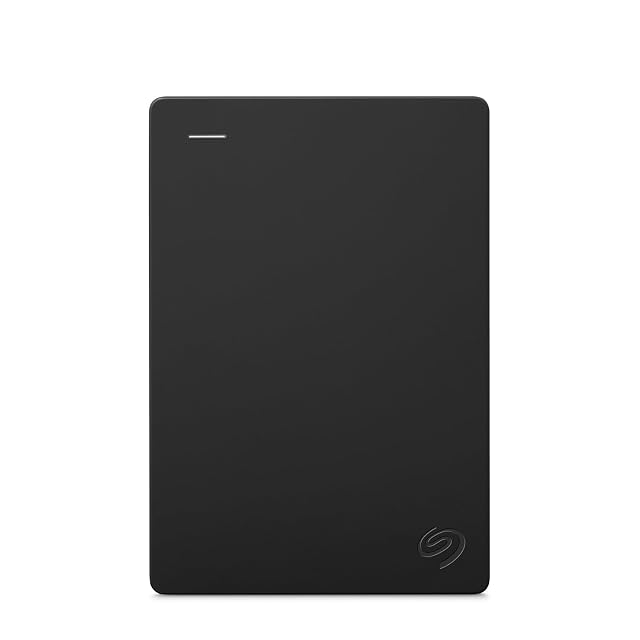
4 TB · portable · USB 3.0, backwards compatible with USB 2.0 · compatible with computers and two console families · sold exclusively through one marketplace
A four-terabyte portable drive whose page names a generation, a compatibility list and a marketplace exclusivity twice, and that never states a connector, a measurement or a warranty.
Best for: A console or laptop that has run out of room, where four terabytes at a low price per terabyte is the requirement and the interface details can be confirmed with the seller.
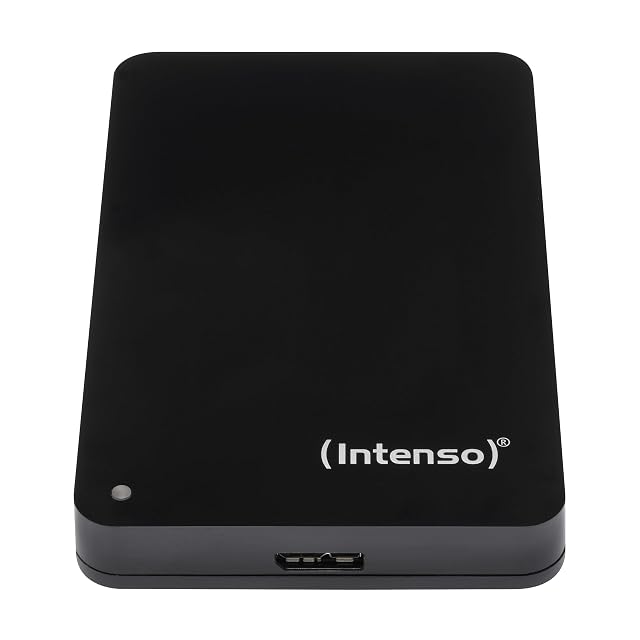
1 TB · 2.5-inch portable · USB 3.2 Gen 1×1 · certified refurbished, reconditioned in Germany · no cable, no connector, no measurement published
A one-terabyte portable drive that names its USB generation precisely and states that the mechanism inside it has been reconditioned and fitted into a new case.
Best for: A modest second copy of documents and photographs at the lowest price on the shelf, where the reconditioned mechanism is understood and accepted in advance.