Lexar promises years without the total behind them
The Lexar range here
A one-terabyte Gen 4 NVMe drive, a two-terabyte magnetic portable SSD, a one-terabyte SATA drive, a two-slot card reader and a dual-ended flash drive with a Type-A plug at one end and a Type-C at the other.
What each page does well
The NVMe drive publishes both sequential figures and names the host memory buffer and the cache arrangement behind them. The portable drive states in its first bullet what its magnetic case and ring will not hold, which is unusual candour for a product sold on magnets, and it counts both leads in the box. The card reader is the one on its shelf to name UHS-II, and it prints a separate rate for the older bus mode instead of one figure for both.
Where the sentence runs out
No Lexar page here publishes a written total or a population statistic, so a five-year promise sits on the page with nothing to bound it. The SATA drive’s fifth bullet gives three years and a limitation, then stops before naming what lasts for three years. The portable drive, designed to hang off a telephone, publishes neither its measurements nor its weight — while the flash drive, which is measured to a tenth of a millimetre and weighed at 26 g, never names a USB generation at all.
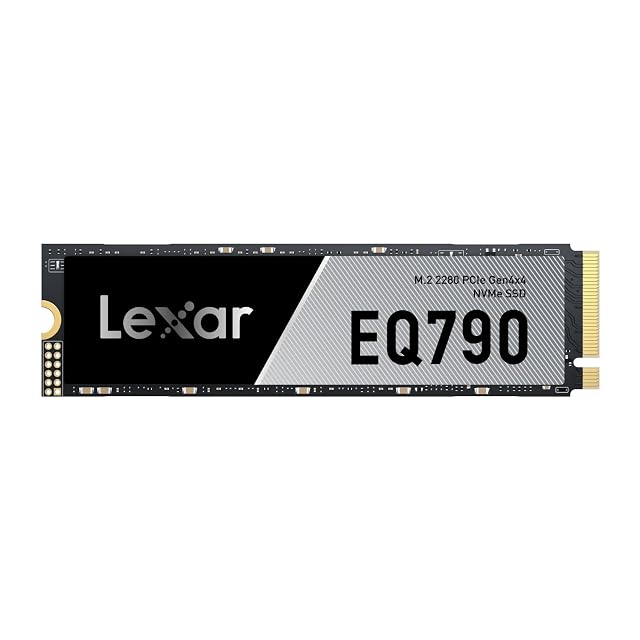
1 TB · M.2 2280 · PCIe Gen 4 · up to 7000 MB/s read · up to 5000 MB/s write · host memory buffer and SLC cache named · five-year limited warranty · no TBW, no MTBF
A one-terabyte Gen 4 drive with a short title, both sequential figures, a five-year term and neither of the two endurance quantities that would say what such a term is measured against.
Best for: A Gen 4 slot where a stated term counts for more than a full sheet of figures, in a machine that will not be written to heavily.
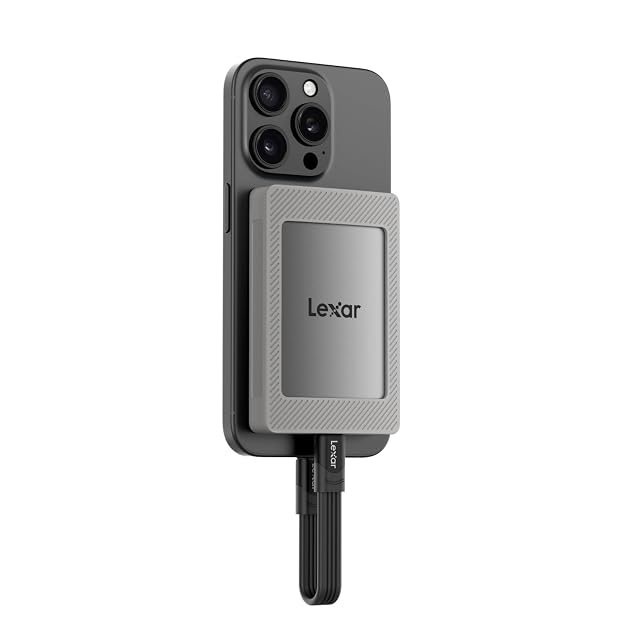
2 TB · USB 3.2 Gen 2 · up to 1050 MB/s read · up to 1000 MB/s write · magnetic case and ring supplied · two leads in the box · encryption at 256 bits · no dimensions, no weight · no TBW, no MTBF, no warranty
A two-terabyte portable drive supplied with a magnetic case and ring, whose first bullet states outright what the magnets will not do, and whose page publishes both rates and no endurance quantity.
Best for: A recent telephone used for filming, where the magnetic case is the point and the drive will spend its life attached rather than in a bag.
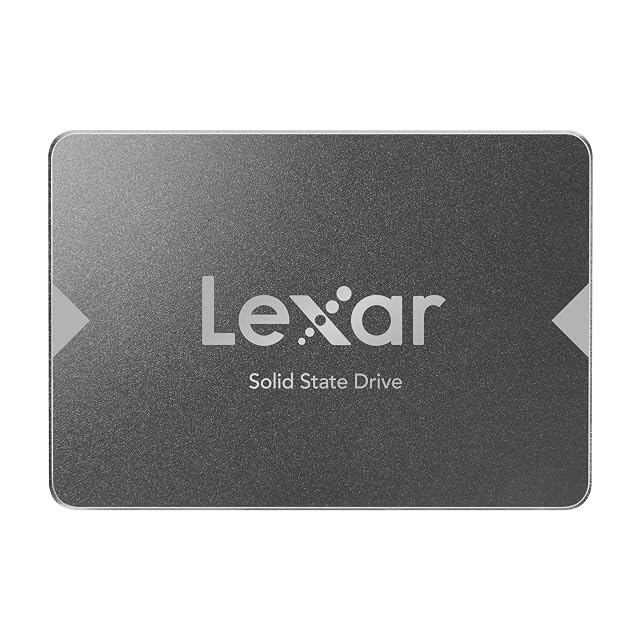
1 TB · 2.5-inch · SATA III at 6 Gb/s · up to 550 MB/s read · three years, in a bullet that ends before it names what lasts · no write figure, no TBW, no MTBF
A one-terabyte drive whose interface and reading figure are published twice over, and whose fifth bullet gives three years and a limitation and then stops before naming what runs for three years.
Best for: An older laptop or desktop machine where a spinning drive is being replaced and a stated term matters more than a full sheet of figures.
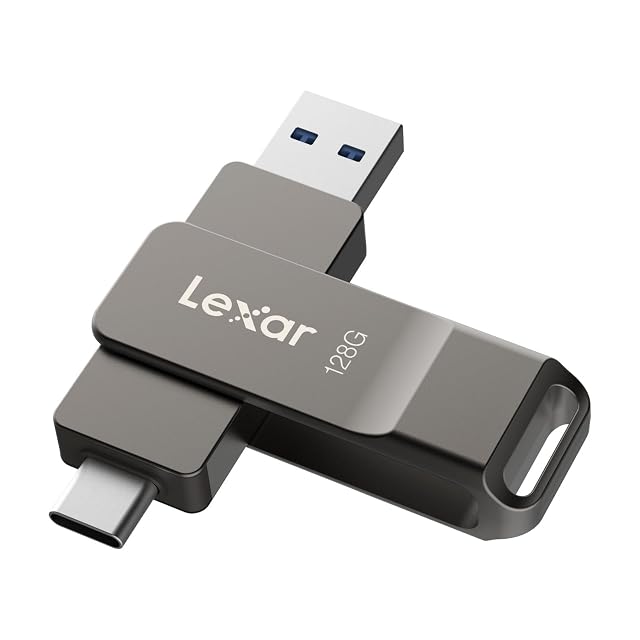
The most thoroughly measured drive on this shelf — millimetres, grams, an operating temperature range and the definition of its own megabyte — and the only one that never names a USB generation at all.
Capacity
128 GB — stated in the title. The second bullet adds the maker’s own definition of the unit, 1 MB = 1,000,000 bytes, which is the decimal count the label figure rests on
USB generation
Not published on the listing — no 3.0, no 3.1 and no 3.2 appears in the title or in any of the five bullets. The first bullet names USB Type-A and Type-C connectors and the OTG role, which are shapes and a function rather than a generation. It is the only drive in this hub with no generation stated
Stated link rate
Not published on the listing — no class rate in gigabits per second is given, which follows from the generation being absent
Stated read figure
Not published as a read figure. The second bullet gives transfer speeds of up to 100 MB/s without naming a direction, and adds that performance varies with the host device, the interface and the conditions of use. Where a maker publishes one undirected figure it is normally the reading one, and this page reports the figure rather than assigning it
Stated write figure
Not published on the listing — no separate writing figure appears anywhere, and the single 100 MB/s figure is not broken down by direction
Connector type
Type-A and Type-C on one body — stated in the first bullet as a 2-in-1 OTG design in a slim, portable form. The title names the Type-C side and the colour, titanium grey
Body design
A metal housing measuring 70.4 × 16.9 × 11.7 mm and weighing 26 g — stated in the third bullet, which also gives an operating temperature range of 0 °C to 50 °C (32 °F to 122 °F). The fourth names a cap that rotates through 360° so it swaps between the connectors without ever being removed and lost
Keyring provision
Not published on the listing — no loop, eyelet or lanyard is named in any bullet
Stated ingress rating
Not published on the listing — no IP code and no water or dust figure appears. The temperature range in the third bullet describes operating conditions and is not an ingress rating
Warranty length
Three years, limited — stated in the fifth bullet alongside security software offering 256-bit AES encryption. It is the longest warranty published on this shelf
Amazon reference
B0FMF5R4Q3 (same reference on 6 Amazon marketplaces)
EAN
0843367143672
Publishes dimensions to a tenth of a millimetre and a weight, which four listings here never do
The rotating cap covers whichever plug is not in use and cannot be mislaid
No USB generation anywhere, so the class of link is unstated
Best for: Carrying between a laptop and a phone in a coat pocket, where the cap that cannot be lost and the 26 g body matter more than a headline rate.
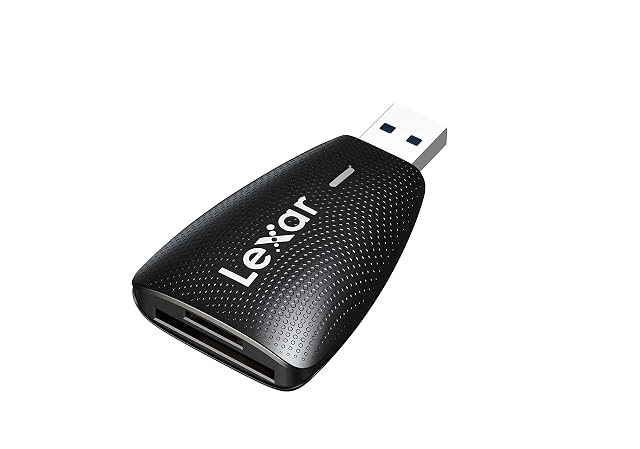
Two slots, two figures and two bus modes: the only reader on this shelf that names UHS-II, and the only one whose two published rates describe two different classes of card.
Host interface standard
USB 3.1 — stated in the title and in the sixth bullet, which calls it high-speed USB 3.1 technology. No Gen 1 or Gen 2 suffix appears, and those two differ from each other by a factor of two
Stated link rate
Up to 312 MB/s — stated in the sixth bullet against the USB 3.1 interface. A second figure of up to 170 MB/s appears in the fourth bullet, attached there to backward compatibility with SD and microSD UHS-I cards. Both are printed on the same page and the listing does not reconcile them; both are reported here as written
Connector type
Not published on the listing — neither Type-A nor Type-C is named in the title or in any of the seven bullets
Internal or external form
External — the third bullet describes a compact, portable body, light and space-saving, meant for maximum mobility. No bay mounting or internal header is named
Slot count
Two — an SD slot and a microSD slot, stated in the first and second bullets
Formats accepted
SD and microSD — stated in the first bullet, with the seventh naming UHS-I and UHS-II cards of both shapes. No capacity ceiling is published, and no CF, MS or XD support is claimed
Simultaneous slot access
Both slots at once — stated in the second bullet, which describes transferring files from the SD and microSD slots to the computer at the same time
Stated protocol support
UHS-I and UHS-II — stated in the seventh bullet, which names support for SD and microSD cards in both modes, and in the fourth, which gives backward compatibility with UHS-I cards up to 170 MB/s. It is the only listing on this shelf that names UHS-II
Cable arrangement
Not published on the listing — no lead is described and no length is given. The third bullet sells the body on being compact and space-saving and does not say how it reaches the machine
Amazon reference
B085Z7P3LC (same reference on 5 Amazon marketplaces)
EAN
4895217903734
Names UHS-II, which no other reader on this shelf does
Publishes a figure for each bus mode rather than one number covering both
USB 3.1 with no Gen suffix, and the two variants of that generation differ by a factor of two
Best for: A photographer holding UHS-II cards who has been getting UHS-I speeds out of a reader that never named a mode at all.