Skip to content

SanDisk Ultra Flair 32 GB, whose own footnote undercuts its headline

A metal thirty-two-gigabyte drive quoting 150 MB/s and then publishing the arithmetic that reduces it: a 1.2 GB film in under thirty seconds is about forty megabytes a second.

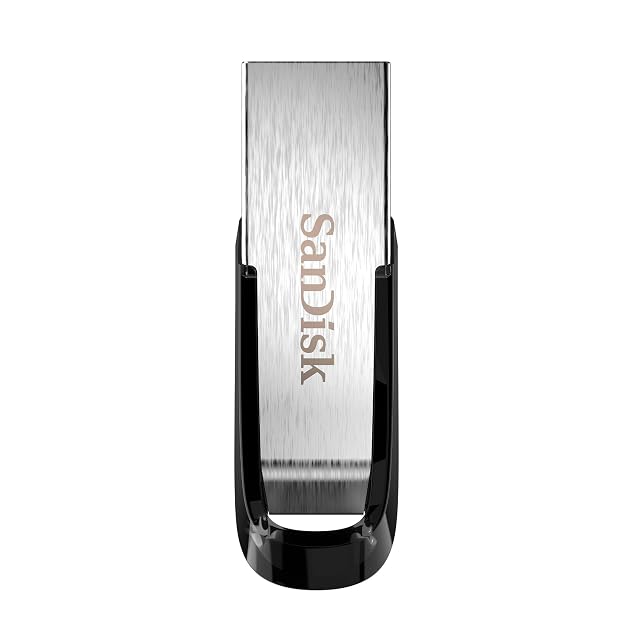
SanDisk Ultra Flair 32 GB metal USB 3.0 flash drive

SanDisk Ultra Flair 32 GB, whose own footnote undercuts its headline

A metal thirty-two-gigabyte drive quoting 150 MB/s and then publishing the arithmetic that reduces it: a 1.2 GB film in under thirty seconds is about forty megabytes a second.

Capacity
32 GB — stated in the title and in the reference. The first bullet’s footnote adds that performance varies by drive capacity, which means the headline figures belong to the range rather than to this version
USB generation
USB 3.0 — stated in the title and in the first bullet, which requires a USB 3.0 port for the quoted speed and notes that performance may be lower depending on the host
Stated link rate
Not published on the listing — no figure in gigabits per second appears, only the generation name
Connector type
Type-A — implied by the body and never designated on the page
Stated read figure
Up to 150 MB/s — stated in the first bullet and its footnote, which says plainly that 150 is the read speed and that it varies by drive capacity.
Stated write figure
Given as a multiple and then undercut by the page’s own example — the first bullet’s footnote gives writing as up to fifteen times a standard USB 2.0 drive at 4 MB/s, which is about 60 MB/s. The second bullet’s footnote gives a 1.2 GB film in under thirty seconds, which is about 40 MB/s. Both are published and neither is chosen
Body design
A sleek, durable metal casing — stated in the fourth bullet. At 4 g (0.1 oz) and 13 by 42 by 7 mm (0.28 in) it is the lightest drive on this shelf. Whether a cap is fitted is not stated
Keyring provision
Not published on the listing — no loop, no lanyard hole and no clip is named anywhere, on a drive small enough to lose
Stated ingress rating
Not published on the listing — no water rating, no dust rating and no IP figure appears
Warranty length
Not published in the bullets — the description names a five-year limited term for the range and the bullets do not restate it, so the figure is attached to the family rather than printed as this listing’s own specification
Amazon reference
B015CH1JIW
EAN
0619659136697
  • Publishes the arithmetic that corrects its own headline: a 1.2 GB film in under thirty seconds is about 40 MB/s, against the 150 on the front
  • Names the encryption properly — 128-bit AES, with the Windows and macOS versions it works on and the Mac download it needs
  • The headline 150 MB/s is a read figure for the range, and the page’s own example implies about 40 MB/s writing on a real file

Best for: A small, solid drive for documents and photographs, bought with the thirty-second film example in mind rather than the number on the front.

≈ $18
Check price on Amazon
Specifications

Capacity
32 GB — stated in the title and in the reference. The first bullet’s footnote adds that performance varies by drive capacity, which means the headline figures belong to the range rather than to this version
USB generation
USB 3.0 — stated in the title and in the first bullet, which requires a USB 3.0 port for the quoted speed and notes that performance may be lower depending on the host
Stated link rate
Not published on the listing — no figure in gigabits per second appears, only the generation name
Connector type
Type-A — implied by the body and never designated on the page
Stated read figure
Up to 150 MB/s — stated in the first bullet and its footnote, which says plainly that 150 is the read speed and that it varies by drive capacity.
Stated write figure
Given as a multiple and then undercut by the page’s own example — the first bullet’s footnote gives writing as up to fifteen times a standard USB 2.0 drive at 4 MB/s, which is about 60 MB/s. The second bullet’s footnote gives a 1.2 GB film in under thirty seconds, which is about 40 MB/s. Both are published and neither is chosen
Body design
A sleek, durable metal casing — stated in the fourth bullet. At 4 g (0.1 oz) and 13 by 42 by 7 mm (0.28 in) it is the lightest drive on this shelf. Whether a cap is fitted is not stated
Keyring provision
Not published on the listing — no loop, no lanyard hole and no clip is named anywhere, on a drive small enough to lose
Stated ingress rating
Not published on the listing — no water rating, no dust rating and no IP figure appears
Warranty length
Not published in the bullets — the description names a five-year limited term for the range and the bullets do not restate it, so the figure is attached to the family rather than printed as this listing’s own specification
Amazon reference
B015CH1JIW
EAN
0619659136697
On Amazon.com
Amazon.com had an offer at $18 on October 26, 2026.

The first bullet gives up to 150 MB/s and a footnote with two qualifications in it: “Write to drive up to 15x faster than standard USB 2.0 drives (4MB/s); varies by drive capacity. Up to 150MB/s read speed.”

Read that carefully. Fifteen times four megabytes a second is sixty — so the writing figure is given as a multiple rather than a number, and it works out at about 60 MB/s. The 150 is explicitly the read speed. And “varies by drive capacity” means neither figure is promised for this particular 32 GB version, which is the smallest in the Ultra Flair range and generally the slowest.

The second bullet then does the arithmetic itself. A full-length film in less than thirty seconds, footnoted as a 1.2 GB MPEG-4 transfer. Twelve hundred megabytes in thirty seconds is forty megabytes a second — a quarter of the headline, and below even the sixty the first footnote implies. The page has published the figure that corrects its own front page, which is rarer and more useful than a bigger number would be.

The intro to this section says to look for the write figure rather than the read figure, and to treat a single number as the read speed. This listing gives the read figure, a multiplier for the write figure, and a worked example that lands lower than both.

The fifth bullet gives password protection and, in its footnote, specifies it: 128-bit AES encryption, supported on Windows 7, 8 and 10 and on macOS 10.9 or later, with a software download required for the Mac. Two listings on this shelf mention encryption and this is the only one that names the key length and the operating systems.

The fourth bullet gives a sleek, durable metal casing. At 4 g (0.1 oz) and 13 by 42 by 7 mm (0.28 in) this is the lightest drive on this shelf. There is no keyring loop named anywhere, which on a metal body this small is worth knowing before it goes into a pocket with keys rather than on them.

USB 3.0 is stated in the title and no link rate in gigabits per second appears. No ingress rating. The description names a five-year limited warranty for the range and this listing’s own bullets do not restate it, so the term is attached to the family rather than printed as a specification here.

At $17.99 for 32 GB on October 26, 2026 this is $0.562 a gigabyte — the most expensive byte on this shelf, just above the Samdata five-pack at $0.550.

Prices quoted in this text were read on October 26, 2026. The live price is at the top of the page.

The questions that come up before an order

Is it really 150 MB/s?

That is the read figure, and the footnote says it varies by drive capacity. The second bullet’s own example — 1.2 GB in under thirty seconds — works out at about 40 MB/s, which is what writing a real file looks like.

How does the password protection work?

128-bit AES encryption, per the fifth bullet’s footnote, supported on Windows 7, 8 and 10 and on macOS 10.9 or later. The Mac version needs a software download from the maker.

Is there a keyring loop?

None is published. No loop, lanyard hole or clip is named anywhere on the page, on a drive of four grams.

All USB flash drives