Skip to content

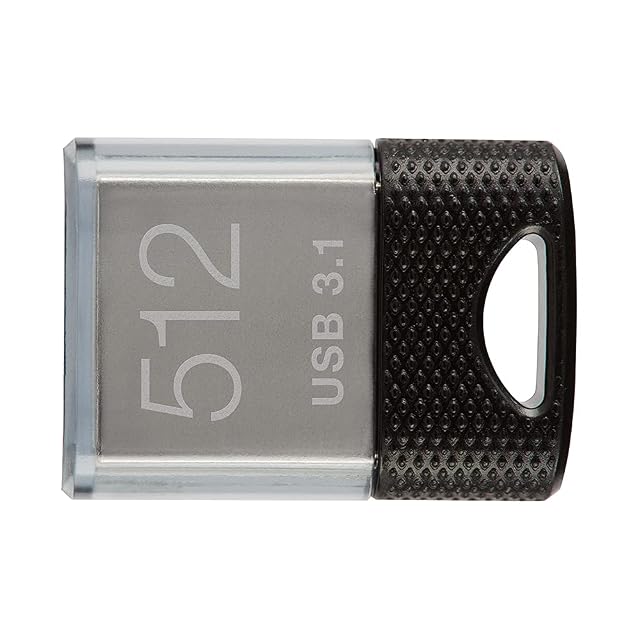
PNY Elite-X Fit 512 GB at 200 MB/s, built to stay in the port

The highest read figure on this shelf at 200 MB/s, in a body small enough to live in a port permanently — and the only listing here that explains what USB 3.1 Gen 1 actually means.

PNY Elite-X Fit 512 GB low-profile USB 3.1 flash drive

PNY Elite-X Fit 512 GB at 200 MB/s, built to stay in the port

The highest read figure on this shelf at 200 MB/s, in a body small enough to live in a port permanently — and the only listing here that explains what USB 3.1 Gen 1 actually means.

Capacity
512 GB — stated in the title and in the reference. It is the joint-largest capacity on this shelf, with the SanDisk Ultra 512 GB
USB generation
USB 3.1 Gen 1, explained — the first bullet states that USB 3.1 Gen 1 offers identical performance to USB 3.0 under a new name, and gives backwards compatibility with USB 2.0. It is the only listing on this shelf to resolve that naming
Stated link rate
Not published on the listing — no figure in gigabits per second appears, although the first bullet’s equivalence to USB 3.0 places it at five gigabits
Connector type
Type-A — implied by the low-profile body and the hosts named in the fourth bullet, and never designated on the page
Stated read figure
Up to 200 MB/s — stated in the second bullet and in the title, and framed in the third as up to thirty times a standard PNY USB 2.0 drive. It is the highest read figure on this shelf; the others that publish one reach 150 at most
Stated write figure
Not published on the listing — no writing rate appears in the title, the five bullets or the description. Several of the seven listings on this shelf are in the same position
Body design
Micro-sized, low-profile, plug-and-stay — stated in the fourth and fifth bullets as able to remain connected to a host for extended periods without interfering with everyday use. It answers the problem the intro to this shelf names, that a wide drive left in blocks the sockets beside it
Keyring provision
Not published on the listing — no loop, no clip and no lanyard hole is named, which follows from a drive designed to stay in a port rather than travel
Stated ingress rating
Not published on the listing — no water rating, no dust rating and no IP figure appears
Warranty length
Not published on the listing — no term appears anywhere on the page, which puts this among the three listings on this shelf with none
Amazon reference
B088RMCCLR
EAN
0751492628561
  • The highest read figure on this shelf at up to 200 MB/s, a third above anything published here
  • The only listing on this shelf that explains USB 3.1 Gen 1 as the same link as USB 3.0 under a new name
  • No write figure, on the highest read figure on this shelf — where the one drive here publishing both shows a ratio of better than four to one

Best for: A console, a car stereo or a laptop that needs more storage permanently, where the drive goes in once and stays.

≈ $70
Check price on Amazon
Specifications

Capacity
512 GB — stated in the title and in the reference. It is the joint-largest capacity on this shelf, with the SanDisk Ultra 512 GB
USB generation
USB 3.1 Gen 1, explained — the first bullet states that USB 3.1 Gen 1 offers identical performance to USB 3.0 under a new name, and gives backwards compatibility with USB 2.0. It is the only listing on this shelf to resolve that naming
Stated link rate
Not published on the listing — no figure in gigabits per second appears, although the first bullet’s equivalence to USB 3.0 places it at five gigabits
Connector type
Type-A — implied by the low-profile body and the hosts named in the fourth bullet, and never designated on the page
Stated read figure
Up to 200 MB/s — stated in the second bullet and in the title, and framed in the third as up to thirty times a standard PNY USB 2.0 drive. It is the highest read figure on this shelf; the others that publish one reach 150 at most
Stated write figure
Not published on the listing — no writing rate appears in the title, the five bullets or the description. Several of the seven listings on this shelf are in the same position
Body design
Micro-sized, low-profile, plug-and-stay — stated in the fourth and fifth bullets as able to remain connected to a host for extended periods without interfering with everyday use. It answers the problem the intro to this shelf names, that a wide drive left in blocks the sockets beside it
Keyring provision
Not published on the listing — no loop, no clip and no lanyard hole is named, which follows from a drive designed to stay in a port rather than travel
Stated ingress rating
Not published on the listing — no water rating, no dust rating and no IP figure appears
Warranty length
Not published on the listing — no term appears anywhere on the page, which puts this among the three listings on this shelf with none
Amazon reference
B088RMCCLR
EAN
0751492628561
On Amazon.com
Amazon.com had an offer at $70 on October 26, 2026.

Two hundred megabytes a second, stated in the second bullet. The other listings on this shelf top out at 150 and three publish nothing, so this is the fastest read figure here by a third — and the third bullet frames it the way PNY frames everything, as up to thirty times a standard PNY USB 2.0 drive.

The first bullet does something no other listing on this shelf does, and it is a kindness: “USB 3.1 Gen 1 offers identical performance as USB 3.0, but under a new name”. That sentence resolves a genuine muddle. USB 3.0 was renamed USB 3.1 Gen 1 and then USB 3.2 Gen 1, all describing the same five-gigabit link, and a buyer comparing a drive labeled 3.0 against one labeled 3.1 has no way to know they are the same thing. Two listings on this shelf carry a 3.1 label, this one and the Amazon Basics, and this is the only one that says what it means.

The body is the second argument. The fourth and fifth bullets describe a micro-sized, low-profile, plug-and-stay design meant to remain connected to the host — a laptop, a car stereo, a games console, a printer, a television — without being removed after each use. The intro to this section warns that a wide drive left in permanently blocks the sockets beside it; this one is built for exactly that use and built narrow enough not to cause the problem. On a machine with two USB sockets side by side, that distinction decides whether the second one is usable.

What follows from a drive that stays in is what the page does not publish. There is no keyring provision at all: no loop, no clip, no lanyard hole, which is consistent with a drive that is not meant to travel and is still worth knowing. And the drive is small enough that removing it needs a fingernail.

No write figure appears. Several of the seven listings on this shelf publish none, and on a 200 MB/s read figure the gap is wider than usual — the Amazon Basics drive on this shelf publishes 130 read and 30 write, a ratio of better than four to one, and nothing here says whether this drive is better or worse. The intro to this section says to treat a single number as the read figure, which is what the second bullet confirms it is.

Five hundred and twelve gigabytes is the joint-largest capacity on this shelf, with the SanDisk Ultra. No link rate in gigabits per second, no ingress rating, and no warranty term anywhere — three listings on this shelf are in that position.

At $69.99 for 512 GB this is $0.137 a gigabyte, the second-cheapest American byte on this shelf, behind the PNY drive of half the capacity and no published speed at all. Between the two PNY listings here the choice is plain: ten dollars less for 200 MB/s published and 256 GB fewer, or forty-two dollars more for double the space and no figure of any kind.

Prices quoted in this text were read on October 26, 2026. The live price is at the top of the page.

The questions that come up before an order

Is USB 3.1 Gen 1 faster than USB 3.0?

No, and this page says so: the first bullet states that USB 3.1 Gen 1 offers identical performance to USB 3.0 under a new name. Both describe the same five-gigabit link. It is the only listing on this shelf to clear that up.

How fast does it write?

The page does not say. The 200 MB/s is a read figure, per the second bullet. The one drive on this shelf publishing both reads at 130 and writes at 30, so the gap can be substantial.

Which of the two PNY drives here is better?

This one publishes 200 MB/s and holds 512 GB for $69.99. The Turbo Attaché 3 holds 256 GB for $27.99 and publishes no speed figure at all. The cheaper byte is on the Turbo; the known speed is here.

All USB flash drives